
A quiet generator can still be off-limits after quiet hours begin. Rules for quiet hours at campgrounds and RV generator use vary by campground, and some sites limit generators to set daytime blocks or prohibit them in certain areas. A noise rating around 50 to 60 dB can be a useful target, but it doesn’t override posted operating hours.
It’s understandable to focus on decibels: a quieter-running unit may seem like the considerate choice. But load and measurement distance affect a generator’s rating, and overnight power needs matter too. You’ll learn how generator noise changes as demand rises, when battery power can cover essentials overnight, and how to read campground rules before settling in. We’ll also explain why quiet hours and generator hours may be separate, so you can plan charging and appliance use without disturbing nearby campers. A little preparation can help keep the night calm and make the trip easier.
Key Takeaways
- Read posted generator hours separately from general quiet hours; a low-noise unit may still be restricted.
- Compare generator sound ratings only when the measurement distance and load are alike.
- Plan overnight power around what you need to run, since battery capacity and appliance demand affect how long it lasts.
- Review campground rules before arrival so you can plan charging times and avoid disturbing nearby campers.
RV Generator Noise Levels: How Quiet Is Quiet Enough for Campgrounds?
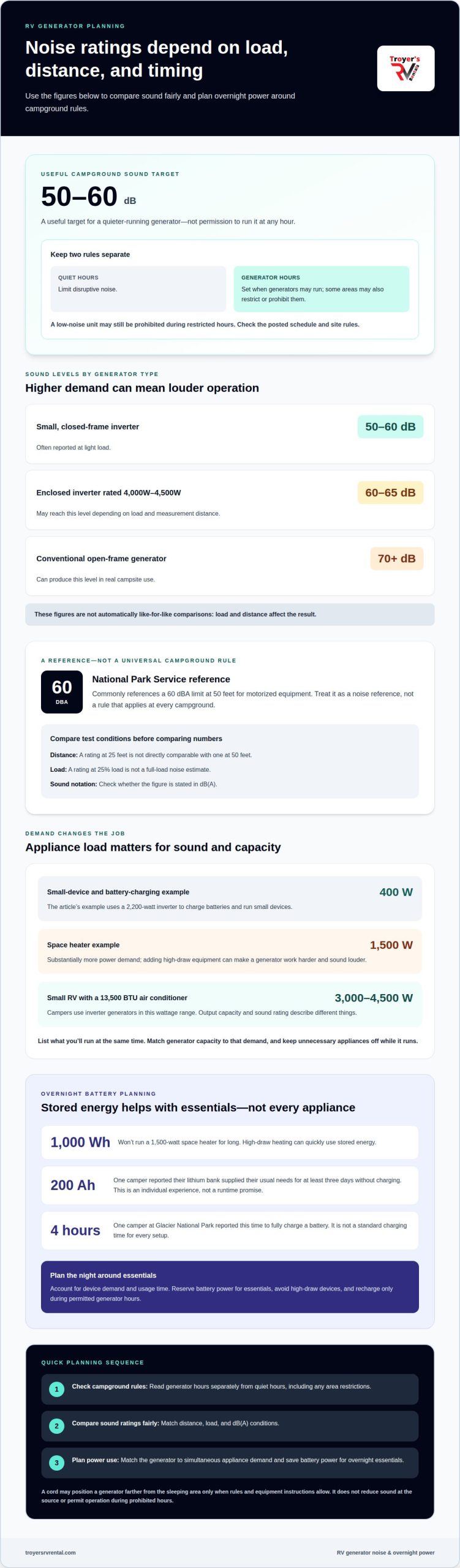
A useful campground target is about 50 to 60 dB, but a quiet rating doesn’t override generator-hour rules. Check both the posted schedule and how the noise rating was measured.
Campground Noise Rules and Quiet Hours
Quiet hours limit disruptive noise, while generator rules may set separate times when generators can run. That distinction matters: even a relatively quiet generator may be prohibited during restricted hours. Some campgrounds also ban generators in particular areas, so check posted signs and site rules before deciding when to recharge or use appliances.
Noise References and Distance Measurements
The National Park Service commonly references a 60 dBA limit at 50 feet for motorized equipment. Treat this as a noise reference, not a universal campground rule. A generator rating only helps you compare units when the measurement distance and operating load match. For example, a rating taken at 25 feet under light load cannot be fairly compared with one measured at 50 feet or at rated load.
Generator Type, Load, and Noise
Generator design and demand both affect sound. Small, closed-frame inverter models often produce about 50 to 60 dB at light load. An enclosed inverter rated at 4,000W to 4,500W may reach 60 to 65 dB, depending on load and distance. Conventional open-frame generators can produce 70 dB or more in real campsite use. Higher demand can make a generator work harder and sound louder.
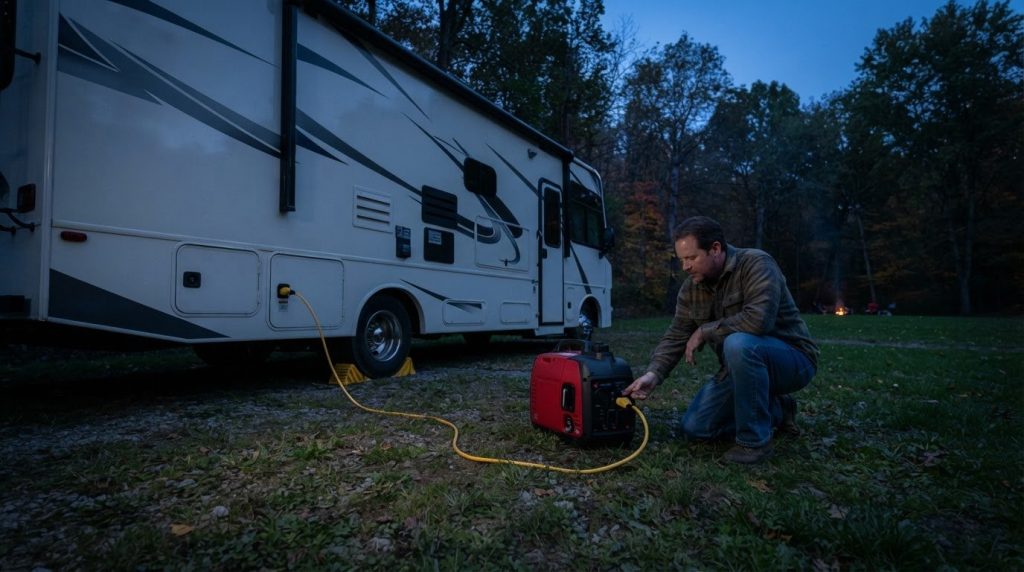
Use an extension cord to position a generator farther from your sleeping area only when campground rules and equipment instructions allow. A cord doesn’t reduce sound at its source or make operating during prohibited hours acceptable. Keep the generator in an allowed location, and don’t use a cord to bypass site restrictions.
There’s no single fine that applies at every campground. Follow the posted rules, and switch off the generator if use is prohibited at that time. Any further response depends on the campground’s own policy.
Generator decibel ratings and load
Treat a decibel rating as a test result, not a promise of campsite sound. Many generator ratings are measured at 25% load, so the displayed number may reflect light demand, not several appliances running together. A target around 50 to 60 dB(A) at light load gives a useful comparison point. It doesn’t tell you how loud the unit will be when demand rises.
Start by listing the devices you expect to use at the same time. A 1,500-watt space heater draws substantially more power than the 400-watt example of a 2,200-watt inverter charging batteries and running small devices. That difference helps explain why the same generator can sound different during different tasks. Battery charging may keep demand modest; adding high-draw equipment changes the load.
Match the generator’s capacity to the equipment you plan to run. For a small RV with a 13,500 BTU air conditioner, campers use 3,000- to 4,500-watt inverter generators. The wattage figure describes electrical output, while the decibel rating describes sound under stated test conditions. Consider both: a quiet-sounding unit may not suit simultaneous appliance use if it can’t meet the demand.
Compare the details behind each sound rating before judging two models. Look for the stated load, measurement distance, and whether the figure uses dB(A). A rating measured at 25% load shouldn’t be treated as a full-load noise estimate. If the operating conditions differ, the numbers aren’t directly comparable. Choose based on the loads you actually expect, then keep unnecessary appliances off while the generator runs. That reduces demand and helps avoid relying on a light-load rating as a guide to every situation.
Battery power stations for overnight use
Battery power can cover selected overnight needs without running a fuel generator during quiet hours. How useful it is depends on stored energy and the devices drawing from it. List what needs power overnight, such as lights, phones, or a fan. Then consider each device’s power demand and how long you’ll use it. This gives you a more realistic plan than relying on the battery’s capacity label alone.
Capacity and appliance draw need to match. A 1,000 Wh power station won’t run a 1,500-watt space heater for long. High-draw heating can use stored energy quickly, leaving less for other devices. Keep the heater example in mind when choosing overnight loads. A phone or light has a different demand, so prioritize essentials instead of assuming one battery can power every appliance.
Battery-bank experiences vary with daily use. One camper said a 200 Ah lithium bank supplied their usual power needs for at least three days without charging. That account isn’t a runtime promise for every setup. The devices used, time in operation, and available stored energy all affect how long a battery lasts. Treat your own power needs as the deciding factor.
Recharging takes planning, too. A camper at Glacier National Park reported needing 4 hours to fully charge their battery. That’s one reported experience, not a standard charging time for every battery or charging setup. If generator hours are limited, think about when you can recharge and whether the available window suits your needs.
Make a simple overnight plan: reserve battery power for essentials, avoid high-draw devices, and recharge during permitted generator hours. If you need air conditioning, battery power alone may not meet that demand. Match your plan to your appliances and campground rules instead of counting on a quiet generator to run overnight.
Campground generator rules and quiet hours
Rules for quiet hours at campgrounds and RV generator use vary by park. Check generator schedules separately from general quiet hours.
Variation in Private Park Policies
Private parks set their own generator policies, so permission at one park doesn’t guarantee permission at another. Some allow generators only during set daytime blocks, while others restrict them in certain areas or prohibit their use. This matters when planning overnight power: a low-noise generator may still be prohibited during restricted hours.
Campground Noise and Decibel Limits
Campground policies may cover sound levels as well as generator operating times. Some specify hours without setting a decibel limit; others may have additional noise conditions. A quieter model doesn’t exempt you from a time restriction. The posted policy determines whether and when you can operate a generator at that campground.
Checking Policies Before Booking
Before booking, review the campground’s official rules and reservation details for quiet hours, generator windows, and generator-free areas. Check whether generator restrictions differ from general quiet time. One reported campground sign listed quiet time from 11pm to 7am, with generator quiet times from 8-9am and 6-7pm. Planning for quiet hours at campgrounds and RV generator use means reviewing both schedules. If the policy is unclear, contact the campground directly.
Planning a trip around campground rules? Explore camper rental options for your getaway.
Troyer’s RV Rental
Troyer’s RV Rental can help you choose a vehicle for your campground trip. Once you understand a park’s generator rules, choose a rental that fits your plans and consider how you’ll manage power during restricted hours. Motorhome and camper rentals suit different trip styles, while monthly RV rentals can work for longer stays. Planning time on the water too? Fishing boat rentals are another option.
Think about your destination, trip length, and expected power needs as you plan. Then match your rental to the kind of getaway you have in mind. For help planning your rental, contact Troyer’s RV Rental.
Make Your Next Campground Stay Easier to Plan
Let your campsite plans shape your trip. Before setting out, consider how much time you’ll spend at camp, what you want to power, and whether you’re planning quiet nights or days out exploring. Planning for quiet hours at campgrounds and RV generator use is part of a bigger picture: choosing a trip that feels comfortable for everyone traveling with you.
A clear plan can make it easier to enjoy the outdoors without letting power needs take over the experience. Give yourself room to adjust your routine to the campground, and keep the focus on the people and places that brought you there. If you’re ready to start shaping your getaway, talk with Troyer’s RV Rental about your plans. A little preparation now can help make the open road feel even more welcoming.
Frequently Asked Questions
Are inverter generators quieter than regular generators?
Often, yes. Closed-frame inverter generators tend to run more quietly than conventional open-frame models, especially under light loads. The difference can shrink as demand increases, so don’t rely on generator type alone. Compare sound ratings at the same distance and load, then consider what you’ll power at camp. A generator running one small device may sound different under heavier demand.
Is 60 dB loud for a generator?
A 60 dB rating can be a reasonable target for campground use, but the number needs context. A rating measured at a particular distance and load can’t be fairly compared with one taken under different conditions. Also consider where the generator will sit relative to neighboring sites. A rating alone can’t tell you whether the sound will suit a quiet campsite.
Quick Answer: How Quiet Should an RV Generator Be?
Aim for about 50 to 60 dB at light load as a practical comparison range. Check the measurement distance and test conditions before comparing models. Then think about your actual power needs: a generator supplying several appliances may sound different from one running a small device. The campground’s operating rules still apply, even if your generator has a low noise rating.
What is the National Park generator noise limit?
The National Park Service commonly references 60 dBA measured at 50 feet for motorized equipment. Treat this as a noise reference, not a single rule that automatically applies at every campsite. Specific campground policies can set operating hours or other restrictions. Before a trip near Millersburg or elsewhere, read the rules for the campground you plan to use.
What are typical quiet hours at campgrounds and RV parks in the United States?
There isn’t one schedule for every campground. Some National Forest campgrounds list quiet hours from 10 PM to 6 AM, while other parks set different times. Private RV parks can also establish their own schedules. For a Millersburg-area trip, use the specific campground’s posted policy rather than assuming another park’s hours will apply.
What generator hours do campgrounds allow, and how do they differ from quiet hours?
Generator hours are the times a campground permits generator operation; quiet hours cover the broader period when noise is restricted. A campground may allow generator use during daytime blocks separate from its general quiet schedule. Read both rules before planning battery charging or appliance use. When booking a stay, look for generator restrictions alongside the campground’s quiet-hours information.