
An RV can do more than sit between your own trips. If you’re considering renting out your RV for profit in Ohio, report rental income on your taxes. Your profit depends on booking income and expenses such as upkeep, turnovers, and other rental costs.
Getting your RV in front of renters is only the first step. A smooth rental also takes a clear listing, thoughtful renter screening, reliable handoffs, and a maintenance plan. This guide explains those steps and the basics of business-use deductions and depreciation. It also covers camper van rentals if you’re deciding what type of RV to list. Use it to weigh the practical work, costs, and tax details before you begin.
Key Takeaways
- Build a clear listing and a consistent process for booking, screening renters, and preparing your RV for each handoff.
- Separate rental-related expenses from personal use, and learn how depreciation may affect the tax picture.
- Consider how a camper van’s size, setup, and likely renter needs shape its listing and turnover routine.
- Estimate potential earnings by weighing booking income against maintenance, cleaning, and time between rentals.
Marketing, bookings, and renter screening
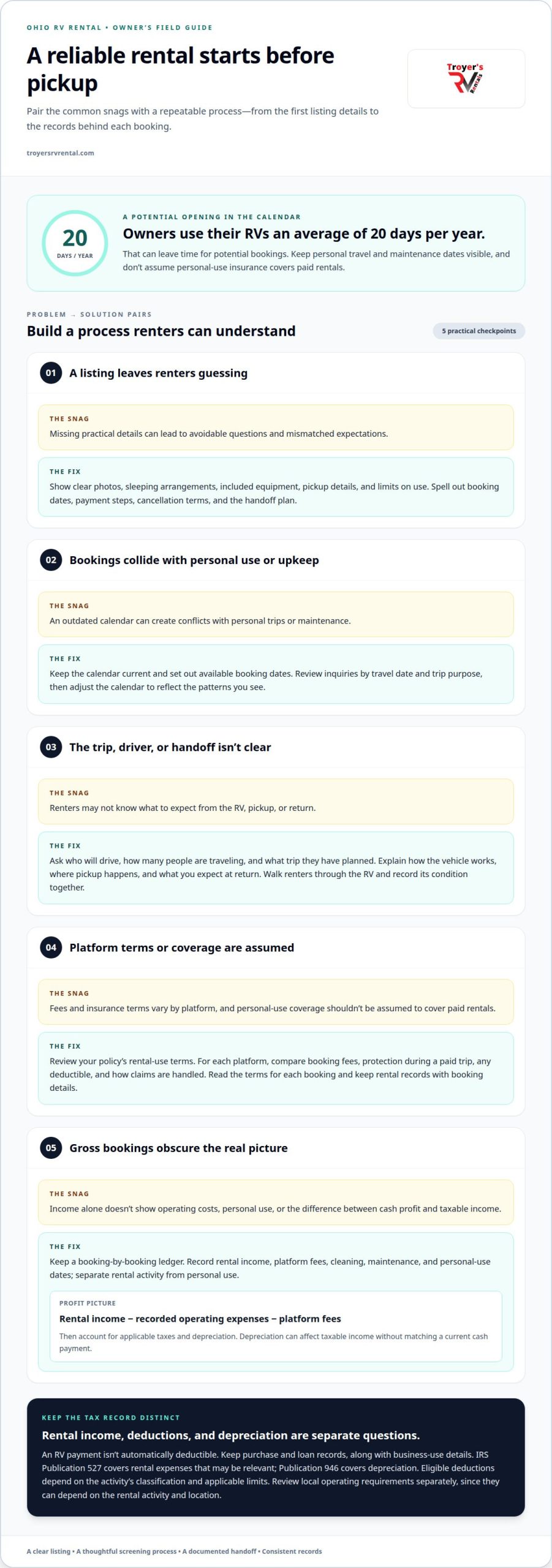
Owners use their RVs an average of 20 days per year, leaving time for potential bookings. In Ohio, treat registration and insurance as separate questions: personal-use coverage shouldn’t be assumed to cover paid rentals, so review the policy’s rental-use terms before accepting a reservation.
RV Rental Marketing and Bookings
Create a listing that answers practical questions before renters inquire. Include clear photos, sleeping arrangements, equipment provided, pickup details, and any limits on use. Set out booking dates, payment steps, cancellation terms, and the handoff plan. Keep your calendar current to avoid conflicts with personal travel or maintenance.
Renter Screening
Screen each booking based on the trip, driver, and RV. Ask who will drive, how many people are traveling, and what kind of trip they have planned. Explain how the vehicle works, where pickup happens, and what you expect at return. A clear walkthrough helps renters understand the RV before departure and gives both sides a shared record of its condition.
Platforms, Fees, and Insurance
Peer-to-peer rental platforms can connect Ohio RV owners with renters, but fees and insurance terms vary. Compare booking fees, what protection applies during a paid trip, any deductible, and how claims are handled. Read the terms for each booking rather than assuming every platform provides the same coverage. Keep platform rental records with your booking details.
Which platforms operate in Ohio, and what fees and insurance do they charge? Those details depend on the platform and its current terms, so compare those specific items before listing. Don’t rely on a platform’s coverage as a substitute for understanding your own policy.
Rental Demand by Location and Season
Demand in Ohio can vary with travel dates, nearby attractions, and pickup access. The right location and season depend on the RV: a compact camper may suit a different trip than a larger motorhome. Review inquiries by travel date and trip purpose, then adjust your calendar based on the patterns you see.
Which Ohio locations and seasons have the strongest demand? The strongest fit depends on where renters want to travel and when they plan to go. Track booking requests by location and season to identify the most useful windows for your RV.
Business-use deductions and depreciation
Rental income may have tax implications, even if you also use the RV for personal trips. Keep income reporting separate from questions about permits or other local requirements in Ohio. Requirements can depend on the rental activity and location, so income reporting alone does not cover every operating rule.
Start a record for every booking. Track rental income, platform fees, cleaning, maintenance, and the dates you use the RV personally. Separate business use from personal use in your records. Depending on the activity’s classification and applicable limits, eligible owners may be able to deduct the business-use share of certain expenses.
An RV payment isn’t automatically a deductible tax expense. Keep loan and purchase records, but don’t assume the full payment qualifies. The Internal Revenue Service’s Publication 527 covers rental expenses that may be relevant to the tax treatment of an RV rented for income. Use it to understand the expense rules, then match records to the rental activity.
Depreciation is a separate part of the calculation. The Internal Revenue Service’s Publication 946 covers depreciation, which may be relevant to the tax treatment of an RV used to earn rental income. Keep the purchase date, cost records, and business-use details together. Personal use can affect how much of an expense relates to rental activity, so consistent records matter.
To calculate profit after expenses, taxes, and platform fees, add rental income and subtract recorded operating expenses and platform fees, then account for applicable taxes and depreciation. Keep tax estimates separate from cash profit: depreciation can affect taxable income without matching a current cash payment. A booking-by-booking ledger makes the distinction easier to see.
Review your records before filing each year. Note changes in rental use, expenses, and personal trips, then consult Internal Revenue Service publications to understand how they affect reporting. Clear records help show how the RV earned income and which costs related to that use.
Report the RV’s rental income, and review local operating requirements separately because they can depend on the rental activity and location.
Renting out camper vans
A camper van can suit renters who want a smaller vehicle for flexible road trips. A Leisure Travel Unity Fx NoVa Class B listing gives one concrete size example: 25 feet. That length is specific to that listing, not a standard for every van. Describe your van’s dimensions, sleeping setup, storage, and included equipment clearly. These details help renters decide whether it fits their trip and belongings.
Build the listing around the van’s actual features. Show the driving area, sleeping space, storage, and any kitchen or bathroom features. Don’t imply equipment is included unless it comes with the rental. Explain pickup and what renters need to know before departure. During the walkthrough, cover the van’s controls and how to return it ready for the next booking.
Consider the van’s size and setup when reviewing trip plans. Ask how many people are traveling, what they plan to bring, and who will drive. A couple on a short road trip may prioritize easy handling and simple packing, while a family with bulky gear may need more room. Explain the van’s limits to prevent mismatched expectations.
Even compact vehicles need cleaning, inspection, and restocking between bookings. Use a repeatable checklist for the interior, included equipment, and vehicle condition. Record existing marks before departure, then check the same areas after return. Track cleaning time, supplies, repairs, and booking gaps separately. These records show whether rental income covers the van’s operating demands and what changes could make the process more manageable.
For van owners considering renting out an RV for profit in Ohio, the key is matching the listing, renter, and trip to the vehicle they have. Clear details and consistent handoffs make a camper van easier to market and manage.
How much can you earn renting out an RV in Ohio?
Treat that figure as an upper-end report, not a forecast for an Ohio owner. Your results depend on booking frequency, the RV’s rental rate, and the expenses tied to each trip.
Start with gross income by adding rental payments from completed bookings. Subtract platform fees, cleaning, maintenance, supplies, and other rental-related costs. Several bookings can still result in modest net income if turnovers and upkeep take substantial time or money.
Separate booked days from available days. An open calendar creates no rental income, and personal trips block dates that renters could otherwise reserve. Record every booking and personal-use period to see how often the RV earns income and when it sits unused.
Then account for the work involved in each handoff. Include time spent answering inquiries, preparing the vehicle, explaining its operation, and checking it after return. If you pay for cleaning or maintenance, record those expenses with the related booking. This fuller picture distinguishes revenue from the return on your effort.
Compare results across seasons and booking types instead of relying on one busy stretch. A month-long reservation may reduce repeated turnovers, while shorter trips can mean more preparation between renters. Consider the effects on your calendar, maintenance routine, and total expenses before deciding which bookings suit your RV.
Use a ledger to track income, fees, expenses, booked dates, and personal-use dates. Review it regularly to see which costs rise with use and which remain during quiet periods. These records support informed decisions about availability and whether rental income is meeting your goals.
To explore how RV rentals work for travelers in Ohio, browse Ohio RV rental options.
Troyer’s RV Rental
Troyer’s RV Rental offers motorhome, camper, fishing boat, and monthly RV rentals for Ohio travelers, including in Millersburg. Renting from the company can give you a practical view of the booking and travel experience as you consider what makes an RV listing useful, from vehicle type to trip length. Your own listing, costs, and tax records remain part of your independent rental decision.
Use this guidance to weigh the work involved and decide what kind of RV experience you want to offer. Planning a trip too? Contact Troyer’s RV Rental to discuss its rental options.
Choose a Practical Next Step
Before opening your calendar, decide what a worthwhile rental season looks like for you. Weigh the time you can give to guest messages, preparation, and return checks against your income goal. This can help you decide whether to list now, start with limited dates, or keep the RV for your own travel.
Treat your first booking as a chance to learn what fits your routine, then use the experience to adjust your calendar and rental approach. If you’re weighing whether renting out your RV for profit in Ohio suits your plans, make the decision based on your time, comfort, and goals.
Planning an Ohio trip instead? Troyer’s RV Rental offers motorhome, camper, and fishing boat rentals for different kinds of getaways.
For help planning your next trip, contact Troyer’s RV Rental. Take the next step that feels right for you, and enjoy the road ahead!
Frequently Asked Questions
How Does It Work?
RV rental means making your vehicle available for a renter’s trip, then completing an agreed handoff and return. Choose available dates, share accurate details, and set clear expectations for use and return. In the Millersburg area, owners can explore Troyer’s RV Rental’s List Your RV option to connect their vehicle with travelers.
What steps are involved in listing an RV for rent in Ohio?
Prepare your RV details, choose dates, and create a listing with accurate photos and descriptions. Include the sleeping setup, equipment provided, pickup arrangements, and return expectations. Review booking requests and keep records of reservations and related expenses. To list through Troyer’s RV Rental, start with its List Your RV option and discuss the rental process.
What should an Ohio RV rental agreement and renter screening process include?
Record the booking dates, payment terms, pickup and return arrangements, and expectations for the RV’s condition. Make sure the renter knows what equipment is included and how to report a problem during the trip. Discuss the driver, passengers, planned trip, and vehicle needs. Keep the agreement and handoff notes together so both sides can refer to the same details.
What Ohio laws, permits, or taxes apply to renting out a personal RV?
Report rental income on your taxes. Review local operating requirements separately, since they can depend on the rental activity and location.
Does Ohio require special insurance or registration for a privately rented RV?
Don’t assume personal-use insurance covers paid rentals. Review your policy’s rental-use terms before accepting a reservation, and compare its coverage with the platform’s protection. Check registration requirements separately.