
Don’t assume the consignment lot’s insurance covers every rental or damage claim. For consignment RV rental insurance in Ohio, the owner should keep the RV’s existing coverage in place and understand what coverage applies while a renter has it. Responsibility for damage depends on the policies and rental terms involved.
It’s reasonable to want a clear answer before handing over the keys. Consignment RV rental insurance in Ohio can feel complicated when an owner, a rental company, and a renter are all involved. Knowing which coverage applies at each stage makes everyone’s responsibilities easier to understand.
This guide explains what to review while an RV is stored and rented, who may be responsible if damage occurs, and which insurance questions to address in the written agreements. It will help you approach consignment with a clearer picture of the coverage involved.
Key Takeaways
- Keep the RV insured while it is on consignment, and understand how its coverage applies once a renter takes the keys.
- Separate coverage for the consignment period from coverage during a rental, including protection for damage to the RV and liability claims.
- Learn why commercial rental coverage matters and what insurance questions can help clarify the arrangement.
- Use the rental terms and details of the incident to understand who may be responsible when damage occurs.
Insurance coverage and liability while an RV is rented
Keep the owner’s insurance and registration in place while the RV is on consignment. The rental coverage and written agreements explain how responsibilities are divided once a renter takes the keys.
Renter Insurance During the Rental
During the rental period, identify whether commercial rental coverage applies, who provides it, and when it begins and ends. A renter’s personal policy may not cover every RV rental situation, so don’t assume it replaces coverage arranged for the rental. Clarify who handles a claim if the RV is damaged or someone is injured near it.
Screen renters before handing over the keys. Match the booking details to the renter’s identity, use a payment method you can verify, and be cautious if someone pressures you to bypass the usual process. Keep the rental agreement and handoff records together.
Required Insurance Certificates and Documents
Keep a file with the owner’s insurance certificate, evidence of any commercial rental coverage, the signed consignment agreement, and the rental contract. Add a dated condition report with handoff photos to help show what damage existed before the trip. These records clarify the arrangement, but the policy and agreement determine their specific role.
Ohio requirements depend on the business arrangement and the policies involved. The agreements should spell out each party’s responsibilities and how the RV may be rented. They do not replace the insurance policy’s terms.
Consignment Rental Insurance Costs
There is no single reliable cost for consignment RV rental insurance in Ohio. Premiums depend on factors such as the RV’s value, rental use, selected limits, deductible, and the coverage available. Compare the policy’s coverage and exclusions alongside the premium, rather than focusing on price alone.
Provided Coverage and Liability Limits
A consignment company may arrange commercial rental coverage, but the protection and limits depend on the policy. Review whether it addresses liability to other people and property, as well as physical damage to the RV. Comprehensive coverage may matter while the RV is on a consignment lot. Don’t assume rental coverage applies during storage or that one policy covers every stage.
No single liability limit or physical-damage amount suits every rental. The policy declarations and endorsements specify the actual limits, deductibles, and covered periods. Review them to understand which policy may respond to a claim.
Commercial rental insurance
Renting an RV for income creates different exposure from using it only for personal trips. For consignment RV rental insurance in Ohio, make sure the commercial policy accounts for rental use, the consignment arrangement, and storage periods. A personal policy alone may not cover those activities. The policy’s stated use should match how the RV will actually be rented.
Which insurers offer this coverage in Ohio? Look for a commercial insurer or specialty underwriter that covers RV rentals and consigned units. No specific insurer name can be recommended here; the key is whether its written policy addresses rental use and the owner’s arrangement with the consignment company.
Ask for the policy documents and review the declarations, permitted-use language, exclusions, deductibles, and claims process. Check whether coverage applies while the RV is on the lot, during renter pickup, throughout the trip, and after return. A policy that covers driving but excludes consignment storage leaves a different gap from one that excludes rental use.
Clarify who pays premiums and deductibles, who reports a claim, and how the rental company handles damage records. Put each answer in the consignment agreement. Keep the signed agreement, policy documents, rental contract, and dated condition photos together. These steps make financial responsibilities easier to trace if a claim occurs.
Rental income may help offset ownership costs. Renting an unused RV can contribute toward expenses such as maintenance, insurance, and storage. Keep expected income separate from choosing consignment RV rental insurance in Ohio: expected bookings do not change the policy’s exclusions or coverage limits.
For travelers considering an RV trip rather than consigning their own vehicle, explore RV rental options and choose the type of trip that fits.
Rental-period insurance coverage
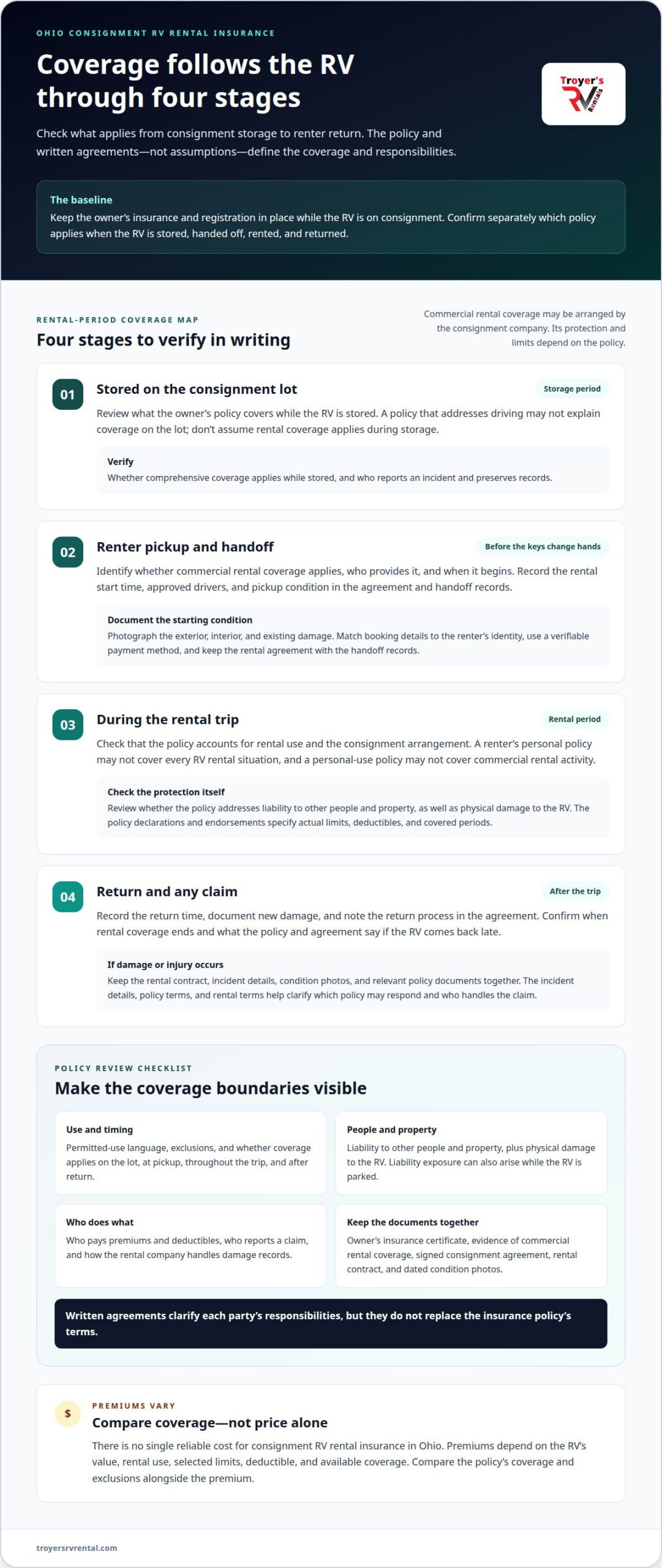
Coverage should match each stage of the rental, from storage on the lot through the RV’s return. Keep the owner’s insurance and registration active, and identify which policy applies while a renter has the RV. A personal-use policy and a rental policy may address different uses, so read the written terms for the actual arrangement.
Before handing over the keys, record the rental’s start and end times, approved drivers, and return process in the agreement. Match the coverage period to those details. If a renter returns the RV late, for example, the agreement and policy terms help clarify what applies after the scheduled return time.
- At pickup, photograph the RV’s exterior, interior, and existing damage.
- At return, document new damage and note the time the RV came back.
- For a claim, keep the rental agreement, photos, and incident details together.
Liability can matter even while the RV is parked. Someone could slip near it or lean against it, or nearby vehicles and buildings could be affected. Consider this exposure while the RV is stored and during renter pickup. The applicable policy terms determine how a claim is handled.
Review storage and rental use separately. A policy that addresses driving may not explain what applies while the RV sits on a consignment lot. Read the written terms for both periods, including comprehensive coverage while stored. Make sure the owner and rental company understand who reports an incident and preserves records.
Before putting your RV up for rent, remove personal belongings and keep the handoff process simple. Rental income may help offset ownership costs, including maintenance, insurance, and storage. Keep expected income separate from coverage: it does not change the policy’s terms, exclusions, or applicable deductible.
Responsibility for rental damage
Responsibility for damage depends on the rental agreement, the circumstances of the incident, and the applicable insurance policy. A renter may be responsible under the contract for damage during the trip, but the contract alone does not determine whether an insurer covers a claim. The owner, rental company, and renter each need clear roles before pickup.
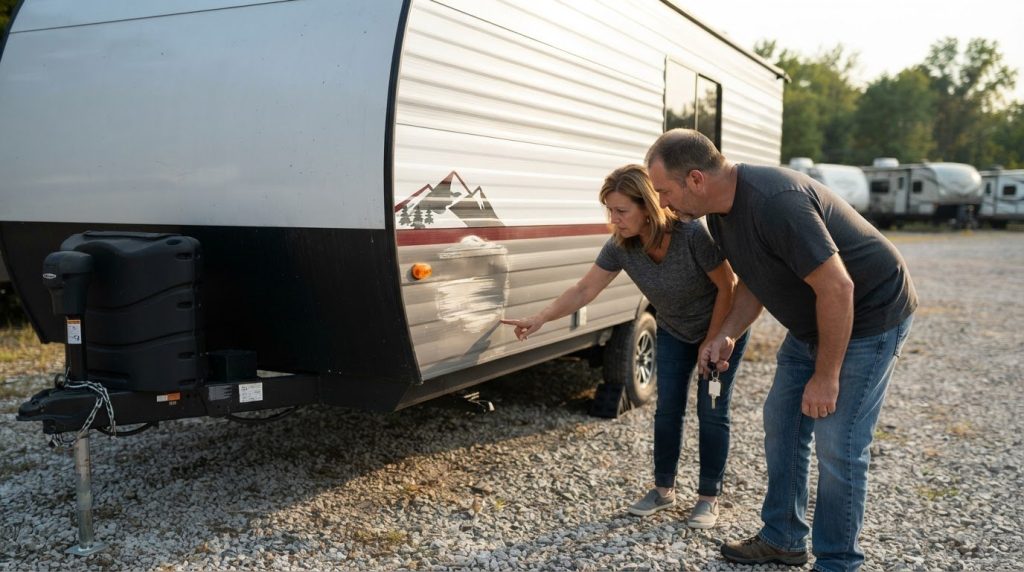
Use a consistent handoff record. At pickup, note existing scratches, cracked lights, interior stains, and equipment condition. Take dated photos and have the renter acknowledge the condition report. At return, compare the same areas and document any new damage. Photos of a bumper before and after the rental, for example, can help distinguish existing marks from a new impact.
If damage occurs on the road, record the date, location, people involved, and what happened. Preserve photos, the rental agreement, and any relevant incident records. Notify the party named in the agreement and follow the policy’s claims process. Don’t assume a renter’s deposit or personal insurance will cover repairs. The policy terms, deductible, exclusions, and claim decision matter.
Distinguish accidental damage from disagreements about cleaning, missing items, or normal use. The agreement should explain how these issues are documented and who handles each report. For a collision involving another vehicle, add the other driver’s details and any available photos to the incident file. Clear records help everyone discuss what happened without relying on memory alone.
Before accepting a booking, make sure the agreement says who receives damage reports, contacts the insurer, and handles repair estimates. Keep communication in writing and save each update with the claim file. These steps do not determine liability by themselves, but they help establish a reliable timeline.
Planning a trip instead? Explore RV rental options for your next getaway.
Troyer’s RV Rental
If you’re planning a trip rather than placing your own RV on consignment, Troyer’s RV Rental offers motorhome, camper, fishing boat, and monthly RV rentals. Choose an option that suits your plans. The insurance questions in this guide can also help you understand what to clarify in a rental agreement, including who handles damage reports and which coverage applies during the rental.
Put the owner’s, rental company’s, and renter’s responsibilities in writing before handing over the keys. To plan a trip or discuss rental options, contact Troyer’s RV Rental.
Make Your Next Step Clear
Before deciding whether to rent out your RV, turn the insurance details into a simple ownership plan. Note what you need the arrangement to protect, how much uncertainty you’re comfortable managing, and which records you’ll keep. A clear plan can make discussions with a consignment company more focused and help you decide whether renting fits your goals.
For consignment rv rental insurance ohio, connect the written coverage terms with how you expect the RV to be used. Keep your questions specific to your situation, such as how storage, renter access, and damage reports fit into the agreement. That gives you a practical basis for deciding what to do next.
If you’re planning a trip instead, Troyer’s RV Rental can help you explore rental options. Contact Troyer’s RV Rental to talk through your plans. Take the next step at a pace that feels right, and look forward to getting on the road.
Frequently Asked Questions
Insurance: Who is responsible for insurance?
The RV owner should keep the vehicle insured and registered while it is on consignment. Rental-period coverage and responsibility for claims depend on the policy and written agreement. The agreement can identify who arranges coverage, reports an incident, and communicates with the insurer. Read those terms together so the owner, rental company, and renter understand their roles before a booking begins.
Repairs: What happens if my RV is damaged during a rental?
The claim process and payment responsibility depend on the insurance terms and rental agreement. Report damage through the process named in those documents, and preserve the rental records and incident details. If a renter reports a broken mirror, for example, note when it was discovered and keep related messages. The insurer’s coverage, exclusions, and deductible affect how the claim is handled.
Does Ohio require insurance for consignment RV rentals?
Consignment does not replace the need to maintain the RV’s insurance and registration. The owner should keep both in place while the vehicle is with a rental company. The rental agreement and applicable policy terms determine how rental use is addressed. If the RV is offered for rent, make sure the written arrangement explains how coverage applies during storage and renter use.
Who is responsible for insuring a consigned RV rental in Ohio: owner, dealer, or renter?
The owner should maintain the RV’s existing insurance, while the rental agreement and policies spell out any additional coverage and responsibilities. A dealer or rental company may arrange rental coverage, but don’t assume that arrangement replaces the owner’s policy. The renter’s role also depends on the agreement. Put responsibility for coverage, claims, and incident reporting in writing before the RV is rented.
Does an RV owner’s personal insurance cover peer-to-peer or consignment rentals in Ohio?
Don’t assume a personal-use policy covers a rental. Rental activity may be treated differently from personal travel, so review the policy’s terms about permitted use, exclusions, and who is covered. A trip by the owner and a booking with a paying renter are different uses. The written policy determines whether rental use is covered.
How are deductibles, damage claims, theft, and renter-caused accidents handled?
The policy and rental agreement determine the deductible, claims process, and responsibilities after damage, theft, or an accident. Use the documents to identify who reports the incident and communicates with the insurer. Record the date, location, and known circumstances. For an accident caused by a renter, the agreement and coverage terms help establish which steps apply. Don’t assume the renter’s personal policy will pay.