
An “is the RV life for me” test trip lets you try RV travel without making a long-term commitment. Start close to home and pay attention to everyday routines, not just the scenery. Notice what feels comfortable and what takes some getting used to.
New places can be exciting, but RV life has trade-offs. Time away from friends and family, frequent moves, and everyday tasks in a smaller space all shape the experience. You may enjoy the freedom while realizing you prefer a slower pace.
Focus on three practical questions: How does time away from loved ones feel? Do you enjoy moving often? Are daily logistics manageable? Use your test trip to decide what to try next, whether that’s another short outing or a longer adventure.
Key Takeaways
- Consider how being away from friends and family could affect your routines and sense of connection.
- Think about whether you enjoy changing locations often or would feel better with a slower travel pace.
- Pay attention to the everyday tasks of RV living, including managing water, internet, mail, and appointments.
- Use a test trip to notice which parts of the experience feel comfortable and which may take adjustment.
Distance from friends and family
Living on the road can make visits with friends and family less spontaneous. A quick dinner with a nearby relative may become a planned stop, and school events or weekly gatherings can be harder to attend. Think about which relationships rely on being physically close. The RV-life suitability quiz has 12 questions and awards 1 point for answering no to depending on nearby friends and family. That score is one prompt for reflection, not a decision by itself.
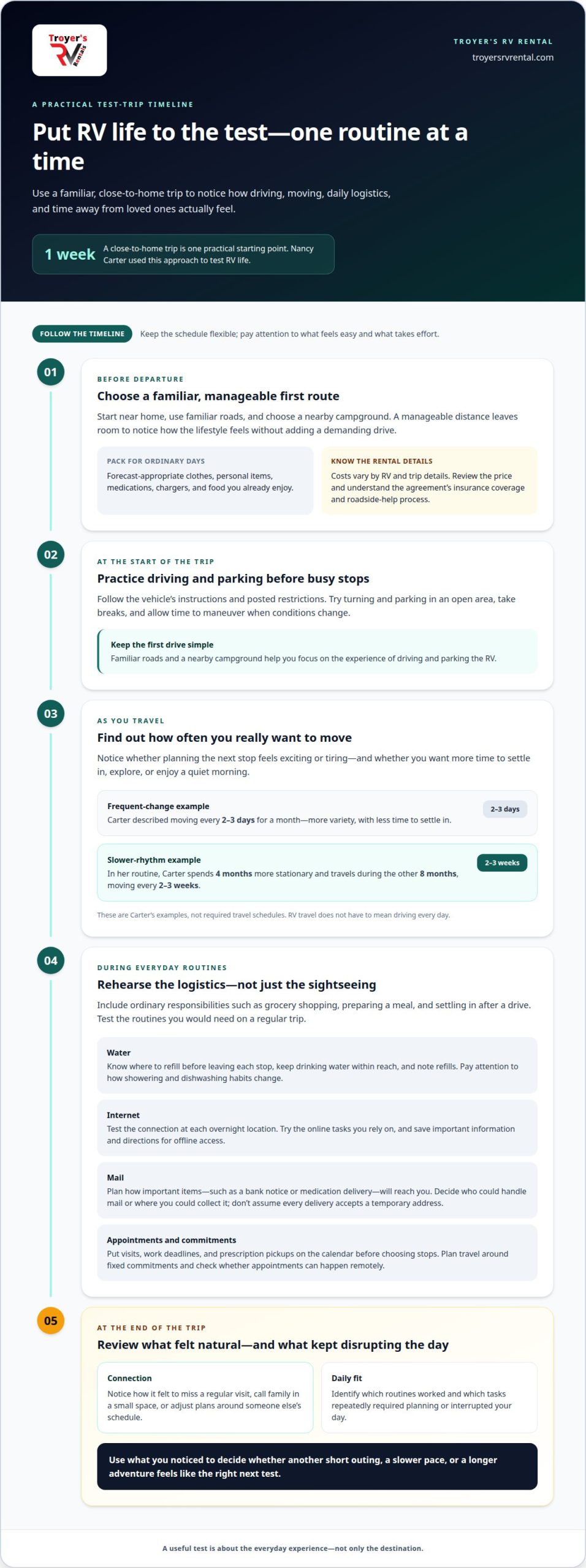
Try ordinary routines before making a long-term choice. Nancy Carter tested RV life on a one-week trip close to home. During your trip, notice how it feels to miss a regular visit, make a family call in a small space, or adjust plans around someone else’s schedule. You could set a regular time to call a relative, then consider whether keeping that routine feels natural or like another task.
For your first time driving and parking an RV, follow the vehicle’s instructions and posted restrictions. Practice turning and parking in an open area before approaching a crowded stop. Rental costs vary by RV and trip details, so review the price for your plans before booking.
A one-week trip close to home is one practical starting point for testing the lifestyle. Pack clothes for the forecast, personal items, medications, chargers, and food you already enjoy. Insurance and roadside assistance depend on the rental agreement, so understand its coverage and help process before departure.
Tight turns, limited parking, and changing conditions can make a trip more challenging. Take breaks and allow time to maneuver. Choose familiar roads and a nearby campground for your first drive, keeping the distance manageable. This gives you room to notice how time away from loved ones feels without adding a demanding journey.
Enjoying frequent travel and exploring new places
New scenery can be a big draw, but travel also means repeated decisions about when to move and where to stop. Nancy Carter described moving her RV every 2 to three days for a month. That pace offers variety, but it can leave less time to settle in, explore a town, or enjoy a quiet morning. During a test trip, notice whether planning the next stop feels exciting or tiring.
Your ideal rhythm may be slower than constant travel. Carter said she spends four months more stationary and enjoys the other eight months traveling. When she described her routine, she was moving every two to three weeks. RV travel doesn’t have to mean driving every day. Try staying in one place for a few nights, then move and see which pattern suits you.
The type of RV also shapes the experience. A camper van is compact and suits flexible stops. A travel trailer is towed behind a separate vehicle, while a motorhome combines the driving and living spaces in one vehicle. Choose a setup that matches the travel you want to try, such as frequent town visits or longer stays in one area.
Treat the trip as a small experiment. Choose a destination with time to explore and leave room for an unplanned stop. Notice how often you want to drive, how much time you spend planning, and whether you’d rather stay longer. Carter’s goal was to travel the United States in her RV for five years, but your trial can help you find a pace that feels sustainable. If you enjoy changing views and the routines that come with moving, frequent travel may suit you. If you prefer fewer transitions, a slower itinerary can still leave room to explore.
The author’s experience traveling in a 32-foot motorhome with her husband and small dog also shows how a shared setup can shape everyday travel.
3. Planning for water, internet, mail, and appointments
Daily logistics can show whether RV life fits your habits. Before leaving each stop, figure out where you’ll refill water and how you’ll manage your supply on the drive. Keep drinking water within easy reach, and make a simple note of refills. If long showers or frequent dishwashing matter to you, notice how those routines change in an RV. The goal is to test your real habits, not an idealized version of them.
Your internet needs depend on what you do online. If you work remotely, try a video call from your planned overnight location before relying on the connection for a busy workday. If you mainly use maps and messages, test those instead. Save important information and directions for offline access. A connection that works at a coffee shop may not work at a quiet campground, so assess each stop separately.
Plan how you’ll receive important mail before leaving, including items such as a bank notice or medication delivery. You might ask someone you trust to handle your mail or collect it during a planned stop. Don’t assume a temporary address will work for every delivery. Write down your plan and who will help, then see whether it feels manageable on the trip.
Appointments can affect your route. Add a dentist visit, work deadline, or regular prescription pickup to your calendar before choosing overnight stops. Consider whether an appointment can happen remotely or requires you to be near a particular town. Plan travel days around fixed commitments instead of squeezing them between drives. Including one ordinary responsibility can make a test trip more revealing than a holiday-only itinerary.
At the end of the trip, review which tasks required planning. If water, connectivity, mail, and appointments felt manageable with a few routines, that’s useful evidence. If one task repeatedly disrupted your day, consider what you’d want to change before traveling longer.
4. How to plan a test trip to see if RV life is right for me
Give your “is the RV life for me” test trip a purpose beyond reaching a scenic destination. Include everyday moments such as grocery shopping, preparing a meal, and settling in after a drive. These tasks show how an RV fits your daily rhythm. Keep the schedule flexible so you can notice what feels easy and what takes more effort.
Start from a familiar place, then add a destination that interests you. Before leaving, decide where you’ll stop, what you want to explore, and which routines you want to try. For example, plan a quiet evening after a day of driving. That way, you experience both the journey and the downtime, not just the excitement of arrival.
Make brief notes when something stands out. Record what worked, what felt inconvenient, and what you’d change next time. Think about packing, meals, sleeping arrangements, and how you and your companions share tasks. A note that you wanted more time between stops can help you plan a future itinerary.
Nancy Carter’s experience offers one way to build up gradually. After her one-week trip close to home, she followed it with a 4-week trip farther from home to see whether she wanted to continue RV living. You can use the same step-by-step approach: begin with a manageable outing, then consider a longer journey if you want to keep exploring. Each “is the RV life for me test trip” can help you learn at your own pace.
After returning, talk through the experience with everyone who traveled. Compare what each person enjoyed with the parts they found tiring. Ready to put your plans into motion? Plan your RV test trip and see how the road feels in real life.
A gradual trial can also include longer stays in a tiny home. The author recommends trying longer trips in a tiny home before selling everything to assess adjustment to RV travel. Nancy Carter’s one-week trip close to home gave her a way to test RV life before deciding whether to live on the road full time. As a trial extends, notice whether the routines still suit you, including the pace of travel and time away.
Troyer’s RV Rental
Troyer’s RV Rental offers motorhome and camper rentals from its Millersburg location for travelers who want to try RV life before making bigger plans. Choose a shorter trip to experience driving, meals, rest, and time away from home. For a longer trial, monthly RV rentals let you explore an extended routine. The right rental depends on what you want to learn: how often you enjoy moving, how everyday tasks feel, and whether the RV suits your travel companions. A fishing boat rental can add time on the water if that fits your plans. Use what you learned on your test trip to choose your next outing, then contact Troyer’s RV Rental to plan your RV trip.
Take the Next Step at Your Own Pace
A test trip can help you decide whether RV life suits you, but it doesn’t have to answer every future question. Treat what you learned as a starting point. You might want more time outdoors, a different travel rhythm, or another chance to try everyday routines on the road. Let your next trip answer one new question rather than planning an entire lifestyle at once.
Think about what you’d like to experience next, then choose a trip that gives you room to explore it. A change of scenery can make the decision more concrete while keeping the commitment manageable. Your RV adventure doesn’t have to match anyone else’s idea of the perfect trip.
Ready to plan what comes next? Contact Troyer’s RV Rental and take the next step toward an RV trip that fits you. Your next adventure can start with a simple plan!
Frequently Asked Questions
How Do You Know if RV Life Might Be for You?
RV life may suit you if the freedom of changing scenery outweighs the effort of adapting to a smaller, more flexible routine. During a trial, notice how you and your companions respond when plans change, such as choosing an indoor activity on a rainy afternoon. Talk afterward about what you enjoyed, what caused friction, and whether you’d willingly make room for those trade-offs again.
Renting an RV for a trial trip: costs and fees in the United States
Rental costs vary by RV and trip details, so review the price for your plans before booking. Read your rental agreement to understand insurance coverage and what help is available if you need it.