
What if confidence behind the wheel starts before you turn the key? If you’re searching for tips for driving a motorhome for the first time, it’s normal to feel unsure about the vehicle’s size, blind spots, turns, and stopping distance. A motorhome handles differently from a car, but preparation and low-speed practice can make your first drive feel more manageable.
Before setting off, learn the motorhome’s exact height, width, length, and weight. Adjust your seat and mirrors, locate the main controls, and practise basic manoeuvres in a safe, open area. You don’t need to tackle a long or complicated route on day one.
This guide covers how to prepare, steer through turns, brake smoothly, reverse with care, and plan a route with suitable places to stop. You’ll also find a simple approach to a short first journey. Build confidence one calm step at a time, and your motorhome trip can begin with a more comfortable drive.
Key Takeaways
- Learn how a motorhome’s size and handling differ from a car, and why knowing its dimensions matters.
- Use these tips for driving a motorhome for the first time to prepare the seat, mirrors, controls, and route before setting off.
- Take turns slowly, allow room for the rear wheels, and leave extra space for smooth braking.
- Plan an Ohio route by checking vehicle dimensions, access, and safe places to stop, including around Holmes County and Millersburg.
- Start with low-speed practice and a manageable drive. Stop safely if you feel tired or unsure.
First-time motorhome driving: what feels different from driving a car?
Feeling nervous before your first motorhome drive is normal. You’re adjusting to a vehicle that’s longer, wider, taller, and heavier than a car, so familiar roads and manoeuvres can feel different. Start by learning the motorhome’s dimensions and controls, then practise at a calm pace before planning a manageable first trip.
Safe first-drive preparation means learning your specific motorhome’s size and controls, then practising basic manoeuvres in a quiet, open area before tackling a longer or busier route. Handling varies by vehicle, so use the measurements and instructions for the motorhome you’ll drive. Motorhomes come in different layouts and classes. This overview of different classes of motorhomes explains the broad differences, but your vehicle’s own measurements are what matter when planning a route.
Why a motorhome needs more room and time
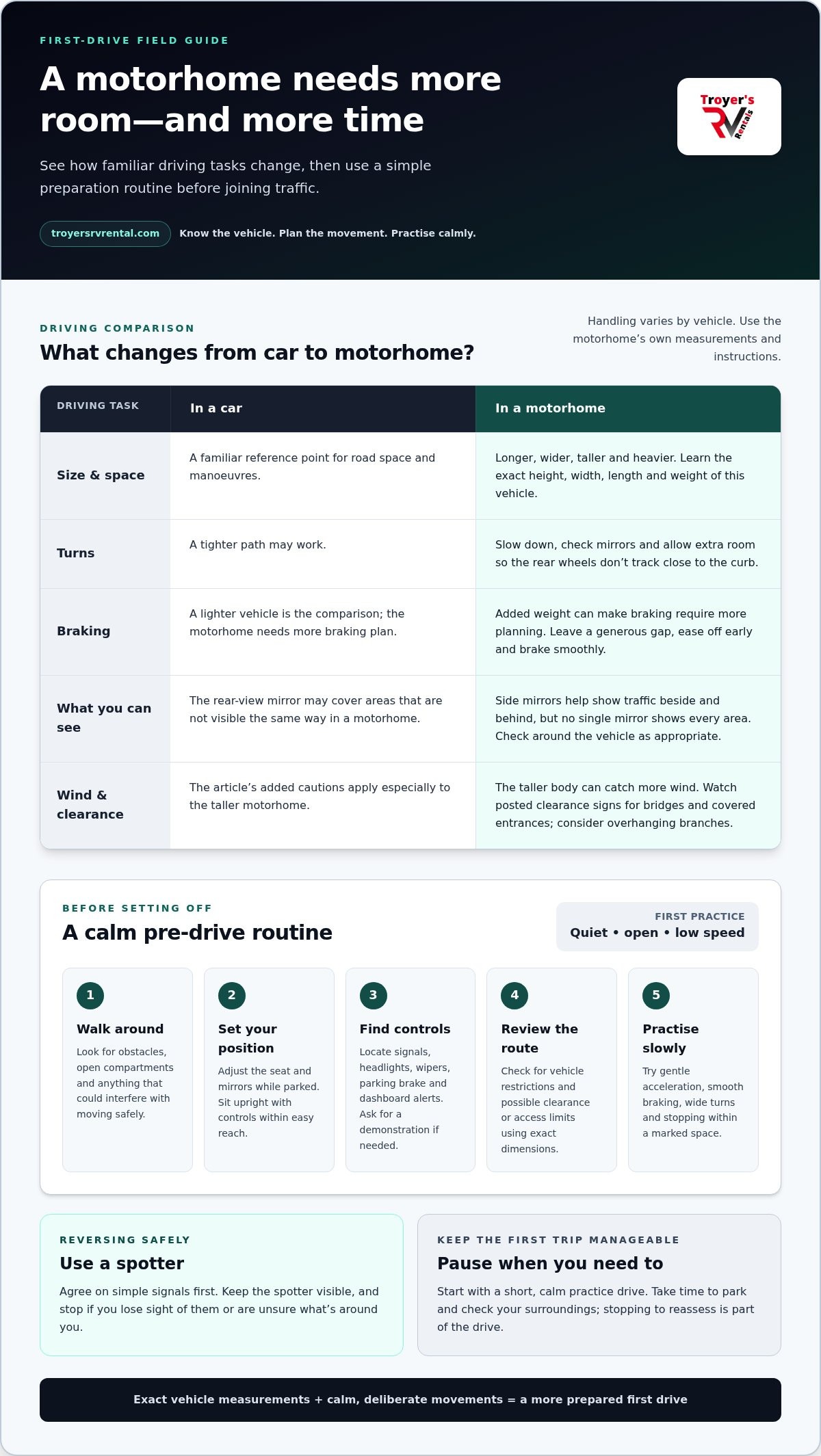
A motorhome’s size changes how you see and move through the road. Its mirrors may show areas that a car’s rear-view mirror covered, while its taller body can catch more wind and feel less settled in gusts. Slow down and leave extra space, especially when wind picks up.
Consider a right turn at an intersection. If you steer too early, the rear wheels may track closer to the curb than the front wheels. Allow extra room, check your mirrors, and watch for people, signs, and roadside obstacles. Height matters too: low bridges, covered entrances, and overhanging branches can pose a risk. Keep the motorhome’s height in mind and follow posted clearance signs.
The added weight can make acceleration feel slower and braking require more planning than in a car. Leave a generous gap ahead, ease off the accelerator early, and brake smoothly instead of waiting until the last moment.
Set realistic expectations for your first trip
Make your first practice drive short and calm. Choose a quiet area where you can get used to steering, braking, and judging the vehicle’s position before entering busy traffic or starting a long journey. Take your time parking and checking your surroundings. Pausing to reassess is a sensible part of the drive, not a setback.
If you plan to share the driving, make sure the other driver is qualified and comfortable with that specific motorhome. Agree on who will drive before setting off. Don’t hand over the wheel simply to keep to a schedule. These tips for driving a motorhome for the first time work best when you give yourself room to learn at your own pace.
Before you set off: learn the motorhome controls and dimensions
A few minutes of preparation can make the first miles feel less unfamiliar. Find the motorhome’s height, width, length, and weight in its vehicle information, and keep those figures handy. Don’t rely on general estimates: dimensions and controls vary by vehicle. During the handover, review the operating instructions and locate the safety equipment so you know what’s available and where to find it.
Before moving, complete a walk-around, set your seat and mirrors, locate the main controls, review your route for vehicle restrictions, and practise at low speed in a safe area. Use this sequence to build a routine:
- Walk around: Look for obstacles, open compartments, and anything that could interfere with moving safely.
- Set your position: Adjust the seat and mirrors before starting your practice.
- Locate controls: Find the turn signals, headlights, wipers, parking brake, and dashboard alerts.
- Review the route: Keep the motorhome’s exact dimensions in mind and look for possible clearance or access limits.
- Practise slowly: Get a feel for basic movements before joining traffic.
Adjust the seat, mirrors, and driving position
Sit upright with a clear view of the road and the controls within easy reach. Set each mirror while parked. Side mirrors help reveal traffic beside and behind you, but they can’t show every area around the motorhome. A rear-view mirror may offer only a limited view, especially if the interior layout blocks the sightline. Turn your head and check around the vehicle as appropriate. Don’t treat any single mirror as a complete view.
During the handover, ask for a demonstration of unfamiliar controls or dashboard alerts. It’s easier to learn what a switch does while parked than while managing traffic.
Practise slowly before joining traffic
Choose a quiet, open place where practice is safe and permitted. Try gentle acceleration, smooth braking, wide turns, and stopping within a marked space. Notice how much room the motorhome needs, and make small, deliberate adjustments. Take the time you need to get comfortable with the basics.
For reversing, use a spotter who can see the area behind the vehicle. Agree on simple signals before you begin, keep the spotter visible, and stop if you lose sight of them or aren’t sure what’s around you. These practical tips for driving a motorhome for the first time start with knowing your vehicle, not guessing its limits. If you’d rather have the RV brought to your destination, explore motorhome rental options with delivery and setup.
How to handle turns, braking, and lane position in a motorhome
A motorhome’s size can feel intimidating in traffic, but deliberate movements help you manage it. Give yourself time to read the road, check your mirrors, and choose a path that fits the vehicle. These tips for driving a motorhome for the first time focus on smooth, planned movements rather than quick corrections.
Make turns and lane changes with extra room
Slow down before entering a turn, not halfway through it. In a right turn, the front of the motorhome may clear the corner while its rear wheels track closer to the curb. Check your mirrors as you turn, and leave enough room to avoid curbs, poles, parked vehicles, and other roadside obstacles. Don’t cut the corner. Choose a path that suits the motorhome’s actual length and width, and wait if there isn’t enough space.
Keep lane changes unhurried. Signal early, check your mirrors for traffic and open space, then move over only when you can do so safely. Don’t assume the motorhome fits like a car or that you should drive close to one side of the lane. Use the vehicle’s known dimensions and keep checking your position in the mirrors.
Brake smoothly and keep a safe gap
Extra weight can change how quickly a motorhome accelerates and how braking feels. Build speed gently, maintain a steady pace, and leave a larger following gap than you would in a car. There’s no single stopping distance that applies to every motorhome or road condition, so adjust to the vehicle, traffic, weather, and visibility.
Look ahead and ease off the accelerator early as traffic slows, a curve approaches, or the road slopes downhill. Apply the brakes smoothly to allow for a gradual stop. If conditions change or you’re unsure, reduce speed and give yourself more space. Calm, early adjustments make turns and stops easier to manage.
Parking, reversing, and planning an Ohio motorhome route
A good first route gives you space to learn, not a string of tight turns and last-minute decisions. Around Holmes County and Millersburg, plan with your motorhome’s actual dimensions and the access details for your destination in mind. A route that works for a car may not suit every motorhome.
Use this planning order before you leave:
- Check dimensions: Keep the vehicle’s height, width, length, and weight details close at hand.
- Review access: Look for current height, weight, and vehicle-access restrictions along the route and at your destination.
- Allow time: Choose a straightforward drive with manageable turns, and avoid a tight schedule.
- Plan stops: Identify suitable places to take breaks or pull over safely if you need to reassess.
Choose a first route that leaves room to learn
Favor a simple route with planned breaks over a shortcut that may involve narrow roads or difficult turns. Don’t rely on a car navigation setting to account for your motorhome’s height or weight. Check current road conditions and destination access before departure, and adjust your plan if you find a restriction or an uncertain approach. For broader trip-planning ideas, read the Ohio motorhome rental guide.
Park and reverse without rushing
Choose a spacious stopping place where you can see the approach and have room to manoeuvre. Before committing, look for low branches, posts, parked vehicles, and other obstacles. If the space feels too tight, move on to a safer option rather than forcing the turn.
A passenger can help spot while you reverse. Agree on simple hand signals first, and ask them to stand where you can see them clearly. Move slowly and stop if they disappear from view, a signal is unclear, or you’re unsure about an obstacle. If needed, park safely, get out, and reassess before continuing.
If driving the motorhome to your destination doesn’t suit your plans, Troyer’s RV Rental offers delivery and setup. Explore motorhome rentals with delivery and setup as another way to plan your Ohio trip.
A simple first-drive plan: prepare, practise, and travel at your pace
A comfortable first trip doesn’t need a complicated itinerary. Build it in stages: get familiar with the motorhome, practise the basics, then choose a route that gives you time to travel without rushing. These tips for driving a motorhome for the first time can turn preparation into a repeatable routine.
Use a confidence-building first-day checklist
Before you leave, work through this checklist with your travel companions:
- Review the vehicle: Note its height, width, length, and weight, and make sure you understand the main controls and mirrors.
- Check the day’s conditions: Review the weather and current road conditions before choosing your route.
- Plan the drive: Pick familiar roads where possible, identify stopping places, and leave extra time for turns and parking.
- Share the roles: Decide who will navigate and who can help spot during reversing. Keep the driver focused on driving.
- Start simply: Practise at a calm pace before taking on a longer or more demanding journey.
There’s no need to push through fatigue or uncertainty. If you’re tired, unsure about a turn, or facing an unfamiliar manoeuvre, pull over somewhere safe and take a moment to reassess. Continue only when you feel ready and have a clear plan.
Choose a trip setup that fits your comfort level
You can plan a straightforward route and drive the motorhome yourself, or choose RV delivery and setup if you’d rather not drive it to the campsite. Either approach can suit a trip planned around your comfort and experience. The goal is to enjoy the journey, not to prove you can manage every driving situation on day one.
If you’re planning an outdoor getaway, explore this Ohio RV fishing-trip planning guide for ideas on bringing RV travel and time outdoors together. When you’re ready to plan a trip, explore motorhome rentals and choose an option that fits your plans.
Make your first motorhome trip a comfortable one
Confidence grows from preparation, not pressure. Learn the motorhome’s dimensions and controls before setting off, then practise turns, braking, and parking at a calm pace. Plan a manageable route with suitable stopping places, and give yourself permission to pause if you’re tired or unsure.
These tips for driving a motorhome for the first time can help you take the road in smaller, more comfortable steps. Your first trip doesn’t have to be long or complicated. Choose a plan that fits your experience, and focus on enjoying the journey as much as the destination.
Troyer’s RV Rental offers motorhome rentals and delivery and setup for travelers in Millersburg and Holmes County. Delivery can suit plans where you’d rather not drive the RV to your campsite. Explore motorhome rentals for your next trip and start planning an outing that feels right for you.
Frequently Asked Questions
What is the hardest part of driving a motorhome for the first time?
The biggest adjustment is usually judging the motorhome’s size and allowing more room to turn, stop, and park. Before entering traffic, learn its dimensions and what your mirrors can and can’t show. Then practise slowly in a safe, open area, taking one manoeuvre at a time. These tips for driving a motorhome for the first time aren’t about moving quickly. They’re about making calm, deliberate decisions.
Is driving a motorhome harder than driving a car?
It can feel unfamiliar because a motorhome is generally taller, wider, longer, and heavier than a car. That can affect visibility, turns, braking, and route choices. Give yourself time to learn the controls and practise at low speed before taking on busy roads. Handling varies between vehicles, so use the specific motorhome’s dimensions and operating instructions rather than assuming it will respond like a car.
How do you make turns in a motorhome?
Slow down before the turn, check your mirrors, and leave enough room for the motorhome to clear the corner. The rear wheels can track closer to the inside of a turn than the front wheels, so avoid cutting corners. Watch for curbs, signs, parked vehicles, and other obstacles. If you can’t tell whether the path is clear, stop somewhere safe and reassess before continuing.
Can you reverse a motorhome by yourself?
You can reverse alone, but limited visibility can make it more challenging. Choose a pull-through space or avoid reversing when practical. If you need to back up, a passenger spotter can help. Agree on clear signals first, and keep the spotter where you can see them. Stop if they disappear from view or you’re unsure about an obstacle. Getting out to check your surroundings is a sensible step.
Do you need a special license to drive a motorhome in Ohio?
For non-commercial recreational use in Ohio, a standard driver’s license is sufficient for a motorhome under 26,001 pounds. Requirements can depend on the vehicle and driver’s circumstances, so don’t assume this applies to every situation. Check the specific motorhome’s weight and classification, then review current Ohio Bureau of Motor Vehicles requirements before driving. This practical guide doesn’t replace current licensing rules or official guidance.
How should I plan my first motorhome route in Ohio?
Choose a manageable route, allow extra travel time, and identify suitable places to stop before leaving. Check current road conditions and restrictions for your motorhome’s height, weight, and access needs, including at your destination. This matters on unfamiliar rural roads around Millersburg and Holmes County, where access can vary. Use navigation as a guide, not as proof that every road or entrance suits your vehicle.
What should I practise before taking a motorhome on the highway?
Practise starting and stopping, wide turns, mirror checks, lane positioning, and parking in a quiet area where practice is safe and permitted. Notice how the specific motorhome responds before increasing speed or entering busier traffic. Keep a generous following gap and make movements smoothly. Move on to highway driving only when you feel in control and the traffic and weather conditions suit your experience.