
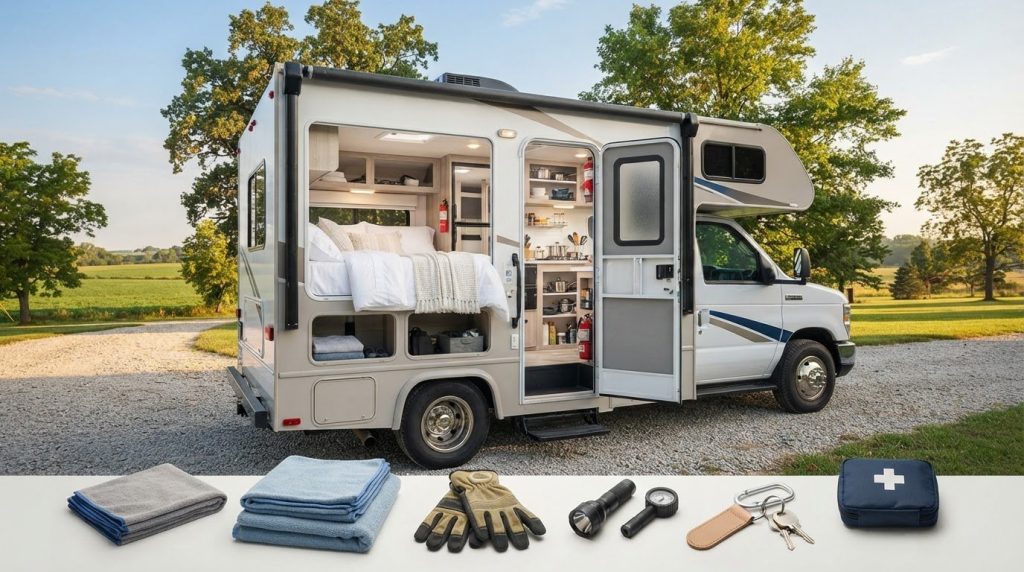
A quick clean won’t cover everything guests need for a smooth RV trip. If you’re asking, “how to prepare my RV for renters,” start with a repeatable handoff system that covers the details before pickup and return.
It’s understandable to wonder what guests expect, which items to leave onboard, and how to prevent mix-ups about the RV’s condition. A clear routine helps you get the vehicle clean, safe, stocked, and ready to explain without scrambling before each booking.
This checklist covers the key steps: checking safety essentials, cleaning and restocking, documenting the RV’s condition, and showing renters how its main features work. You’ll also find ways to make pickup and return instructions clear, so guests know what to expect and what’s expected of them.
If managing each booking takes more time than you want to spend, RV owners can list through Troyer’s rental platform and use its rental-management support. Whether you prepare each handoff yourself or have help managing rentals, a dependable checklist makes the process easier to repeat.
Key Takeaways
- Use a repeatable readiness check so every guest receives an RV that’s clean, safe, and clear to use.
- Document the RV’s condition before each booking to create a useful record of existing wear.
- Build a simple turnover routine for cleaning, supplies, and guest instructions without making optional extras feel essential.
- Plan pickup, delivery, and return details ahead of time to make the handoff easier for you and your renters.
- Learn how to prepare my RV for renters while weighing self-management against rental support for coordination.
How to Prepare Your RV for Renters: Start with Guest Readiness
Your goal is simple: hand over an RV that’s clean, safe to use, easy to understand, and ready for the trip. A repeatable checklist helps you meet that standard without relying on a last-minute walkthrough or memory alone.
Renter readiness brings together the RV’s condition, cleanliness, working features, and clear instructions. A Recreational vehicle can have different layouts and amenities, so don’t assume guests will know how yours works. Explain the features they’ll use and make essential items easy to find. If you’re working out how to prepare my RV for renters, think beyond tidying up: guests also need accurate information and a confident handoff.
What renters need from a ready-to-use RV
Start with a comfortable, clean living space. Make sure guests can locate basic supplies and understand how to use the appliances, hookups, and other features included with the rental. Short written instructions, paired with a clear in-person walkthrough, can prevent confusion once guests are on the road.
Keep your listing details and photos honest. Show the RV as it is, including noticeable wear, and describe its features accurately. Clear expectations help guests arrive prepared and give you a shared reference for the handoff.
What to check before setting a rental date
Take a fresh look at the RV before opening dates for booking. Check its visible condition inside and out, and note anything that needs attention. If you spot a concern involving the engine, brakes, tires, or another mechanical system, pause the rental plan and have a qualified professional assess it. Owner preparation covers readiness and communication, not mechanical repair.
Also consider whether you can complete the cleaning, restocking, documentation, and guest walkthrough before pickup. In Millersburg and elsewhere in Ohio, seasonal conditions can affect the routine: pollen, wet weather, and muddy surroundings may mean the RV needs additional cleaning before guests arrive. Leave enough time to prepare it properly.
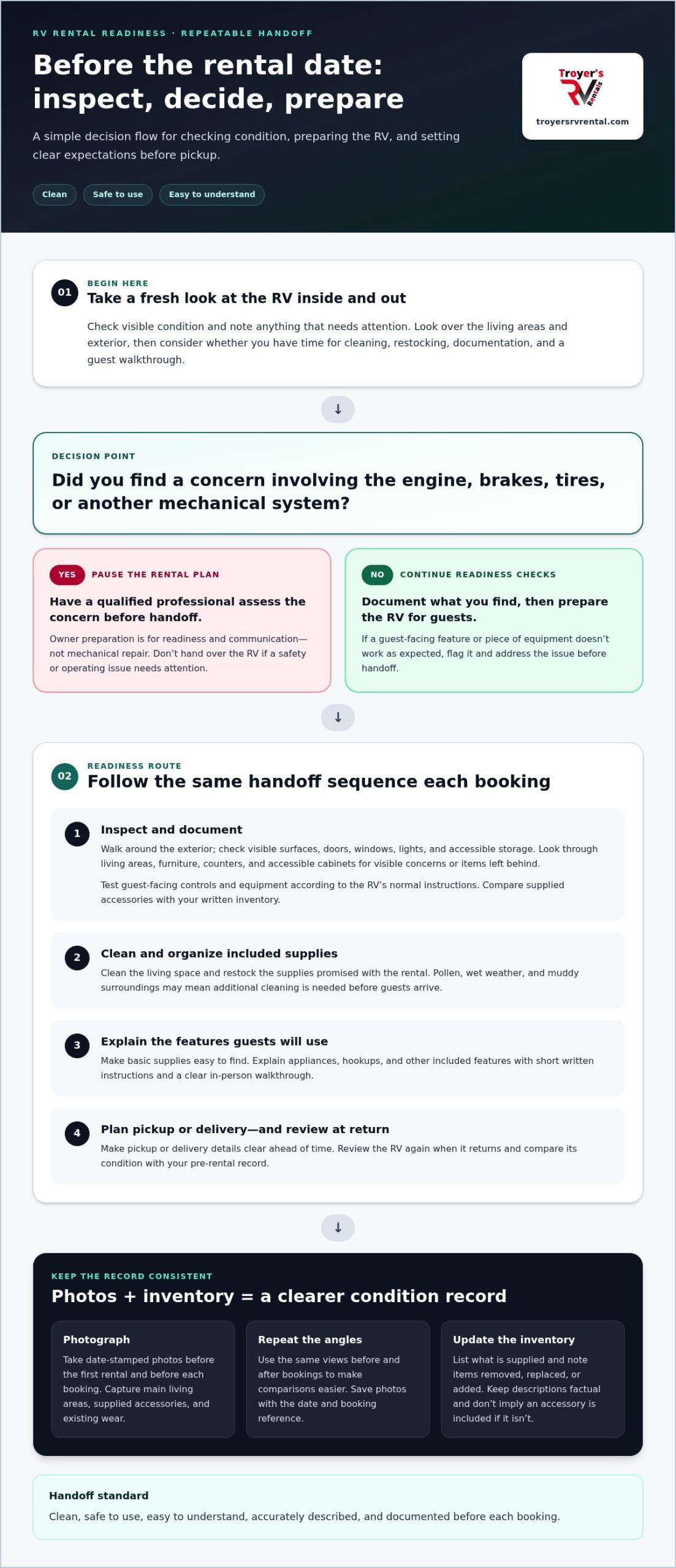
Use this guide as a simple sequence:
- Inspect the RV and document its condition.
- Clean the living areas and organize included supplies.
- Explain key features and share useful instructions.
- Plan pickup or delivery, then review the RV again at return.
With the guest’s experience in mind, each step has a purpose. The sections ahead turn that sequence into a practical routine you can repeat for each booking.
Inspect and Document Your RV Before the First Rental
A consistent inspection gives you a clear picture of the RV’s condition before guests arrive. It also creates a useful record to compare against after the return. Treat this as a visual readiness routine, not a substitute for professional servicing or a mechanical inspection.
A repeatable walk-around inspection
Follow the same route each time so small details are less likely to slip through. Note concerns as you find them, and don’t hand over the RV if a safety or operating issue needs attention.
- Walk around the exterior. Look over visible surfaces, doors, windows, lights, and accessible exterior storage. Note existing marks or anything that appears damaged or out of place.
- Check the living areas. Look across floors, walls, furniture, and counters. Open accessible cabinets and storage compartments to check for visible concerns or items left behind.
- Try guest-facing features. Test the controls and equipment guests are expected to use, following the RV’s normal operating instructions. Record what you checked and flag anything that doesn’t work as expected.
- Review included equipment. Compare supplied accessories and essentials against your written inventory. Make sure the list reflects what is actually onboard.
- Address concerns before handoff. Arrange qualified professional attention for issues that affect safe operation or require mechanical expertise. The National Highway Traffic Safety Administration also provides a way to report a vehicle safety problem.
Use photos and an inventory to keep records clear
Take date-stamped photos before the first rental and again before each booking. Capture the main living areas, supplied accessories, and any existing wear, such as a scuff on a cabinet or a mark near a doorway. Use the same angles before and after bookings to make comparisons easier.
Pair the photos with a simple inventory. List what’s supplied and note changes between rentals, such as an item that was removed, replaced, or added. Keep the wording factual. If an accessory isn’t included, don’t imply that it comes with the RV.
- Save photos with the date and booking reference.
- Record visible condition without guessing how or when a mark occurred.
- Update the inventory whenever the included items change.
This record makes the handoff clearer for both sides. If you’re listing your RV for rent, organized photos and accurate details also help present its actual condition to prospective renters.
Clean, Stock, and Explain the RV Without Overcomplicating Turnover
A simple turnover routine is easier to repeat than a long list of extras. Focus first on the cleaning and supplies promised for the rental. Treat optional comforts as a separate choice, not an expectation every guest should have. That distinction helps you set accurate expectations and reset the RV between bookings.
A practical cleaning and restocking routine
Work through the RV room by room, following the same order after each trip. Clean high-touch surfaces such as handles, switches, and counters. Then check kitchen and bathroom areas, floors, linens, and waste. Remove rubbish and leave the living space tidy. Use the written inventory to confirm which kitchen, bathroom, and bedding items belong onboard for that specific booking.
Before guests arrive, remove personal belongings and secure any owner-only storage. A clear boundary helps renters know what they can use and what should stay untouched. Match supplies to the RV, booking terms, and trip style rather than relying on a one-size-fits-all kit.
- Essential supplied items: List only the items included with the rental, such as specified linens or kitchen basics.
- Optional extras: Note add-ons you choose to provide, such as outdoor seating or extra comfort items.
Keep these categories clear in your listing and handoff. If an item changes, update the inventory so the next guest isn’t expecting something that’s no longer onboard.
Make the RV easier to use with clear instructions
Write short, plain-language directions for the controls and everyday equipment guests will use. Tailor them to your RV. Explain where essentials are stored, how to use features included with the rental, and what you’d like guests to do before returning it. Avoid generic instructions that may not match the vehicle’s actual setup.
A quick walkthrough can reinforce the written guide. Point out key items and let renters follow along, especially if a control or feature may be unfamiliar. For broader background on RV safety standards, owners can consult the NFPA 1192 Standard on Recreational Vehicles. Keep guest directions specific to the RV and its operating instructions.
A practical answer to how to prepare my RV for renters isn’t about filling every cabinet or adding every possible amenity. It’s about a clean reset, an accurate supply list, and guidance that helps guests use what’s actually there.
Create a Smooth Ohio RV Rental Handoff and Return Process
A good handoff gives renters a clear start and gives you a consistent way to check the RV back in. Write down the steps once, then use the same sequence for each booking. Include the agreed pickup or delivery plan, the RV’s location, access details, and a clear way for renters to reach you with questions during the rental period.
Walk renters through the RV before departure
Allow enough time for a calm walkthrough, especially for a first-time RV renter. Demonstrate the essential controls and point out where the instructions and included supplies are stored. Invite renters to look over the RV with you, ask questions, and mention any marks they notice before leaving. Record those observations in the handoff notes.
For a Millersburg or wider Holmes County handoff, make arrival details specific. Share the pickup location and access instructions in writing, or explain the agreed delivery and setup arrangement so guests know where to meet the RV and what to expect. Record the condition, included items, and key operating guidance covered during the walkthrough.
Make the return and reset routine just as clear
Don’t leave return expectations until the last day. Give renters simple written directions in advance, including the agreed return location and the steps you expect them to follow. Keep the guidance consistent with your rental terms and the RV’s actual setup.
At return, review the RV’s condition and included items against the handoff record. Take updated photos from the same viewpoints used before the booking, and note any differences factually. Then reset the RV using your cleaning, inventory, and readiness checklist before the next guest arrives.
- Before pickup: Confirm location, access, timing, and the planned handoff.
- At departure: Walk through key features, review the condition, and record included items.
- During the trip: Give renters one agreed method for raising questions, such as a designated phone number or messaging channel.
- At return: Review condition and supplies, document changes, and begin the reset.
These steps make how to prepare my RV for renters part of a dependable process, not a rushed exchange. Troyer’s RV Rental provides RV delivery and setup, and manages listings for owners who rent through its platform. Explore RV rental management.
Choose a Manageable Preparation Plan and Decide When Rental Support Helps
A reliable preparation checklist makes rentals easier to repeat, but you’ll also need a plan for coordinating bookings and guest handoffs. Decide how much time you can set aside for each rental and how involved you want to be. Choose an approach you can manage consistently, even when bookings overlap or schedules get busy.
Self-managing rentals versus using rental management
Managing rentals yourself gives you direct control over the schedule, guest communication, preparation, and handoff. It also means coordinating each step yourself, from keeping listing details current to arranging pickup or delivery and preparing for the next booking. Consider the full routine, not just the time spent cleaning.
Rental management can organize the process when repeated bookings make coordination difficult or you want less day-to-day involvement. Troyer’s RV Rental lists and manages third-party-owned RVs through its rental platform. Understand the arrangement and which decisions remain yours. Management is a way to approach the work, not a promise of rental income.
Either way, keep information about your RV accurate and rental expectations clear. Align the description, photos, included items, and operating instructions with the vehicle guests will receive. Be clear about pickup or delivery arrangements and the return process. A preparation routine only works if the details shared with renters are dependable.
Next steps for Ohio RV owners
If you’re weighing whether support could make ownership easier, The Top Benefits of RV Rental Management in Ohio: Turn Your Camper into Income offers another angle to consider. Troyer’s RV Rental serves travelers in Ohio, including Holmes County locations in Millersburg and New Concord, and gives owners a way to list an RV through its rental platform.
Before choosing your approach, review the routine you’ve built: Can you keep the RV ready, coordinate each handoff, and maintain accurate rental information? If so, self-management may suit your schedule. If coordinating bookings takes more time than you want to give, rental management can help with the process. Either way, a consistent checklist helps you offer guests a clearer, more comfortable start to their trip.
Explore RV rental options with Troyer’s RV Rental.
Make Your Next Rental Easier to Prepare
A dependable routine turns rental preparation into manageable steps. Inspect and document the RV before each booking, then follow a simple cleaning and inventory checklist. Clear instructions and a calm handoff help guests understand what’s included and how to use the vehicle.
If you’re still wondering how to prepare my RV for renters, start with the essentials: accurate condition records, a clean and organized space, and clear pickup and return expectations. Repeat the same process each time, and update your checklist when the RV or its included items change.
Troyer’s RV Rental serves travelers in Ohio, including Holmes County, and RV owners can list their vehicles through its rental platform. If you’re considering renting your RV, explore RV rental options with Troyer’s RV Rental. With a practical plan in place, you can welcome guests with greater confidence and make each handoff more straightforward.
Frequently Asked Questions
What should I check before renting out my RV for the first time?
Before your first rental, check the RV’s visible condition, cleanliness, guest-facing features, and included equipment. Walk through the exterior, living areas, and accessible storage, then test controls renters are expected to use. Photograph existing wear, create an accurate inventory, and prepare clear operating instructions. If you find a safety or mechanical concern, have a qualified professional address it before offering the RV. Set aside time for a complete renter walkthrough, too.
How do I clean an RV between renters?
Clean the RV room by room using the same sequence after each booking. Wipe high-touch surfaces, tidy kitchen and bathroom areas, clean floors, refresh linens if included, and remove rubbish and waste. Check cabinets and storage for items left behind, then compare supplies with your inventory. Keep personal belongings out of guest areas and secure owner-only storage. A consistent reset checklist helps you prepare the RV for the next pickup without relying on memory.
What should I include in an RV rental handoff?
Include a condition record, an inventory of supplied items, and plain-language directions for the features renters will use. Walk through essential controls and show where instructions and supplies are stored. Confirm the pickup or delivery plan, RV location, access details, and return expectations in writing. Give renters one agreed way to raise questions during the rental period. For a Millersburg handoff, clear meeting and access details help guests arrive ready to start their trip.
Should I stock food, linens, or kitchen supplies in a rental RV?
Stock only what you’ve chosen to include and clearly describe it in the rental details. Linens or basic kitchen supplies may be useful, but they aren’t universal expectations. Match your choices to the RV, trip style, and booking terms. List included items separately from optional extras, then check them before every handoff. Avoid leaving food unless it’s specifically part of your plan, and remove perishable items between bookings so the next guest knows what to expect.
How can I document existing damage before renters pick up my RV?
Take date-stamped photos before each booking, including the main living areas, supplied accessories, and visible marks on interior and exterior surfaces. Use the same angles each time so you can compare the RV before and after a rental. Add concise, factual notes about existing wear and record the included items. Review the documentation with renters at pickup and invite them to point out anything they notice before departure. Keep the records together by booking.
Can I rent out my RV if I do not have time to manage every handoff?
You can list your RV through Troyer’s RV Rental platform, which manages third-party-owned RV listings for travelers in Ohio, including the Millersburg area. Before listing, make sure your RV information, photos, included items, and rental expectations are accurate. Rental management helps organize the process, but it doesn’t promise income or remove the need for clear owner decisions.
How do I prepare an RV for renters in Ohio during colder weather?
In colder Ohio weather, plan your turnover around the forecast and check the RV’s condition before confirming a handoff. Make sure the guest instructions reflect the vehicle’s actual equipment and explain any weather-related steps renters need to follow. If the RV’s plumbing or other systems need winter preparation, use the manufacturer’s guidance and consult a qualified professional for technical concerns. Allow extra time for cleaning and inspection if wet or muddy conditions affect the RV or its access area.