

A bigger audience isn’t always the better fit for your RV. The benefits of listing my RV on a local platform can include reaching travelers nearby and finding a rental arrangement that suits your needs. But local visibility doesn’t guarantee bookings. The right choice depends on regional demand, your RV’s availability, and how much of the rental process you want to handle.
It’s reasonable to wonder whether local renters will find your RV, what responsibilities you’ll have, and how a local option compares with a national marketplace. National platforms can reach renters across a wider area, while a local rental business can connect your RV with regional travelers. The details of listing, rental management, fees, and your responsibilities matter just as much as reach.
This guide explains what local reach could mean for your RV, compares local and national approaches, and outlines what to review before listing. Troyer’s RV Rental serves Ohio travelers from Millersburg and New Concord, and gives RV owners a way to list their vehicles through its rental operation. Use these points to decide whether a local arrangement fits your vehicle, schedule, and expectations.
Key Takeaways
- The benefits of listing my RV on a local platform depend on regional demand and how well the rental approach fits your needs.
- Compare a local focus with a national marketplace’s broader reach, and weigh how involved you want to be in rentals.
- Before listing, consider your RV’s availability, your goals, and the rental and management terms, including any fees or commissions.
- Troyer’s RV Rental serves Ohio travelers from locations in Millersburg and New Concord, and lets owners list RVs through its rental operation.
What does listing your RV on a local platform mean?
A local RV platform is a rental operation that connects RV owners and travelers within a specific region. Unlike a national marketplace designed to reach renters across a broad area, a local operation focuses on a nearby market. Troyer’s RV Rental serves Ohio travelers from locations in Millersburg and New Concord.
This kind of arrangement is part of the sharing economy: an owner makes a personal asset available for others to use. Listing through a rental business is different from simply placing an ad. An ad promotes an RV for rent, while a rental business can include the vehicle in its rental offering and manage listings for owners. The specific services, fees, and owner responsibilities are set by the rental arrangement.
How does a local RV listing work?
An owner makes an RV available through a regional rental business, which can list and manage the vehicle as part of its rental operation. Before listing, understand what the arrangement covers and which responsibilities remain yours. Review the rental process, how payments and any management commissions work, and any costs that apply. Don’t assume that a business handles bookings, handovers, cleaning, insurance, or maintenance unless those responsibilities are included in the terms.
Who might benefit from a local listing?
A local listing may suit owners whose RV sits unused during part of the year and who are open to sharing it with travelers exploring Ohio. A regional rental operation offers a locally focused route compared with advertising on your own, but local focus alone doesn’t promise bookings. The benefits of listing my RV on a local platform depend on whether its rental approach fits your circumstances.
Start with your own plans. Think about when you use your RV, how much time you can set aside for renting, and what you hope to gain. You may be comfortable making your vehicle available during quieter months. Or you may prefer to keep it close at hand and stay closely involved whenever it’s rented. Compare your calendar, responsibilities, and income goals with the listing terms before deciding.
Benefits of listing your RV locally: regional fit and a simpler path to renters
A regional rental operation may give your RV a path to travelers looking for a trip in or around the area it serves. For owners near Millersburg, that means considering an Ohio rental context rather than relying only on a listing designed to reach people across a much wider market. Troyer’s RV Rental serves travelers from locations in Holmes County, including Millersburg, and in New Concord.
Local context can make nearby travel more relevant to renters exploring Ohio. It can also give you a single rental business and arrangement to evaluate, rather than a broad marketplace with its own platform rules and processes. That doesn’t necessarily mean fewer steps or less owner involvement. Compare the actual listing and management terms, and be clear on what you’ll need to do.
Local renter demand and regional context
Ohio travelers may be looking for a motorhome or camper for a local getaway or a longer trip. A regional rental operation can connect its RV offerings with people planning travel in the area it serves. Still, no location guarantees demand. Interest in a particular RV can depend on the season, where it’s based, its type, and when it’s available.
Consider your calendar alongside the location. If you use your RV during the same periods travelers are seeking rentals, your available dates may be limited. A local listing may be worth exploring if your schedule leaves room for renters, but it shouldn’t be treated as a promise of bookings or income. Start by identifying the dates you could genuinely offer, then consider whether that availability makes the arrangement practical for you.
A local option alongside national marketplaces
National marketplaces promote broad reach and can put listings in front of travelers beyond one region. A local rental operation has a narrower focus, which may appeal if you’d rather consider an arrangement centered on nearby Ohio travelers. Neither approach is automatically the better fit. Platform size alone can’t tell you how well a listing suits your RV, schedule, or preferred level of involvement.
Research on peer-to-peer rental models, including this sharing economy research, offers broader context for making personal assets available to others. For your decision, focus on the specific listing and management terms. Compare responsibilities, payment arrangements, commissions, and protections without assuming different platforms provide equivalent services.
A local listing may connect your RV with regional travelers and offer a focused rental-business relationship, but results depend on fit, timing, and agreed terms. If you’re weighing that approach in Holmes County, take a look at Troyer’s RV listing option as one local route to consider.
Local RV platform vs. national marketplace: what should owners weigh?
A national marketplace may offer a broader audience, while a local rental operation focuses on a particular region. That difference matters, but audience size alone won’t tell you which option fits. Consider where your RV is based, when you can rent it out, and how involved you want to be. Listing and management terms can shape the experience just as much as reach.
| What to compare | Local rental operation | National marketplace |
|---|---|---|
| Focus | Travelers and rentals in a specific region | Travelers searching across a wider area |
| Reach | More geographically focused visibility | Potential exposure to a broader audience |
| Owner involvement | Depends on the business and agreed arrangement | Depends on the platform’s process and owner responsibilities |
| Management terms | Set by the specific rental arrangement | Set by the platform’s policies and terms |
This is a general comparison, not a promise about what any one provider includes. Protections and services vary by platform and arrangement. Compare the written terms instead of assuming a local operation and a national marketplace offer the same coverage, support, or rental process.
Does a local platform have enough reach?
Reach and relevance are different. A national marketplace may present an RV to a wider pool of renters, while a local option may suit owners who want to participate in a regional rental operation. Neither guarantees inquiries or completed rentals. Demand can vary with location, season, RV type, and available dates, so consider the travelers your RV could realistically serve and whether its location and availability fit their plans.
How do management terms affect the comparison?
Read the arrangement before listing. Understand who handles each rental step, what responsibilities remain yours, how payments work, and what process renters follow. Check how any management commission is calculated and whether other costs apply. Your obligations depend on the specific terms, so avoid relying on assumptions about what “managed” means. For more context on the local approach, explore RV rental management in Ohio.
The benefits of listing my RV on a local platform depend on the fit between your vehicle, location, rental goals, and preferred level of involvement. Compare the actual terms and reach of each option, then choose the approach that makes sense for your situation.
How to decide if listing your RV on a local platform is right for you
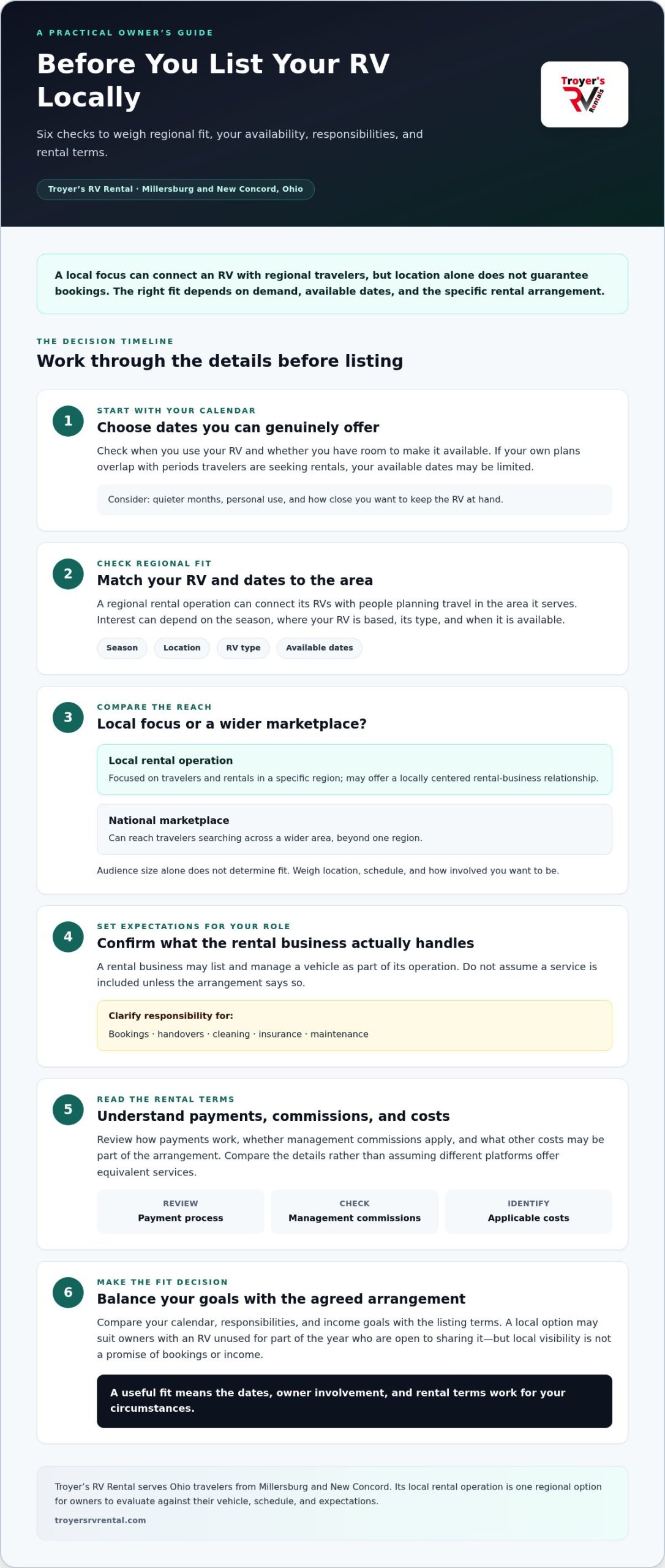
A good decision starts with your own plans, not a promise of bookings. The benefits of listing my RV on a local platform depend on whether the arrangement fits your RV, schedule, and goals. Use this sequence to assess the fit:
- Define your goal. Decide whether you’re interested in earning from time your RV isn’t in use, reducing your role in rental tasks, or something else.
- Check your availability. Compare potential rental dates with the times you want the RV for yourself, including seasonal plans.
- Compare the terms. Review responsibilities, rental steps, payment terms, any management commission, and the protections or services described in the arrangement.
- Choose the right fit. Consider whether a regional operation or a broader marketplace better matches your RV’s location and your preferred level of involvement.
Check your RV, schedule, and rental goals
Start with a realistic look at your RV’s current condition and readiness to be rented. Then check your personal-use calendar. If you rely on it for trips during popular travel periods, you may have fewer dates to offer. If it often sits unused, you may have more flexibility, though that doesn’t guarantee renters will book it.
Be clear about your priorities. You might be comfortable handling more rental tasks to stay involved, or you may value a management arrangement that defines a different division of responsibilities. Your income goals matter, too, but rental income and booking frequency aren’t guaranteed. Consider the potential proceeds after any commission or other costs described in the arrangement, rather than focusing on rental income alone.
Review the listing arrangement before you commit
Read the terms carefully and make sure you understand how the listing and rental process works. Look for clear descriptions of:
- Which rental tasks the business handles and which remain your responsibility
- How renter communication and the handover process are managed
- How payments are calculated and made, including any management commission or other costs
- What protections or services apply to the arrangement
Details vary by rental arrangement, so don’t assume that a listing includes a particular service or protection. If you’re weighing an Ohio motorhome listing, consider how the vehicle’s location, type, and available dates align with the rental operation’s regional focus. Match the terms with your schedule and comfort level before deciding.
If a local listing feels like a fit, explore listing your RV with Troyer’s as a local Ohio rental option.
List your RV with Troyer’s: a local Ohio rental option
If you’re weighing a regional rental arrangement, Troyer’s RV Rental offers an option rooted in Holmes County. The business serves Ohio travelers from locations in Millersburg and New Concord, and RV owners can list their vehicles through its rental operation. Its motorhome and camper rentals are part of that local Ohio context.
A local connection may be a good fit if you want to consider renters traveling in the region rather than relying only on a national marketplace. It isn’t a promise of bookings or earnings. The right choice still depends on your RV, its availability, the responsibilities you’re comfortable taking on, and the terms of the rental arrangement.
Why consider a local Holmes County rental operation?
A regional business gives owners a way to explore listing an RV within a rental operation serving Ohio travelers. For an owner near Millersburg, that makes local reach a practical part of the decision. Think about whether your RV and schedule match the rental opportunity, and how the arrangement fits your expectations. A local focus can be relevant without guaranteeing demand.
Take the next step toward listing your RV
Before making a decision, bring together the factors covered in this guide: whether the arrangement suits your goals, when your RV is available, what responsibilities you’ll have, and how the listing and rental management terms work. Read the details carefully so you understand the process and your role. Rental frequency and income can vary, so consider listing as an option, not a guaranteed result.
If a local Ohio rental operation sounds right for your situation, explore listing your RV with Troyer’s.
Choose a Rental Path That Fits Your RV
The benefits of listing my RV on a local platform come down to fit: the regional audience, your available dates, and how much rental involvement feels right for you. A national marketplace may offer broader reach, while a local rental operation can provide a region-focused option. Either way, review the arrangement carefully. Understand your responsibilities, the rental process, and payment terms, and remember that bookings and income aren’t guaranteed.
Troyer’s RV Rental serves Ohio travelers from locations in Holmes County, including Millersburg, and in New Concord. RV owners can list vehicles through its rental operation. If you’re considering a local option, review how the listing arrangement could fit your RV and schedule.
Explore listing your RV with Troyer’s and see whether a local rental path feels right for you. Your RV could be part of someone else’s next Ohio adventure!
Frequently Asked Questions
What are the benefits of listing my RV on a local platform?
The benefits of listing my RV on a local platform may include reaching travelers looking for rentals in the region and having a focused rental-business relationship. A local context can make nearby travel relevant, but it doesn’t guarantee renter interest. Consider whether the platform’s location, rental process, management terms, and expected owner involvement fit your RV and schedule before deciding.
Is it better to list my RV locally or on a national marketplace?
Neither option is always better. A national marketplace may offer exposure across a wider area, while a local rental operation focuses on a particular region. Compare how each option fits your RV’s location, available dates, and the responsibilities and terms involved. A larger audience doesn’t guarantee bookings, and a regional focus doesn’t guarantee a better fit. Choose based on your goals and the actual arrangement.
Can I make money by listing my RV with a local rental company?
You may earn rental income if your RV is booked, but neither income nor booking frequency is guaranteed. Results depend on factors such as demand, season, location, RV type, and availability, as well as the terms of your listing arrangement. Understand how payments work and what costs or responsibilities apply to you. Treat potential income as one factor, not a promised result.
How does listing my RV with Troyer’s work?
RV owners can list vehicles through Troyer’s RV Rental’s rental operation. Troyer’s serves Ohio travelers from locations in Millersburg and New Concord. Its rental operation includes motorhomes and campers. Listing and rental management follow the agreed arrangement, so understand the process, responsibilities, and payment terms that apply. This local option connects an owner’s RV with a regional rental business, not a national marketplace.
What should I consider before renting out my RV?
Review your RV’s readiness, your personal-use calendar, and the dates you’re comfortable making it available. Be realistic about the time and tasks you can take on. Then read the listing terms, including owner duties, rental steps, communication, payments, and any protections or services described. These details vary by arrangement. Also consider your goals and remember that demand and bookings can change with location, season, and RV type.
Does a local RV rental platform guarantee bookings?
No. A local listing can make an RV part of a regional rental operation, but it can’t guarantee renter inquiries or completed bookings. Demand may vary based on the season, the RV’s location and type, and the dates it’s available. Consider local reach as one possible advantage, not a promise of utilization or income. Review the arrangement and decide whether it suits your expectations even if bookings vary.
What is the difference between listing an RV and RV rental management?
Listing makes an RV available within a rental business’s offering. Rental management refers to the business’s role in managing and listing owner-provided RVs through its rental platform. The two may be connected, but a listing alone doesn’t define who handles bookings, renter communication, handovers, or other tasks. Read the arrangement closely so you know which responsibilities belong to you and which are included in the management relationship.