
Packages can be harder to receive on the road than letters. A practical plan for mail and package delivery for long-term RV renters can combine USPS General Delivery for USPS mail with a separate address for other carriers, since UPS and FedEx packages cannot go to General Delivery. Campgrounds may accept deliveries, but policies vary.
It’s natural to want one simple address for everything. In practice, the right setup depends on how long you’ll stay in one area, which carrier is handling the package, and whether you need to collect sensitive mail in person.
Learn how to choose a mail-forwarding option, handle USPS mail while traveling, and plan package deliveries to an RV park or campground. You’ll also see when a local P.O. box or a trusted person’s address can make things easier, so important mail keeps moving without interrupting your trip.
Key Takeaways
- Choose a mail forwarding option based on whether you need scans, physical mail forwarded, or the ability to discard unwanted items.
- Separate your mailing address from your physical address, since some personal and official needs may require a physical location.
- Plan campground deliveries around the park’s process, including whether packages go to the office or directly to your site.
- Match the delivery method to the carrier, and use a trusted person or forwarding service as a backup when you’re on the move.
1. Choosing a mail forwarding provider
Start by deciding what you need to receive. A virtual mailbox may scan incoming mail and email you images, or collect and forward the original pieces. Some services let you choose whether to open and scan each item, discard it, or send it onward. If you mainly need to keep up with bills, digital statements can reduce the paper sent to your mailing address.
Next, compare the service options with your travel routine. If you need original documents, choose an option that forwards physical mail to an address where you can collect it. If a trusted friend can receive mail, ask whether they’re willing to sort it and forward important items as your route changes. DMAchoice offers a way to reduce offers from companies you don’t have a business relationship with; registration has a small fee.
A local P.O. box is another option if you’ll stay near one town. P.O. boxes are commonly rented for 6–12 months, so consider whether you can return often enough to collect mail. A small-town post office may also be easier to reach with an RV than a busy location. Choose based on where you’ll park, how you’ll collect items, and whether you need mail forwarded beyond that area.
Choose your RV size based on the people, gear, and campsite you’ll use. A couple bringing fishing gear may prioritize storage and a manageable campsite footprint, while a family may need more sleeping and shared living space. Think about where you’ll park before choosing a larger vehicle. A wider or longer RV can limit which campsites suit your trip, while a smaller model may leave less room for luggage. Match the vehicle to your route and daily needs, then choose a mailing setup that can keep up with changing stops.
2. How Do Full-Time RVers Get Their Mail and Packages?
Private and virtual mailboxes can receive mail on an ongoing basis, but they don’t automatically replace a physical address. A mailing address works for correspondence, while some tasks also require a physical location. Banking, taxes, voting, and vehicle registration may require a physical address. Keep those roles separate when choosing a permanent mailing setup.
A P.O. box is a mailing address, not a physical one. It can’t be listed as the address on a driver’s license, passport, voter registration, or employer file. Before leaving, identify which accounts need a mailing address and which records require a physical address. That distinction matters even if a mailbox service can receive and forward your letters.
A forwarding service can help keep checks, legal notices, and other documents moving, but forwarding adds time before you receive an item. A scan is not the original document, and digital images may not show everything you need. For sensitive mail, use a local P.O. box or a trusted family member who can receive and hold the physical item. Decide how each type of mail will reach you instead of routing everything the same way.
For a trip lasting one to three months, you can ask the post office to hold your mail or request a temporary address change through USPS. Plan the change before you leave; updating your mailing address a month ahead is one practical example. If a friend or family member receives mail for you, agree on how they’ll sort it, alert you to urgent items, and forward anything you need. Keep a record of the address used for each account, then update it when your travel plans change.
3. Mail and package delivery at campgrounds and RV parks
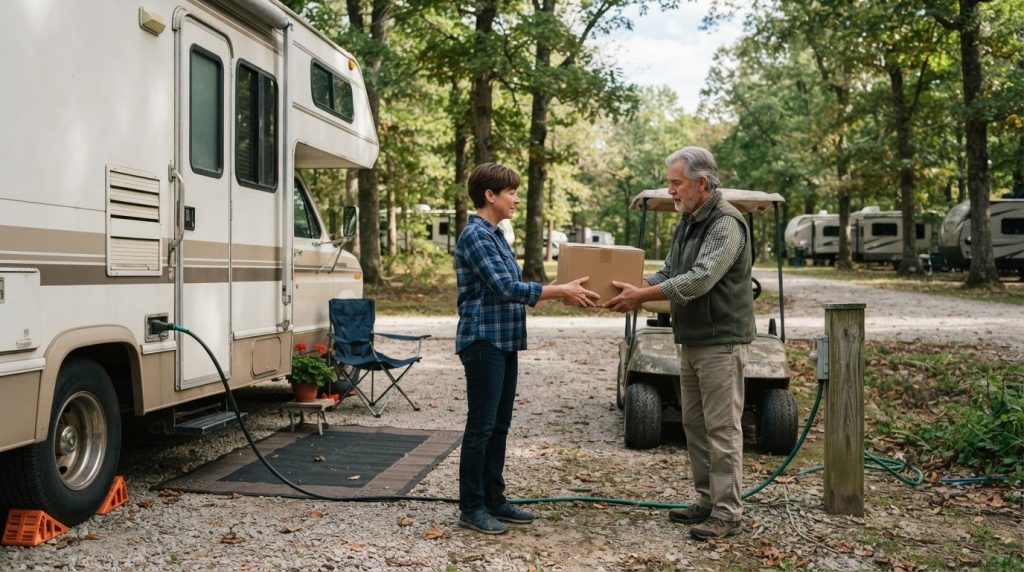
Campground delivery can work well when you’re staying put, but each location sets its own process. Some RV parks accept packages at the office; others may allow delivery directly to a campsite if you ask. Before using the address, find out where the carrier should leave the item, how staff will identify it, and where you’ll collect it. Include your name and site details as the park directs.
Don’t assume every campground accepts USPS deliveries. Some parks may allow them for long-term site rentals, while others won’t take mail. Many RV parks limit guests to one or two pieces during their stay, and policies differ. Campground delivery is therefore a better fit for a planned arrival than for a steady flow of letters. A package that arrives before you check in may also be difficult to collect.
For a weekly or monthly stay, compare nearby campgrounds by location, site terms, and delivery process before choosing where to park. A lower weekly rate may not be worthwhile if the office is far from your campsite or the park doesn’t accept parcels. Monthly RV rentals can suit travelers settling into one area, but your mailing plan should match the stay’s length and location. Keep delivery instructions with your reservation details so the driver can identify your site.
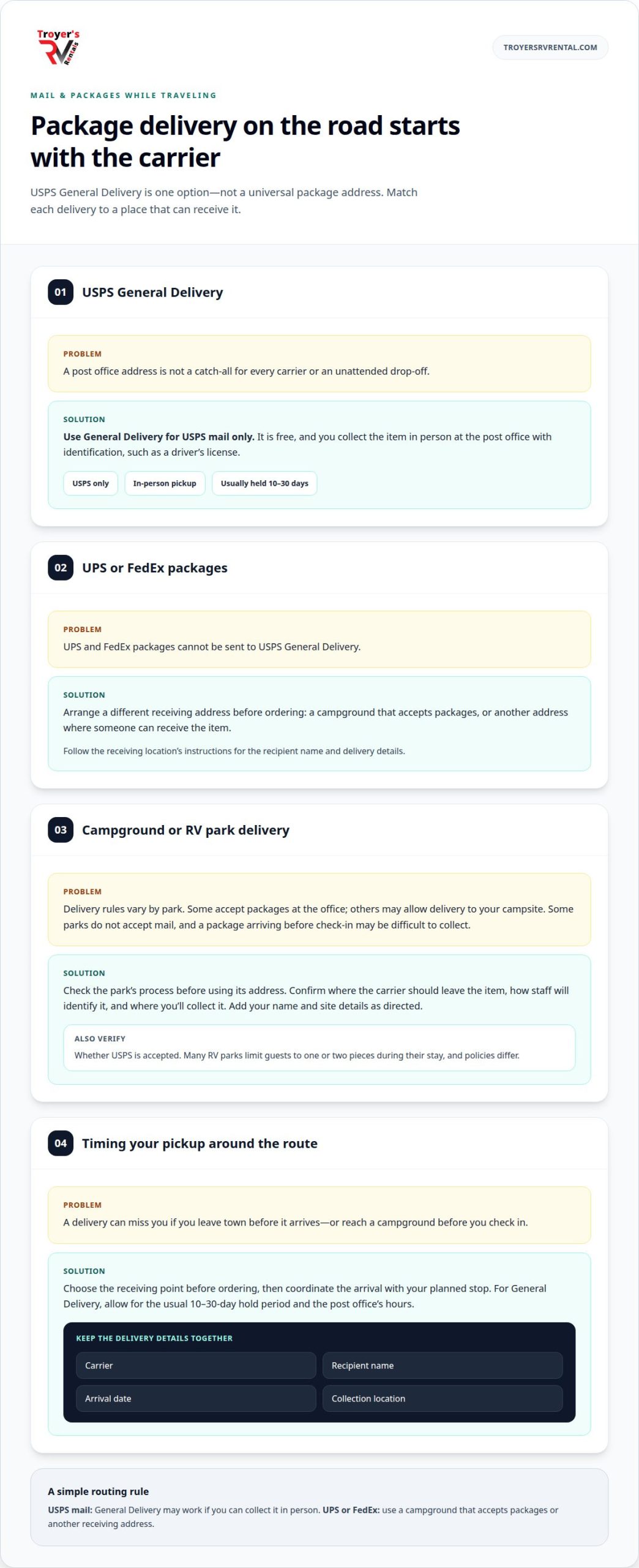
Use USPS General Delivery as a separate option for USPS mail, not as an assumed campground service. It lets travelers receive mail at a post office, while UPS and FedEx packages cannot be sent there. If a campground accepts packages, follow its instructions for those carriers. If it doesn’t, arrange another receiving address before ordering. A simple note with the carrier, recipient name, arrival date, and collection location can help prevent confusion during a long stay.
4. Receiving packages while traveling
During RV travel, choose a receiving point before ordering each package. USPS General Delivery is free and works only for USPS mail. You must collect items in person at the post office, using identification such as a driver’s license. Mail is usually held for 10–30 days, so plan collection around your route and the post office’s hours. Avoid sending an item to a town you may leave before it arrives.
Start with the carrier. USPS shipments can go through General Delivery, but UPS and FedEx packages cannot be sent there. For those carriers, arrange delivery to a campground that accepts packages or use another address where someone can receive the item. Provide the recipient name and delivery location exactly as requested, then coordinate the arrival with your stop. This matters during a long rental, when even a small route change can leave you separated from an expected parcel.
For an RV trip lasting six months to a year, a trusted friend or family member can receive and forward mail if they’re willing. Agree on how they’ll handle parcels, urgent notices, and items that need to stay sealed. Review forwarded mail with them about once a month. Regular check-ins help you spot shipments that need action while they’re still within the delivery window.
Keep a simple delivery plan with the carrier, recipient, destination, and expected stop. For example, send a USPS package to General Delivery only when your route includes time to collect it. Use a forwarding service or trusted household as backup when your travel dates shift. If you’re planning an RV rental, build delivery stops into your route before placing orders. Plan an RV getaway around your travel route and give each parcel a dependable destination.
Troyer’s RV Rental: Motorhome Rentals
Troyer’s RV Rental offers motorhome, camper, and monthly RV rentals for trips that call for more time on the road. Once you’ve mapped out how to receive mail and packages, choose a rental that fits your travel plans. A monthly RV rental may suit an extended stay, while a motorhome or camper can work for a trip with changing stops. Consider who’s traveling, what you’ll bring, and where you expect to park. These details can help you choose a setup that supports your trip without making mail delivery the whole plan.
Keep your expected stops in mind as you decide where to receive parcels. A longer stay near one area can make a local delivery plan easier to manage. If you’ll move often, plan each receiving point before ordering items. Explore Troyer’s RV Rental options in Millersburg and contact the team to plan your next trip.
Set Up Your Next Trip With Confidence
Planning before departure can make it easier to focus on the places you want to explore. Build your delivery plan around your route, while leaving room for changes. For mail and package delivery for long-term RV renters, flexibility matters: travel plans can shift, but important letters still need a clear destination.
When you’re ready to plan the trip itself, choose the kind of getaway that fits your group and pace. Troyer’s RV Rental offers motorhome rentals, camper rentals, and fishing boat rentals for travelers planning time on the road or water. Pick the experience that suits your plans, then map out receiving points before placing orders.
Take the next step at your own pace. Explore rental options and contact Troyer’s RV Rental to start planning. With a thoughtful delivery setup and a trip that fits your plans, you can head out feeling ready for the road ahead.
Frequently Asked Questions
How Do Full-Time RVers Get Their Mail and Packages?
Full-time RVers often combine a forwarding address with delivery stops along their route. A workable plan for mail and package delivery for long-term RV renters separates USPS mail from shipments handled by other carriers. For example, arrange USPS General Delivery pickups around a planned town stop, and direct other parcels to an address that accepts that carrier. Keep a backup recipient in mind in case your route changes.
How can long-term RV renters receive mail at an RV park or campground?
Use a campground address only when its delivery process suits your stay. Before placing an order, note the correct recipient name, site details, office location, and carrier instructions. If you’re moving between parks, avoid sending parcels to a stop you might leave before delivery. For an important item, choose a destination where you can collect it promptly rather than relying on forwarding between campsites.
What mail forwarding services work best for full-time RVers?
The right option depends on whether you need digital access, original documents, or both. A virtual mailbox can suit someone who wants to review scans while traveling. A forwarding service that sends physical pieces may work better for paperwork that requires an original copy. Compare how each service handles sensitive items, unwanted mail, and forwarding requests, then choose based on the mail you expect to receive.
How much do RV mail forwarding services cost?
Costs depend on the service’s features and how often you need mail handled. Scanning, physical forwarding, storage, and postage can affect the total, as can the volume of mail you receive. Compare the full charges for your expected use, not just the basic account fee. If you rarely need paper mail, switching bills and statements to digital delivery can reduce the number of pieces to process.
Can USPS deliver packages to RV parks and campgrounds?
USPS can deliver to a campground when the park accepts deliveries and provides a usable address. Acceptance and pickup procedures vary, so follow the park’s instructions for your recipient name and location. General Delivery is different: it sends USPS items to a post office for in-person pickup, not to an RV park. Don’t use a campground address unless the park’s process supports the delivery.
How do RVers handle official mail, state residency, and vehicle registration?
Keep a dependable mailing address for correspondence, but don’t assume it serves every official purpose. A P.O. box can’t be used as the address on a driver’s license, passport, voter registration, or employer file. A physical address may be needed for banking, taxes, voting, or vehicle registration. Keep a record of which address you use for each purpose, and update it when your circumstances change.