
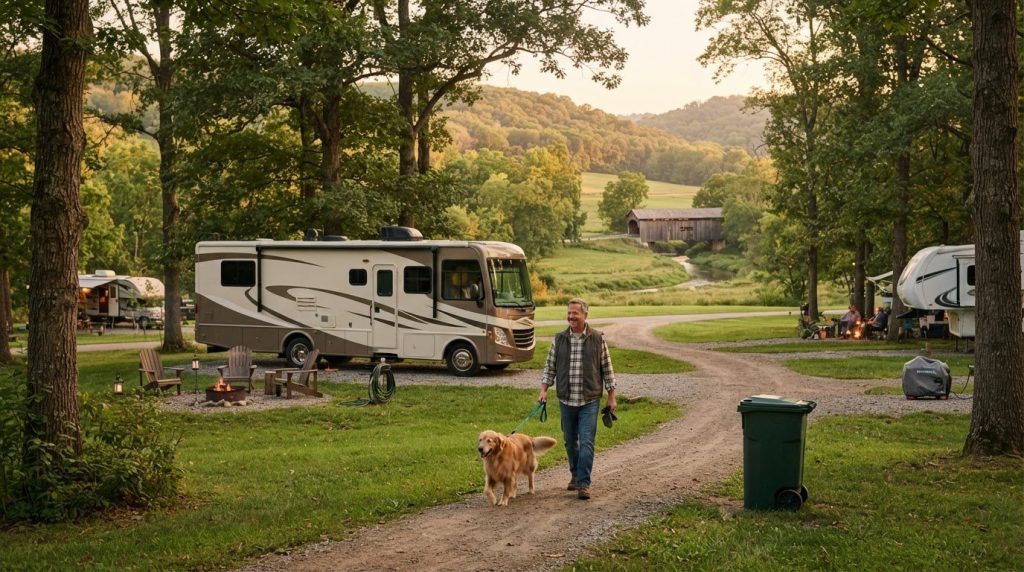
A peaceful campground depends on small, considerate choices. RV camping etiquette for beginners means keeping pets leashed in shared areas, cleaning up after them promptly, limiting generator use during peak enjoyment hours, and putting trash in designated disposal areas. Keep noise low during quiet hours, which are usually in the late evening and early morning.
It’s easy to focus on your own campsite, but nearby campers share the same outdoor space. A little consideration helps everyone relax and enjoy the stay. This guide covers practical ways to manage pets, generators, trash, outdoor lights, and nighttime noise, whether you’re settling in for a weekend or a longer trip.
Key Takeaways
- Keep pets leashed in shared areas and clean up after them promptly to help keep common spaces comfortable.
- Use your generator thoughtfully, especially during times when other campers are enjoying the outdoors.
- Put trash in designated disposal areas when available, and leave your campsite tidy for the next visitor.
- Keep noise low during campground quiet hours, which are usually in the late evening and early morning.
1. Keeping pets leashed and cleaning up after them
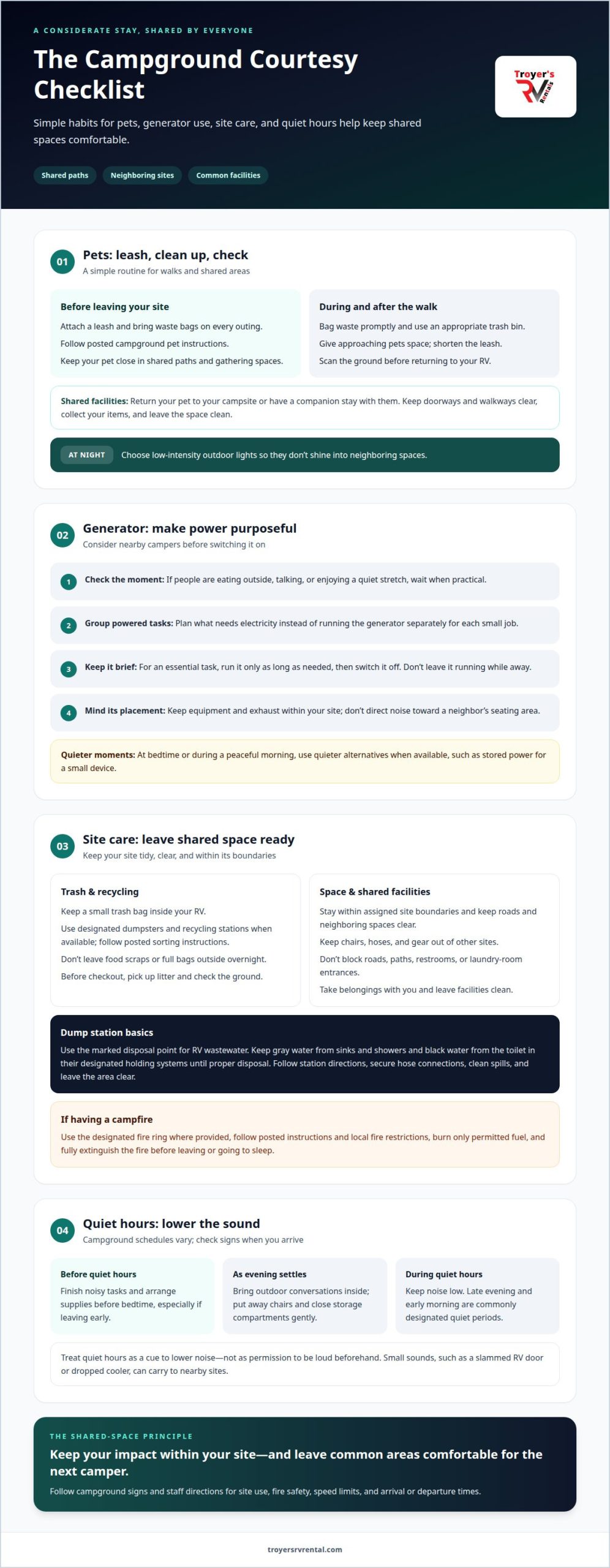
A practical starting point for RV camping etiquette for beginners is preparing before each walk. Attach your pet’s leash and bring waste bags before leaving your campsite. Keep pets leashed in communal areas, including shared paths and gathering spaces. A leash helps guide your dog past neighboring sites, children, and other animals. Keep it short enough to prevent your pet from wandering into someone else’s space, and follow posted campground pet instructions.
Pick up after your pet promptly, even when you’re only a short walk from your RV. Carry bags on every outing, including quick trips along a campground path. Bag waste as soon as your pet goes and use an appropriate trash bin. Don’t leave a bag beside a trail, tree, or campsite to collect later. Before heading back, scan the ground for anything you may have missed.
Shared bathrooms, laundry rooms, and other facilities call for extra consideration. Return your pet to your campsite before entering, or have a companion stay with them outside. Keep doorways and walkways clear. In a laundry room, collect your items when they’re ready and wipe up any mess you make. Leave the facility ready for the next camper.
Be ready for close encounters. If another dog approaches, shorten your leash and give both pets space rather than assuming they want to meet. Keep your pet beside you while passing occupied campsites. At night, choose low-intensity outdoor lights so they don’t shine into neighboring spaces. These small steps help pets and people share campground paths comfortably.
Use a simple routine: leash, bags, a short walk, prompt cleanup, and a quick check before returning. If your pet needs a break while you use a shared facility, plan ahead with a companion or return your pet to your campsite first. These habits make RV camping etiquette for beginners easier to follow and help keep common areas clean.
2. Limiting generator use
A running generator can carry across neighboring campsites, especially when outdoor spaces are quiet. Limit use during times when nearby campers are relaxing, talking, or enjoying the surroundings. Before starting it, consider whether you need power right away. If you can wait, choose a quieter time instead of adding noise to a shared moment.
Plan around your power needs. For example, group tasks that require electricity rather than running a generator separately for each small job. Switch it off when you’re finished. Keep the exhaust and equipment within your campsite, and don’t direct noise toward a neighbor’s seating area. These choices help make generator use purposeful.
Check-in, checkout, and speed-limit rules differ by campground. Follow the posted speed limit, and use the campground’s instructions for arrival and departure times so your generator use doesn’t create extra disruption.
Think about your neighbors before turning on the generator. Are people eating outside, talking nearby, or enjoying a quiet stretch of the day? If so, wait when practical. If you need power for an essential task, keep the run brief and switch the generator off as soon as the task is done. Don’t leave it running while you’re away from the campsite.
Make generator use part of your campsite routine. On arrival, identify what needs power and plan a short window for those tasks. At bedtime or during a peaceful morning, choose quieter alternatives when available, such as stored power for a small device. Don’t assume a distant site can’t hear your generator; sound can carry beyond your immediate space.
Respectful habits make shared camping more comfortable. For your next trip, plan your campground stay thoughtfully and consider how each powered task affects nearby campers.
3. Proper trash disposal and campsite cleanliness
Keep a small trash bag inside your RV, then empty it at a designated dumpster. Use campground recycling stations when available and follow posted sorting instructions. Don’t leave food scraps or full bags outside overnight, since wildlife can spread them across neighboring sites. Before checkout, walk around your site to pick up wrappers, bottles, and other litter. A quick ground check catches small items that are easy to miss.
There isn’t one universal distance between parked RVs. Stay within your assigned site boundaries, leave shared roads and neighboring spaces clear, and follow campground signs or staff directions. Don’t extend chairs, hoses, or gear into another site. If your vehicle doesn’t fit inside the marked space, reposition it instead of blocking a neighbor’s access.
For a campfire, use the designated fire ring where provided and follow posted campground instructions. Burn only permitted fuel, and check local fire restrictions before lighting a fire. Don’t collect firewood from the surrounding area unless signs allow it. Keep the fire attended and extinguish it fully before leaving the site or going to sleep.
On national or state park roads, obey posted speed limits and watch for pedestrians, cyclists, and wildlife. Drive slowly around tight turns, occupied sites, and shared facilities. Park without blocking roads, paths, restrooms, or laundry-room entrances. In bathrooms and other facilities, take your belongings with you and leave the space clean for the next visitor.
At a dump station, use the marked disposal point for RV wastewater. Gray water comes from sinks and showers; black water comes from the toilet. Keep both in their designated holding systems until proper disposal, and never release them onto the ground or into storm drains. Follow posted station directions, secure the sewer hose connections, and clean up any spills before moving on. Keep the area clear for the next RV.
4. Respecting campground quiet hours
Most campgrounds set quiet hours for late evening and early morning. These periods help campers sleep and enjoy a calmer start to the day. Read posted signs when you arrive, since each campground sets its own schedule. Treat quiet hours as a cue to lower noise, not as permission to be loud beforehand.
Before quiet hours begin, finish noisy campsite tasks. Put away chairs, close storage compartments gently, and bring outdoor conversations inside. A slammed RV door or dropped cooler can carry across nearby sites. If you’re packing for an early departure, arrange supplies before bedtime. Then you can leave with fewer lights, footsteps, and disruptions.
Keep voices low around neighboring campsites, even during daytime rest periods. Turn down music and television so sound stays inside your RV. Avoid running a generator during quiet hours; plan charging and other power needs earlier whenever possible. If children are playing, move active games away from occupied sites and shared sleeping areas.
Early mornings need the same care as late evenings. Start conversations quietly, avoid loud engine warm-ups, and close doors without banging them. If you need to walk to a restroom, aim a flashlight at the path instead of shining it into another camper’s windows. Small adjustments help neighbors stay asleep.
If noise from another site interrupts your rest, stay calm and avoid arguing campsite to campsite. Check the posted quiet-hour instructions, then contact campground staff if the disturbance continues. Describe the specific noise and location clearly. This gives staff useful details while keeping the exchange respectful.
Build a simple routine: check the quiet-hour sign, finish noisy tasks beforehand, and keep sound low overnight and early morning. These habits make it easier for families, solo travelers, and other campers to share the same campground. For your next trip, plan a camper rental and put considerate campground habits into practice.
Troyer’s RV Rental: Motorhome Rentals
Troyer’s RV Rental offers motorhome and camper rentals for travelers planning a campground stay. Choose the type of RV that suits your trip, then use the etiquette in this guide to be considerate of nearby campers. For an extended visit, monthly RV rentals can suit a longer stay. Fishing boat rentals are another option for trips that include time on the water.
Planning before departure can make campground routines easier. Decide how you’ll handle pets, campsite cleanup, quiet hours, and generator use. Pack what you need to leave shared spaces tidy, then follow the campground’s posted instructions when you arrive.
For rental details or help choosing a vehicle for your trip, contact Troyer’s RV Rental.
Make Your Next Campground Stay Count
Your next trip is a chance to put thoughtful habits into practice and enjoy the campground at a comfortable pace. Before leaving, consider what would make the stay enjoyable for everyone traveling with you. A simple plan can help you settle in, adapt to campground routines, and make room for the moments you came to enjoy.
Good RV camping etiquette for beginners isn’t about making every moment perfect. It’s about paying attention to shared spaces and adjusting when plans change. Give yourself time to get comfortable with your setup, learn the rhythm of your stop, and enjoy the scenery without rushing.
As you plan your next getaway, choose an RV rental that fits the kind of trip you have in mind. Contact Troyer’s RV Rental today to explore your options and start planning a welcoming, memorable trip.
Frequently Asked Questions
What are the basic RV campground etiquette rules for beginners?
Start by reading campground instructions and locating your assigned site before unloading. Keep your setup within its boundaries, and leave roads and facility entrances clear. Save directions and arrival details before driving near Millersburg, where unfamiliar turns can make a large vehicle harder to maneuver. These are useful starting points for RV camping etiquette for beginners, especially on a first visit.
What are quiet hours at RV parks, and how should guests handle noise?
Quiet hours are campground-designated periods, usually in the late evening and early morning. Lower voices, music, and activity during those times. If you’re arriving after dark, prepare essentials before reaching the site so you aren’t searching through storage compartments. Keep conversations away from neighboring sleeping areas, and bring group activities indoors when sound carries between campsites.
What are the rules for RV generators, air conditioners, and outdoor lights?
Follow posted campground instructions for generators, air conditioners, and lighting, since rules can differ by site. Use a generator only when needed, and switch it off after the task. For RV camping etiquette for beginners, check exterior lights from outside: if a beam reaches a neighbor’s window, redirect or dim it. Keep lighting focused on steps and walkways.
What are campground rules for pets, leashes, and cleaning up after them?
Keep pets controlled at your site and on shared paths, and leash them in communal areas. Make walks easier by keeping waste bags with the leash or in a pocket. If another animal approaches, create space instead of letting the pets rush together. Before entering a shared building, return your pet to the RV or have a companion stay with them outside.
How should RV campers handle trash, recycling, and food to avoid attracting wildlife?
Use designated dumpsters or recycling stations when available, and follow posted sorting labels. After meals, clear plates and secure leftovers inside your RV or in a closed container. Don’t leave food scraps on tables or outside overnight. If you notice a spill near your site, clean it up rather than waiting until checkout. These habits help keep the campsite orderly and reduce food odors.