
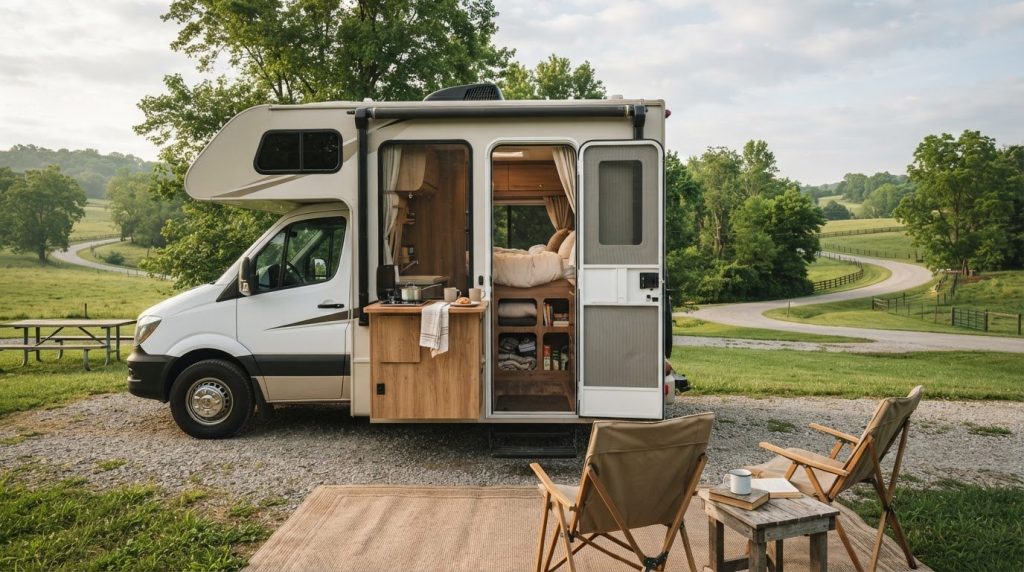
A month in an RV brings everyday life onto the road: you still cook, clean, sleep, and manage your belongings, but in a smaller space that travels with you. What it’s like to live in an RV for a month depends on your travel pace, the RV’s layout, and how you manage daily routines. Expect a mix of freedom and small adjustments.
The open road can make ordinary days feel fresh, but limited storage and frequent driving take some planning. This guide covers the day-to-day realities so you can picture how RV life might fit your travel plans. Meals, personal space, laundry, parking, fuel, and spending all shape a month on the road. A little preparation helps you enjoy the scenery while staying on top of everyday details.
Key Takeaways
- RV life brings flexibility and close company, so build in time for individual interests and everyday tasks like laundry.
- Plan simple meals and grocery stops around your route to make cooking in a compact space easier.
- Choose what earns its place in limited storage, and decide ahead of time where items you leave behind will go.
- Estimate fuel spending from your RV’s mileage and travel plans, then leave room in your budget for changing routes and stops.
Benefits and challenges of RV life
Living in an RV means trading separate rooms and familiar routines for a home that travels with you. Compared with a hotel or rental, an RV keeps your belongings close and lets you prepare meals in your own space, but you also handle chores, parking, and limited storage. A month gives you time to settle into the rhythm, rather than simply enjoying a quick change of scenery.
A typical day might begin with breakfast inside, followed by a drive or an outing. Back at camp, you cook, tidy up, and plan the next stop. Because you share close quarters around the clock, make room for individual hobbies as well as shared plans. One person might read while another takes a walk. Laundry becomes part of the routine too, with RV parks and laundromats offering places to wash clothes along the route.
Long-term stays and overnight parking depend on site rules and local restrictions. Choose places that allow overnight stays, follow posted limits, and arrange longer stays with the campground or RV park. To find a place for the month, map parks along your route, decide how long you want to stay at each, and plan ahead. Popular destinations, including national parks in summer, can fill up.
Your water, electricity, and sewage needs depend on how you use the RV and whether your site has hookups. Frequent showers and cooking can use water and power faster. Longer stays without hookups call for closer attention to tank levels and battery use. Match your plans to the RV’s capacity and the services available at your overnight stops.
Before committing to a month of travel, take a short RV trip to learn the controls, practice daily tasks, and see what you actually use. A couple traveling with two dogs, for instance, needs to make room for pets and plan for walks. A trial trip gives you a chance to adjust your packing, pace, and expectations before settling into a month on the road.
Cooking and grocery shopping on the road
RV meals are easier when your menu suits your route, storage space, and cooking setup. Choose a few meals, identify ingredients they share, then shop near your next stop. Tortillas, beans, vegetables, and cheese, for example, can become breakfast wraps or quick dinners. Buying ingredients for several meals helps limit leftovers and keeps crowded cupboards manageable.
Imagine arriving at camp after a long drive with fresh produce and no dinner plan. Make a one-pan meal, such as pasta with jarred sauce and spinach, to keep cleanup simple. On a quieter evening, prepare a larger batch of soup or rice and vegetables. Store extra portions safely for lunch the next day. A little planning makes cooking feel less like a chore.
- Before shopping: Check the pantry and refrigerator, then write a short list for the meals ahead.
- At the store: Pick ingredients for flexible meals, such as eggs, bread, fruit, and vegetables.
- After unpacking: Put items you’ll use first within easy reach, and keep snacks together.
How often you shop depends on your route and storage space. If you’re moving often, buy smaller amounts and restock near your next overnight stop. If you’re staying in one place, plan several meals before shopping so fresh ingredients don’t get forgotten. Either way, leave room for drinking water and everyday items instead of filling every shelf with food.
Cooking with limited counter space takes coordination. Set out only the recipe ingredients, clear the work area, and wash tools as you go. For a shared meal, one person can prepare vegetables while another cooks. Keep a backup dinner, such as canned soup or pasta, for late arrivals or rainy evenings. That reserve can save you a takeout stop and make the kitchen routine easier.
Downsizing and storing belongings
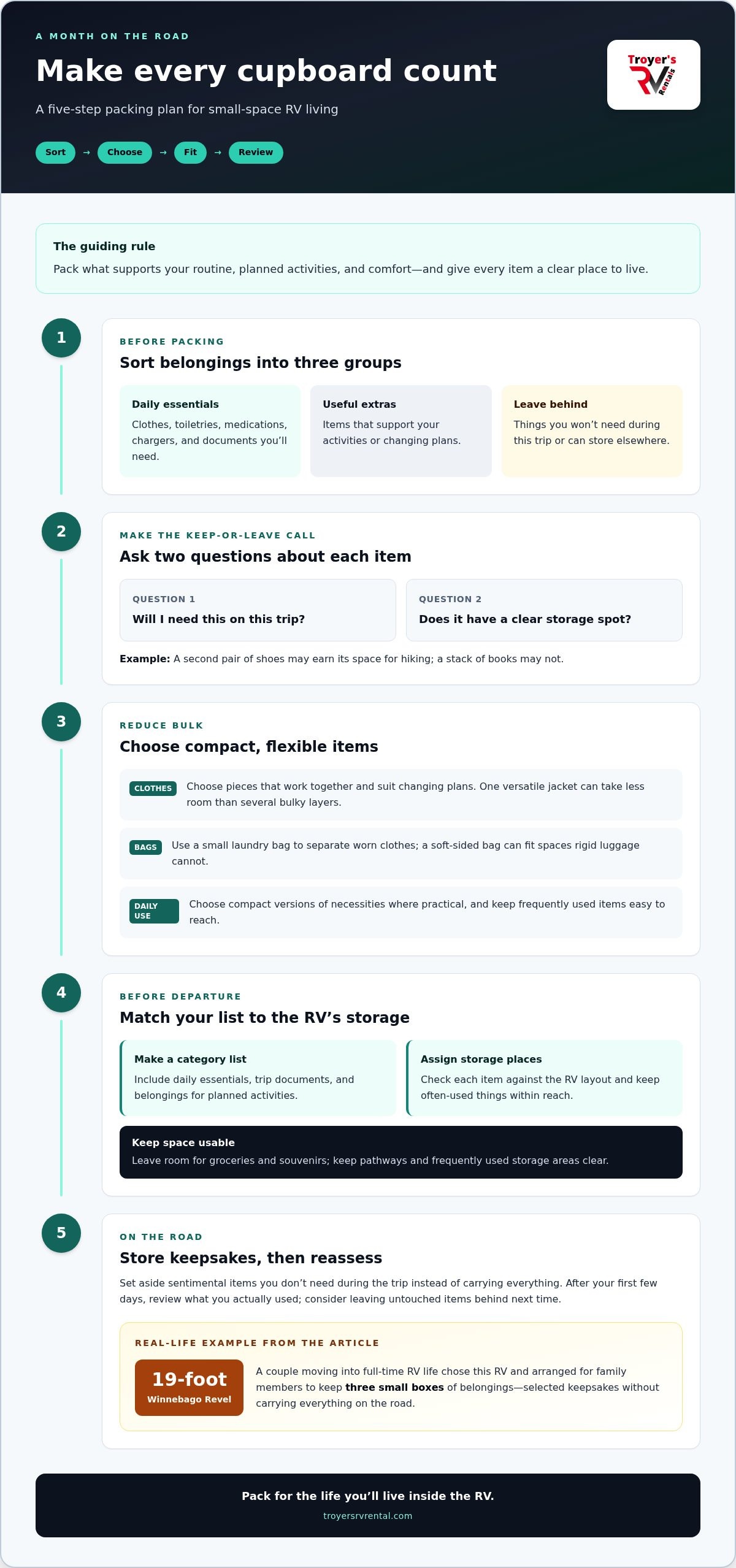
A month in an RV makes every cupboard and drawer count. Sort your belongings into daily essentials, useful extras, and items to leave behind. Pack the clothes, toiletries, medications, chargers, and documents you’ll need, choosing compact versions where practical. One versatile jacket, for example, takes less room than several bulky layers. Keep frequently used items within reach so you don’t have to empty a cupboard to find a raincoat.
For each item, ask whether you’ll need it on this trip and whether it has a clear storage spot. A second pair of shoes may be worth packing for hiking, while a stack of books might not be. Choose clothes that work together and suit changing plans. A small laundry bag separates worn clothes, while a soft-sided bag fits spaces that rigid luggage cannot.
Before departure, make a packing list by category and check each item against the RV’s storage layout. Include daily essentials, trip documents, and belongings for planned activities. This helps you prepare without filling every shelf. Leave room for groceries and souvenirs, and keep pathways and frequently used storage areas clear.
One couple faced the same space limits while moving into full-time RV life. They downsized to a 19-foot Winnebago Revel and arranged for family members to keep three small boxes of belongings. The action gave them a way to hold onto selected keepsakes without carrying everything on the road. Use the same idea selectively: store sentimental items you don’t need during the trip, and keep practical gear close.
- Sort: Separate essentials from optional items before packing.
- Match: Assign each packed item a storage place in the RV.
- Reduce: Choose multi-use clothing and compact daily necessities.
- Store: Set aside keepsakes with family instead of carrying them throughout the trip.
A thoughtful packing list makes small-space living easier. Review it after your first few days on the road: if an item stays untouched, consider leaving it behind next time. Keep the belongings that support your routine, activities, and comfort.
Fuel mileage and budgeting
Fuel spending depends on your route, driving distance, and RV’s fuel economy. A couple’s former Winnebago got 14 to 15 miles per gallon. That example shows why mileage matters, but your monthly fuel use also changes with stops, detours, terrain, and how much you carry. Map your planned route, estimate the total distance, then use your RV’s mileage and current fuel prices to build a working fuel budget.
If you’re planning scenic detours, budget for more driving than you would while staying near one base. Group nearby attractions, avoid unnecessary backtracking, and leave room for route changes. This can reduce avoidable miles while preserving flexibility to explore along the way.
RV park and campground fees vary by location, season, length of stay, and available amenities. Hookups, site features, and popular destinations can affect the cost. Include lodging as its own line in your monthly budget instead of assuming one standard rate.
Fuel and campsite charges aren’t the only expenses to plan for. Set separate budget categories for groceries, laundry, activities, and everyday supplies. If your route changes, update your driving estimate and expected overnight stays. This makes it easier to see how an extra drive or stop could affect your spending.
- Route: List your planned destinations and account for detours between them.
- Fuel: Base your estimate on the RV’s mileage, your distance, and current pump prices.
- Overnight stays: Compare campground costs based on location, dates, stay length, and site amenities.
- Daily spending: Keep food, laundry, and activities separate from travel costs.
Use your first week on the road to compare planned driving with actual travel. If a scenic stop adds miles, adjust the remaining route or fuel allowance. Ready to plan a month-long trip? Explore monthly RV rental options for your road plans.
Troyer’s RV Rental: Motorhome Rentals
Troyer’s RV Rental offers motorhome and camper rentals, including monthly RV rentals for extended road trips. Renting lets you experience everyday RV routines without buying a vehicle. Use the planning tips above to choose a travel pace, pack for compact storage, and map a route that suits your month away.
Choose a motorhome or camper rental to suit your trip. A month-long journey with several stops may call for a different setup than a stay near one destination. For time on the water, fishing boat rentals are another option.
Ready to plan your RV trip? Contact Troyer’s RV Rental to discuss a monthly rental.
Make Your Month on the Road Your Own
Before setting out, decide what you want the month to feel like. You might be looking forward to unhurried mornings, time outdoors, or visiting places you’ve never seen. Let that intention guide your route and pace, while leaving room to change plans. A favorite stop or quiet day may become the best part of the trip.
Life on the road is also a chance to learn what matters most in your next adventure. Notice what feels comfortable, what you’d do differently, and how much flexibility you enjoy. Those discoveries can help you understand what it’s like to live in an RV for a month and decide whether you’d like to travel this way again.
Ready to turn your plans into a trip? Contact Troyer’s RV Rental to explore your next step. The road is waiting, and your month can begin with a plan that feels like yours.
Frequently Asked Questions
How much does it cost to live in an RV for a month in the United States?
There’s no single monthly total because travel plans and RV choices differ. A realistic budget helps you understand the financial side of living in an RV for a month. Add the rental, overnight stays, fuel, food, and personal spending. Rental costs depend on vehicle class and duration. An itinerary around Millersburg with longer stays can require a different budget from one with frequent drives.
What are monthly costs for RV fuel, propane, utilities, and internet?
Monthly expenses depend on mileage, how you use the RV, site services, and internet needs. Budget separately for fuel, propane, utilities, and connectivity. Track spending early in the trip and adjust your remaining plans. A remote-work trip, for example, may need a different internet setup than a vacation with occasional browsing.
What are the biggest challenges and risks of living in an RV for a month?
Limited personal space, daily upkeep, and changing overnight plans all shape what it’s like to live in an RV for a month. Set a routine for shared areas and agree on quiet time or solo activities before tensions build. Keep a backup overnight option in your route in case your preferred stop is full. Before each travel day, review the next destination and driving plan.
How much water, electricity, and sewage capacity does an RV need for month-long living?
Your water, electricity, and sewage needs depend on how you use the RV and whether your site has hookups. Frequent showers and cooking use water and power faster, while stays without hookups require closer attention to tank levels and battery use.