
The nightly rental rate is only one part of your RV road trip budget. To plan how to budget for an RV road trip from Millersburg, include the rental, fuel, campground stays, meals, and activities. Your total depends on how far you travel, how long you’re away, and where you stay.
It’s easy to focus on the RV, but campground fees and fuel also shape the total. Planning ahead helps you separate fixed costs from flexible ones, decide where you can save, and set aside money for unexpected expenses.
Use the cost categories below to build a practical estimate and find ways to keep your trip on budget. Whether renting or using an RV you own makes more sense depends on your plans and which costs you already pay.
Key Takeaways
- Build your estimate around the RV rental, fuel, campground stays, meals, and activities rather than relying on the nightly rate alone.
- Compare campground options and look for weekly or monthly rates to see where a longer stay could lower your lodging costs.
- Weigh RV travel against hotels by considering the whole trip, including food, lodging, and transportation, not just the vehicle expense.
- Plan a direct route, pack thoughtfully, and spend more time in fewer places to help control fuel use and campsite costs.
1. RV Road Trip Budgeting: How Much Does It Really Cost?
Start with trip length, mileage, and RV type. These costs help owners plan, while rental budgets also need to include the vehicle rental fee.
To compare renting an RV with driving your own from Millersburg, add up the rental, fuel, and trip-related fees, then compare that total with the ownership costs you’ll incur. Renting avoids ongoing ownership expenses such as loan payments, storage, maintenance, and depreciation. If you own an RV, include those costs in your overall budget, even if they are not specific to this trip.
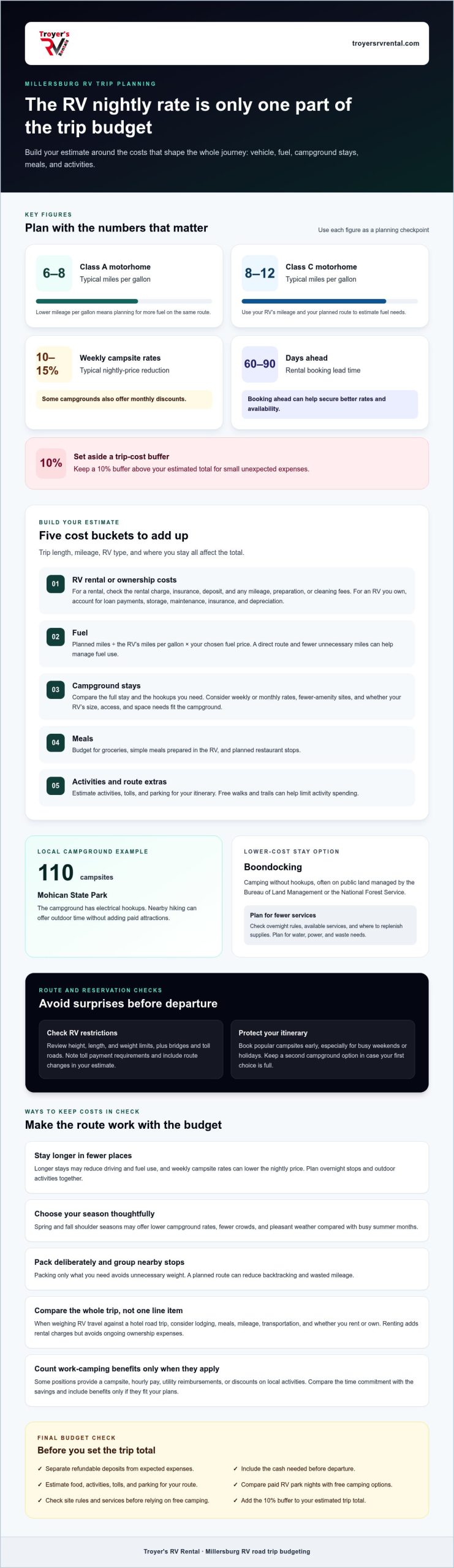
For fuel, divide planned miles by the RV’s miles per gallon, then multiply by your chosen fuel price. A Class A motorhome typically gets 6 to 8 mpg; a Class C typically gets 8 to 12 mpg. For the same route, the Class A’s lower mileage per gallon means you should plan for more fuel. Towing a personal vehicle also lowers efficiency, prompting some long-distance travelers to compare towing costs against auto transport options on gaatco.com.
For a rental, check the agreement for the rental charge, insurance, deposit, and any mileage, preparation, or cleaning fees. Separate the refundable deposit from expenses you expect to pay, and account for the cash needed before departure. Don’t assume the nightly rate is the full trip cost.
Estimate food, activities, tolls, and parking for your specific route. Budget for groceries, meals prepared in the RV, and planned restaurant stops, then add tolls and parking where applicable. Free walks and trails can help limit activity spending. Include these extras before setting your final total for an RV road trip from Millersburg.
2. Choose lower-cost campgrounds and boondocking
Campground choice can significantly affect your budget. Decide which hookups you need, then compare the full nightly cost with sites offering fewer amenities.
For a local example, Mohican State Park’s campground has 110 campsites with electrical hookups. Use it as a starting point when planning a route from Millersburg, and consider nearby hiking as a way to spend time outdoors without adding paid attractions. A travel trailer or larger RV may also affect which sites suit your vehicle, so factor space and access into your choice.
Before leaving Millersburg, check the route for restrictions that apply to your RV, including height, length, and weight limits, as well as bridges and toll roads. Note toll payment requirements and factor any route changes into your estimate, since they can affect both mileage and out-of-pocket costs.
Boondocking means camping without hookups, often on public land managed by agencies such as the Bureau of Land Management or the National Forest Service. It may reduce overnight costs, but services can be limited. Check whether overnight stays are allowed and plan where to replenish supplies along the route.
For an affordable campground plan, compare the full stay rather than only the nightly rate. Weekly campsite rates typically reduce the nightly price by 10 to 15%, and some campgrounds also offer monthly discounts. Staying longer in one location can reduce driving and fuel use, too. Book popular campsites early, especially when your dates fall on busy weekends or holidays. For an RV rental, booking 60 to 90 days ahead can help secure better rates and availability. Keep a second campground option in your itinerary, so a fully booked destination doesn’t force an expensive last-minute change.
3. Is an RV trip cheaper than a hotel road trip?
An RV trip may cost less overall, but the comparison depends on lodging, meals, mileage, and whether you rent or own. A rental adds rental charges but avoids ownership expenses such as loan payments, storage, maintenance, insurance, and depreciation.
The Baxters’ 24-day journey through three states and seven cities offers a detailed example. Their figures reflect one beautiful, long-distance adventure, not a guaranteed result for every route.
Compare the categories that matter for your route. A shorter trip from Millersburg will have different mileage and overnight needs, so estimate each cost for your own itinerary.
Food spending is easier to manage with a plan. Prepare simple meals in the motorhome and choose restaurant stops deliberately rather than dining out by default.
Work camping may help offset travel costs. Some positions provide a campsite, hourly pay, utility reimbursements, or discounts on local activities. These arrangements can make an extended stay more affordable, but only if work fits your camping plans. Compare the time commitment with the savings, and include benefits in your budget only when they apply to your route and schedule.
4. Budget-saving strategies and free camping
Leave some flexibility in your route from Millersburg. Planning ahead can reduce backtracking and wasted mileage, while packing only what you need avoids unnecessary weight. Both can help manage fuel use. Plan overnight stops and outdoor activities together, rather than driving long stretches between destinations.
Free camping areas can be found across the country, particularly in western states. Boondocking means camping without hookups, often on public land managed by agencies such as the Bureau of Land Management or the National Forest Service. Check site rules and available services before relying on a spot. Free camping may mean fewer amenities, so plan for water, power, and waste needs.
Choose a travel season that fits your plans. Spring and fall shoulder seasons may offer lower campground rates, fewer crowds, and pleasant weather compared with busy summer months. Popular campgrounds can fill early, especially on weekends and holidays, so reserve ahead when a particular destination matters. Keep a backup option in your itinerary in case your first choice is full.
Make the landscape part of the trip with activities such as hiking, wildlife watching, and scenic drives. Near a national park, check which trails or outdoor areas are free and budget separately for any entrance charge. Staying longer at one destination can reduce driving and leave room for relaxed, lower-cost days instead of another travel leg.
Use a simple trip review before departure: remove unnecessary gear, group nearby stops, and compare paid RV park nights with free camping options. Then keep a 10% buffer above your estimated trip total for small extras. Ready to turn your route plan into a road trip? Start planning your RV getaway.
Troyer’s RV Rental: Motorhome Rentals
Troyer’s RV Rental offers motorhome rentals for travelers ready to turn a budget into a road plan. Choose a motorhome for a trip with your own sleeping space, or consider a camper rental. Monthly RV rentals can suit an extended stay, and fishing boat rentals are another option if you plan to spend time on the water.
Use your route, campground choices, and trip length to decide which rental suits your plans. Once you have a rough itinerary, Troyer’s RV Rental can help with the RV portion of your trip. Contact Troyer’s RV Rental or visit troyersrvrental.com to learn more.
Make Your Millersburg Trip Plan Happen
A budget is most useful when it helps you choose the trip you actually want. Before committing, decide what matters most: an easygoing route, time outdoors, shared meals, or extra days at one destination. Shape your itinerary around those priorities instead of trying to fit in every possible stop.
As you plan how to budget for an RV road trip from Millersburg, let your travel style guide each decision. A motorhome or camper can make the journey part of the experience, while a fishing boat rental can suit plans that include time on the water. Choose the option that fits how you want to spend your days.
Ready to take the next step? Explore Troyer’s RV Rental and contact Troyer’s RV Rental about motorhome, camper, or fishing boat rentals. Start planning at your own pace, and look forward to the road ahead!
Frequently Asked Questions
Is an RV trip cheaper than a hotel road trip?
An RV trip can be a good fit, especially when several travelers share the vehicle and prepare meals on the road. Compare the full itinerary, not just lodging: include rental or ownership costs, fuel, overnight stays, meals, and activities. A hotel trip may suit a short route with few travelers, while an RV may make more sense for longer stays or destinations with affordable camping.
RV Road Trip Budgeting: How Much Does It Really Cost?
Your total depends on the route, trip length, vehicle, and overnight choices. Start a worksheet with rental or ownership costs, then estimate fuel, campground nights, food, activities, tolls, and parking. Separate fixed expenses from those that change with mileage or daily choices. That makes it easier to revise your Millersburg itinerary without missing smaller costs.
What’s the single biggest RV trip cost?
For a rental trip, the RV rental may be the largest fixed expense. On a long route, fuel and campground nights can take a larger share as mileage and trip duration increase. Compare estimated totals to identify the biggest cost in your plan. Then consider whether a shorter route, fewer overnight stops, or different lodging choices would make the greatest difference.
How much do gas and diesel cost along common RV routes from Millersburg?
There’s no single fuel estimate for routes from Millersburg. The total depends on distance, your RV’s fuel economy, and fuel prices along the way. Map likely fuel stops before leaving, and estimate each leg separately if distances or prices vary. Account for the fuel type, since gas and diesel prices differ.
How do I estimate RV fuel costs using distance and miles per gallon?
Estimate fuel by dividing your planned miles by the RV’s miles per gallon, then multiplying the result by the expected fuel price. Include the full route, return travel, and planned detours, not just the distance to your first destination. Recalculate if you change vehicles or add stops, since either can affect the estimate.
What are typical campground and RV park prices near Millersburg and at popular destinations?
Campground rates depend on location, season, site type, and amenities such as hookups. A site near a popular destination may cost more than a basic stop farther along your route. Compare the total stay and available services, not just the nightly rate. For travel near Millersburg, include campground locations in your route plan so extra driving doesn’t offset a lower site cost.