
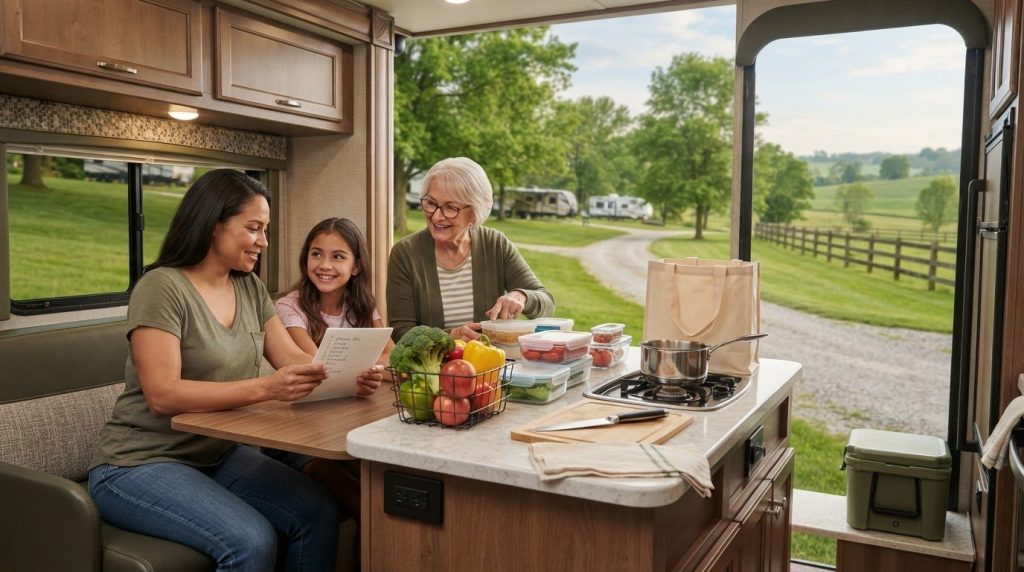
What if the easiest RV meal plan starts with your fridge, not your recipes? Meal planning for an RV trip gets simpler when you first consider how much food you can store, what you can cook, and when you’ll be on the road. A packed travel day may call for a quick lunch and an easy dinner, while a relaxed campsite day leaves room for more.
It’s normal to wonder how to feed everyone without filling every cupboard or relying too heavily on the refrigerator. A little planning can help you avoid extra groceries, reduce food waste, and keep meals manageable when travel changes your schedule. Plan around your RV and your group, not just a list of recipes.
This step-by-step guide will help you map meals for travel and camping days, check your kitchen setup and storage before shopping, and build a compact grocery list. You’ll also find practical ways to plan for food storage. If you’re renting, confirm the kitchen equipment and storage in your specific RV before choosing what to bring. Then you can spend less time sorting meals and more time enjoying the trip together.
Key Takeaways
- Shape your plan around trip length, group size, dietary needs, and planned activities.
- Make meal planning for an RV trip easier by counting meals first, then choosing dishes and building a focused shopping list.
- Choose travel-day, make-ahead, and campsite meals that suit the appliances and cookware available.
- Pack groceries in an easy-to-find order, label items, and leave room to adjust the plan as your trip unfolds.
- Keep food storage manageable by matching what you buy to the refrigerator, freezer, and pantry space you’ll actually have.
Meal Planning for an RV Trip Starts with Your Route and Routine
Your first RV meal plan doesn’t need to be complicated. Start with the shape of your trip, then choose meals that fit the people coming along, the kitchen setup, and the space available for food. That’s the heart of meal planning for an RV trip: matching what you’ll eat and bring to the way you’ll travel.
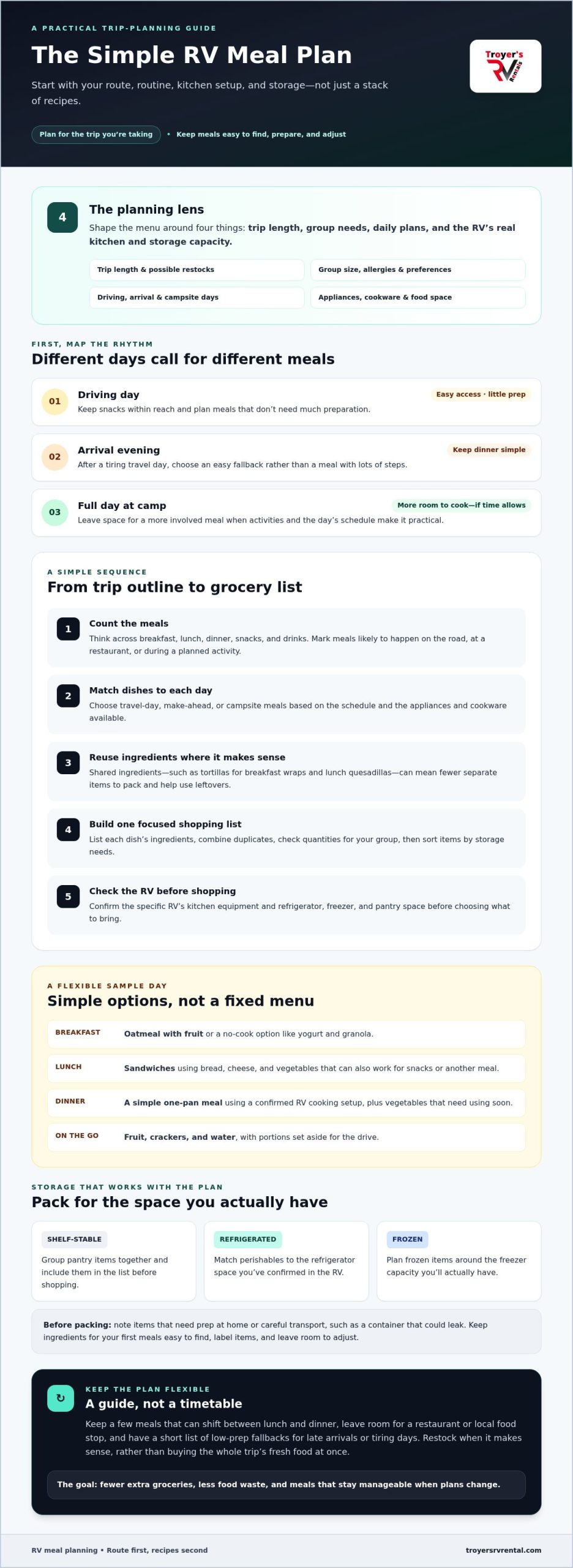
Think in three kinds of days. A driving day often calls for easy-to-reach snacks and a meal that needs little prep. An arrival evening can be tiring, so plan something simple rather than a dinner with lots of steps. A full day at camp may leave more time to cook, unless activities keep everyone busy. Trip length matters, too. A short getaway may need just a few planned meals, while a longer trip may call for more variety and opportunities to restock.
Group size, allergies, dietary preferences, and familiar favorites all shape the menu. If children reliably enjoy a few simple meals, include them. Planning ahead follows the principles of meal preparation, but an RV plan should stay flexible enough for changing schedules and appetites. If you’re planning a trip near Millersburg, consider which days you’ll be driving, exploring, or staying at camp before deciding how much food to bring.
What information should you gather before planning RV meals?
Before assigning meals, note who’s traveling and what they can or want to eat. Then map your departure, arrival, driving, and activity days. This gives you a realistic sense of when cooking will fit. Check whether grocery shopping may be available near planned stops or campsites, but don’t rely on a store being open or convenient. Use that information to decide what to pack from the start and what might be easy to pick up later.
How can you plan meals without making the trip feel rigid?
Use your meal plan as a guide, not a timetable. Choose a few options that can move between lunch and dinner, such as wraps or a simple pasta dish, and leave open spaces for a restaurant meal, local food stop, or last-minute change. Keep a short fallback list for late arrivals or tiring days, with ideas that need little preparation. A flexible plan makes it easier to enjoy the trip without feeling like every meal has to go exactly as scheduled.
How to Build a Simple RV Trip Meal Plan Step by Step
Turn your rough trip outline into a plan you can shop from. Count the meals you’ll need, choose dishes that suit each day, check what each dish requires, then combine the ingredients into one grocery list. Keep breakfast, lunch, dinner, snacks, and drinks in view, but remember that not every meal needs to be cooked. Cereal, fruit, sandwiches, and ready-to-eat snacks can all have a place in meal planning for an RV trip.
How many meals should you plan for an RV trip?
Count meals by day, then mark the ones likely to happen on the road. Leave out meals covered by a restaurant stop or a planned activity, and avoid buying a full trip’s worth of fresh food if you can reasonably restock along the way. For a fishing outing, check the timing and food options around your plans before deciding what to pack. You can also use a guide to planning an Ohio fishing trip with an RV as you map the day.
Next, choose dishes that share ingredients. Tortillas might work for breakfast wraps and lunch quesadillas. A bag of salad greens can go with sandwiches one day and a simple dinner another. Ingredient overlap means fewer separate items to pack and gives leftovers a better chance of getting used.
How do you turn the menu into a useful grocery list?
Write down the ingredients for each meal first. Then combine duplicates, check quantities for your group, and sort the final list into shelf-stable, refrigerated, and frozen items. Mark anything that needs prep at home, such as chopped vegetables, or careful transport, such as a container that could leak. Keep ingredients for your first meals easy to find when you arrive.
Here’s an adaptable sample day, not a fixed menu:
- Breakfast: Oatmeal with fruit, or a no-cook option like yogurt and granola.
- Lunch: Sandwiches using bread, cheese, and vegetables also planned for snacks or another meal.
- Dinner: A simple one-pan meal using a confirmed RV cooking setup, plus any vegetables that need using soon.
- Snacks and drinks: Fruit, crackers, and water, with portions set aside for the drive.
Before buying perishables, check the specific RV’s kitchen equipment and storage capacity. FoodSafety.gov’s food safety fundamentals for travel can help you plan how to transport and handle groceries safely. If an RV rental is part of your trip, review Troyer’s RV rental options and confirm the kitchen details of the specific rental before shopping.
How to Handle RV Food Storage and Safety Without Overpacking
Limited refrigerator and pantry space doesn’t have to complicate meal planning for an RV trip. Buy for the space you have rather than trying to squeeze your usual kitchen’s groceries into a smaller one. Before shopping, check the refrigerator, freezer, and pantry capacity in your specific RV. If you’re renting, confirm the available storage with the rental provider, along with any kitchen details that affect your meal choices.
Make a quick inventory of the meals you plan to eat first. Prioritize those ingredients, then leave out bulky items you’ll use only once. Sealed, stackable containers can help organize suitable foods, but keep raw meat separate from ready-to-eat items to reduce the risk of cross-contamination. If your route includes convenient grocery stops and storage is tight, plan to restock rather than carrying every perishable ingredient from the start.
How can you make limited refrigerator space work?
Use the fridge for foods that need chilling, not for every grocery item. Shelf-stable staples such as bread, crackers, and unopened pantry goods may need less space, while items like dairy, cut produce, and meat need careful temperature control. Check packaging directions and current food-safety advice, and organize chilled groceries so you can find what you need without leaving the door open for long.
A cooler can help transport food, but it isn’t proof that food stayed safely cold. Keep perishables chilled during the trip, and don’t rely on how cold the outside of a container feels. USDA and FDA guidance can help you check current temperature recommendations and safe handling practices. As a general food-safety reference, cold foods should be kept at or below 40°F.
Which foods travel well, and which need extra care?
Shelf-stable foods are often easier to pack because they don’t take up refrigerator space before opening. Perishables need more planning: buy only what fits your cold storage, keep them chilled during transport, and separate raw foods from ready-to-eat groceries. Follow package instructions and check current USDA and FDA advice for handling specific foods. Avoid relying on a fixed storage-time rule unless you’ve confirmed it applies to the food and conditions you have.
When storage is limited, choose ingredients that serve more than one meal and use the most delicate perishables early in your plan. If a grocery stop is practical, bring less and buy fresh items closer to when you’ll use them. Small adjustments like these help you avoid wasted food while keeping meals simple and storage manageable.
What to Cook in an RV: Easy Meals for Driving and Camp Days
Good RV meals don’t need complicated recipes or a fully stocked kitchen. Choose food that fits the day, the people eating, and the appliances and cookware confirmed for your specific RV. Before shopping, check what the kitchen includes so you can adapt your menu instead of assuming you’ll have a particular burner, oven, or pan.
A travel-day meal is one that takes little effort to prepare and clean up, whatever its cuisine. That might mean a packed lunch, a quick sandwich, or a simple dinner after arrival. For relaxed days at camp, you can plan a meal with a few more steps, as long as it suits the available setup.
Which meals work best on an RV travel day?
Keep breakfast packable, such as fruit with granola or a breakfast wrap prepared ahead. For lunch, assemble sandwiches or wraps before setting out, then pack them for the road. After a long drive, try an easy arrival-night option: a prepared meal you can reheat if the RV’s equipment allows, or a no-cook spread of bread, cheese, and vegetables. Keep prepared food chilled during transport and follow current food-safety guidance.
Make-ahead dishes can take pressure off, but choose them based on storage space and how you’ll serve them. A prepped pasta salad, for example, may work for lunch if you can keep it properly chilled. If that’s not practical, switch to shelf-stable snacks or a meal made shortly before eating.
How can you keep camp meals easy to cook and clean up?
On a full camp day, build dinner from a few familiar ingredients. If the confirmed setup permits, combine vegetables, beans, and rice in one pan. Or assemble tacos, wraps, or bowls from ingredients that can be served separately. Use the same vegetables or toppings across meals, and keep cleanup simple: put away leftovers safely, then wash the few dishes used.
Keep a couple of easy substitutions in mind. Swap rice for tortillas, use canned beans instead of fresh ingredients that need more prep, or serve a planned warm meal cold if the weather or schedule changes. The goal of meal planning for an RV trip is to make meals fit the day, not to follow a recipe no matter what.
If an RV rental is part of your plans, explore Troyer’s RV rentals and confirm the specific kitchen setup before settling on meals that depend on particular equipment.
Pack Your RV Meal Plan and Adjust It Once the Trip Begins
A good plan should be easy to use, not just easy to write. Before loading groceries, confirm the specific RV’s refrigerator and freezer space, cooking equipment, utensils, and pantry storage with the rental provider. That check helps you avoid packing food you can’t store or choosing meals that depend on equipment you won’t have.
What should you do before loading food into the RV?
Pack food in practical groups, such as breakfast items, snacks, and ingredients for planned dinners. Label containers with their contents, and put the first meal where it’s easy to reach. Keep foods that need refrigeration chilled during transport, and separate raw items from ready-to-eat food. Check what pantry staples the rental includes before bringing your own. A little coordination makes meal planning for an RV trip easier once you’re on the road.
- Confirm the setup: Ask what refrigeration, cooking equipment, utensils, and storage are available in your specific rental.
- Pack by use: Group groceries by meal or category, and keep arrival-day food accessible.
- Check before adding staples: Bring only what you’ll use and what the RV doesn’t already include.
If RV delivery and setup are part of your plans, ask the rental provider about the arrangements for your trip. Having the RV delivered and set up may make arrival-day logistics easier, especially if you’re planning a simple first meal. It doesn’t mean groceries are provided, so plan and pack food separately.
How should you adapt the meal plan during the trip?
Before each grocery stop, check what’s left and what needs using soon. That quick look can help prevent duplicate purchases and guide your next few meals. If a drive takes longer than expected or an activity changes your schedule, swap meals around. Use the ingredients that need attention first, and save shelf-stable options for another day.
Keep food handling in mind as plans shift. Return chilled items to appropriate cold storage, and don’t leave perishable groceries sitting out while you decide what’s for dinner. If you’re unsure how to handle a particular food, check current official food-safety guidance.
With a flexible plan and the right kitchen details confirmed, you can spend less time sorting groceries and more time enjoying the trip. If you’re planning an Ohio getaway near Millersburg, explore Troyer’s motorhome and camper rentals, including options for a motorhome rental in Ohio.
Get Ready for Easier Meals on the Road
A practical meal plan doesn’t need to cover every moment. Match meals to your route and daily routine, choose dishes that work with your group and RV kitchen, and shop with your available storage in mind. That’s the core of meal planning for an RV trip. Keep the plan flexible, pack the first meal where it’s easy to reach, and adjust as travel plans shift.
Before shopping, confirm the refrigerator, storage, and cooking equipment in your specific rental. Troyer’s RV Rental offers motorhome and camper rentals in the Holmes County area. Delivery and setup services are also offered, but confirm availability for your destination. Once you know what your RV can accommodate, it’s easier to choose meals that keep the trip simple and enjoyable.
Explore Troyer’s RV rentals for your next Ohio trip, then start planning meals that leave plenty of room for the best part: enjoying the journey together.
Frequently Asked Questions
How do you plan meals for an RV trip?
Start by matching meals to your route, schedule, group, and RV kitchen. For meal planning for an RV trip, count the breakfasts, lunches, dinners, snacks, and drinks you’ll need, then mark meals likely to happen on the road or at a restaurant. Choose flexible dishes with overlapping ingredients, check your refrigerator and pantry space, and build a grocery list from the menu. Keep a few easy backup meals for schedule changes.
What are easy meals to make in an RV?
Easy RV meals use familiar ingredients and need little cooking or cleanup. Try oatmeal or yogurt with fruit for breakfast, sandwiches or wraps for lunch, and tacos, rice bowls, or a simple one-pan dinner if the RV’s kitchen setup allows. Keep a no-cook option ready for a late arrival. Before choosing a recipe, check which appliances, cookware, and utensils are available in your specific RV.
How do you keep food cold while traveling in an RV?
Keep perishable food in a working refrigerator or a properly managed cooler, and check its temperature with a food thermometer. FoodSafety.gov recommends keeping cold foods at 40°F or below. Limit how often you open the cooler or refrigerator, and keep raw meat separate from ready-to-eat foods to reduce cross-contamination. Don’t assume food is safe just because a cooler still feels cold; check current USDA and FDA guidance for handling details.
Can you meal prep before an RV trip?
Yes. Preparing a few ingredients at home can make travel-day meals easier. Wash and portion produce, pack dry ingredients together, or prepare a dish that you can keep properly chilled and serve safely. Label containers so you can find items quickly, and make sure the RV has room to store them before you prep a large batch. Keep the plan flexible, since travel timing and appetites can change.
How much food should you pack for an RV trip?
Pack enough for the meals you expect to eat in the RV, based on trip length and the number of travelers. Subtract meals you plan to have at restaurants or during activities, then account for snacks and drinks. Avoid buying a full trip’s worth of fresh ingredients if you can restock along the route. Check available storage first, and choose quantities that fit without crowding the refrigerator or pantry.
What foods are best for an RV road trip?
Choose a mix of shelf-stable staples and a manageable amount of refrigerated food. Crackers, bread, oats, and unopened pantry items are handy, while fruit, sandwich ingredients, and other perishables can add variety if you have room to keep them cold. Pick foods that can work in more than one meal, such as tortillas or vegetables. Keep travel snacks easy to reach, and handle perishables according to current food-safety guidance.
Should you check the RV kitchen before planning meals?
Yes. Confirm the refrigerator and freezer space, cooking equipment, cookware, utensils, and pantry storage before choosing recipes or shopping. This helps you avoid buying food that won’t fit or planning meals that depend on unavailable equipment. If you’re renting near Millersburg, ask the rental provider about the specific RV’s kitchen setup. Troyer’s RV Rental offers motorhome and camper rentals in the Holmes County area, with delivery and setup availability to confirm for your destination.