

A memorable spring break RV trip doesn’t need to race across the map. Families looking for spring break RV trip ideas from Millersburg can consider a Northern Michigan Lower Peninsula trip, which covers 150 miles and includes four stops, or build a route around Wisconsin’s Lake Superior Scenic Byway, with 70 miles along the lake’s southern shore.
It’s tempting to pack every day with miles and attractions. But a comfortable spring break RV trip leaves room to stretch your legs, linger at a scenic stop, and enjoy time together without turning every day into a driving day.
Use these Midwest route ideas to choose destinations that fit your break, balance driving with sightseeing, and plan manageable daily distances. Options range from northern lake views to Missouri attractions, with practical ways to shape the trip around your available time. Start with the places your family most wants to see, then give each stop enough breathing room to make the journey part of the fun.
Key Takeaways
- Choose a route by matching the destinations and stops to your spring break time, rather than trying to cover too much ground.
- Leave room for sightseeing by separating drive days from days set aside to explore.
- Set daily driving distances around your planned stops and how much time you want outside the RV.
- Explore Midwest options such as Missouri attractions and Northern Michigan, then shape the route around your family’s interests.
1. Choosing routes and destinations
For spring break RV trip ideas from Millersburg, start with the time available and the scenery your family wants. Hocking Hills suits a shorter Ohio road trip focused on trails and waterfalls; Lake Erie offers shoreline stops, while the Smoky Mountains bring mountain scenery across Tennessee and North Carolina. These options vary in driving commitment, so choose one region rather than squeezing all three into a single journey.
For an early-spring trip, consider Hocking Hills and Lake Erie-area parks in Ohio, or destinations in nearby states. Campground operations and seasonal hookups vary, so build your route around places open on your travel dates. Before planning overnight stops, check campground rules for RV length, site access, hookups, and quiet hours. Reservation dates and availability also vary by campground.
Campground fees near Millersburg depend on the destination, season, site type, and amenities. Compare the total stay and the features your family needs, such as hookups or an indoor pool. Pair outdoor stops with rainy-day options, including indoor attractions near your chosen town. College football fans can plan around a stadium destination such as Columbus, while checking the game schedule.
March and April can bring cool, wet conditions around Millersburg, so leave room to adjust for changing road conditions. Before departure, inspect tire pressure, fluid levels, brakes, lights, and propane tanks. Test the water, electrical, heating and cooling, and tank systems. Pack hoses, leveling blocks, a surge protector, and a tool kit.
Western U.S. destinations make a longer American road trip, not a nearby spring-break loop. The Desert Southwest route covers 800 miles and includes six stops; Flagstaff Pulliam Airport is about 80 miles from the Grand Canyon. Denver International Airport is about 75 miles from Rocky Mountain National Park. These airport distances help travelers understand regional access, but they don’t shorten the drive from Millersburg. Choose a western canyon journey only if the travel time fits your break.
2. Balancing driving with sightseeing
Build each travel day around one main destination, with time left to enjoy it. A campground near a mountain trail, for example, lets your family explore without packing up and driving again. Choose one base for several nights when a region has multiple places to visit. This creates a steadier rhythm and makes comfort part of the itinerary, not an afterthought.
Use travel days sparingly. One experienced RV traveler recommends no more than 10 travel days on a 21-day trip. That’s a planning example, not a rule for every spring break. For a shorter trip from Millersburg, mark the must-see stops first, then group nearby sights together. A morning hike and a local museum can share one day; a long drive and a full day of activities usually compete for time.
Consider where you want the exploring to happen. A traveler’s example contrasts two days of travel with 19 days exploring after renting near a destination. That comparison shows how long-distance driving can take time away from sightseeing. For a Millersburg departure, choose Midwest places within your trip’s reach before planning a venture to Washington or Colorado. A western mountain route may be appealing, but reaching it also takes substantial travel time.
Season matters, too. Spring break may fall before summer access begins on some scenic roads. Glacier National Park’s Going-to-the-Sun Road is especially scenic soon after it opens in May or June, when melting snow creates waterfalls along the roadway. That timing may suit a later spring journey better than an early break. Choose stops that fit your dates, check campground operating periods, and leave time for meals, rest, and sightseeing. A relaxed schedule makes room to enjoy the places you came to see.
In Williamsburg, RV parks may offer complimentary shuttles to historic attractions. A shuttle can keep a sightseeing day focused instead of adding another drive and parking stop. Check whether it fits your dates and destinations, and allow enough time to explore each attraction without rushing.
3. Daily driving distances
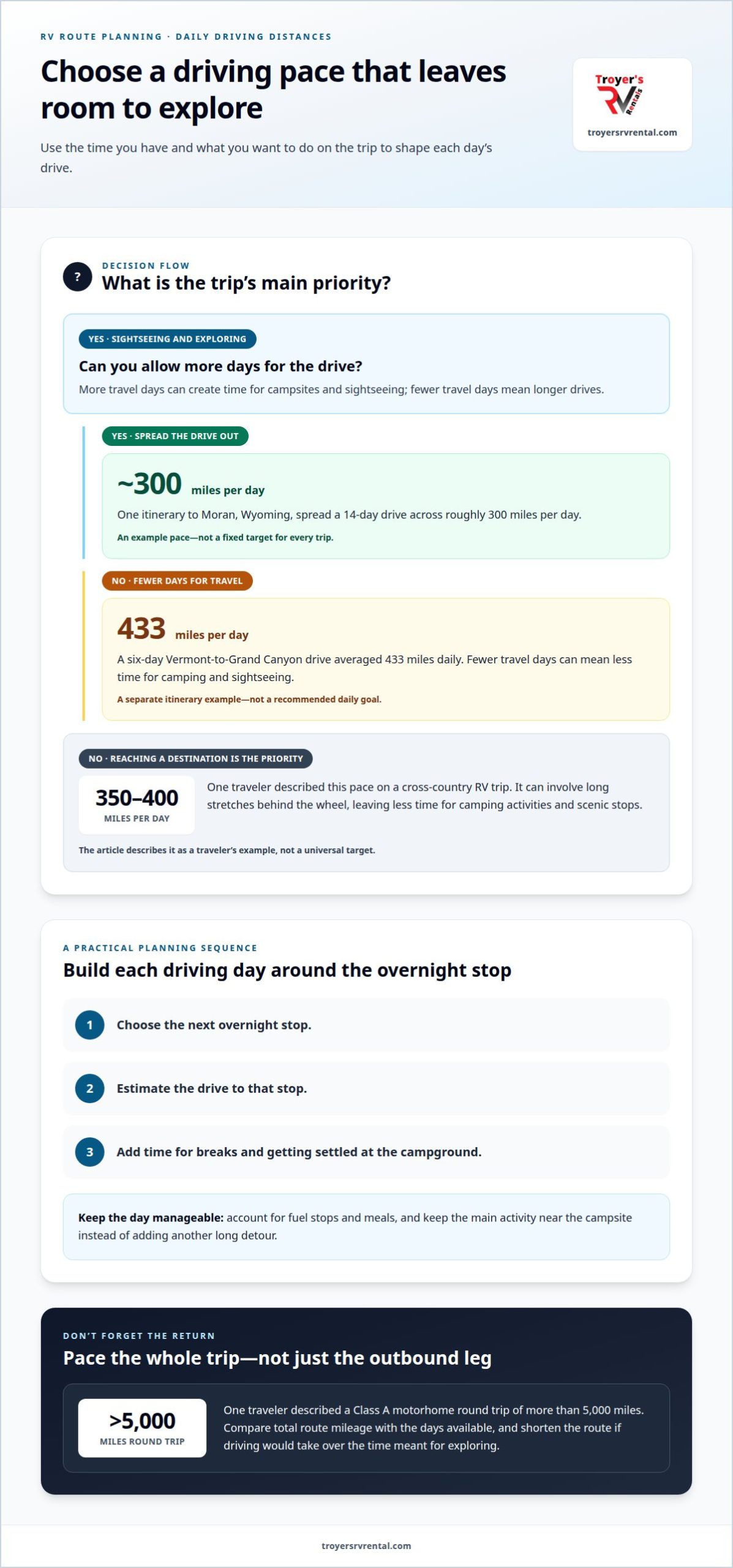
Set daily driving goals by looking beyond the mileage on a map. An RV trip includes fuel stops, meals, campground arrivals, and time to get settled. Choose a distance that leaves room for those tasks and the places you want to see. A shorter travel day can make more sense before a full day of hiking or sightseeing.
Use examples as planning references, not fixed targets. One traveler described driving about 350-400 miles per day on a cross-country RV trip. That pace can mean long stretches behind the wheel, leaving less time for camping activities and beautiful stops. It may suit a trip focused on reaching a destination, but it can crowd a spring break built around exploring.
A separate itinerary to Moran, Wyoming, spread a 14-day drive across roughly 300 miles per day. Compare that approach with a six-day Vermont-to-Grand Canyon drive averaging 433 miles daily. The contrast shows how your schedule changes the pace: fewer travel days mean longer drives, while extra days can create time for campsites and sightseeing.
Plan each leg in this order: choose the next overnight stop, estimate the drive, then add time for breaks and arrival. Keep the day’s main activity near the campsite instead of adding another long detour. For example, an itinerary around national parks works better when an RV park nearby serves as a base. Desert routes also need realistic spacing between overnight stops and fuel breaks.
Finally, count the return journey. One traveler described a Class A motorhome round trip of more than 5,000 miles. That scale of travel calls for careful pacing across the entire break, not just the outbound leg. For a Millersburg departure, compare total route mileage with the days available, then shorten the route if driving would take over the time meant for exploring.
4. Midwest RV trips
For a compact Midwest RV road trip, consider Northern Michigan’s Lower Peninsula. The route covers 150 miles and includes four stops, giving families a defined framework for choosing overnight breaks and sightseeing. Mark the stops that matter most, then use the remaining time for unhurried drives between them. This option can suit travelers who want a regional journey rather than a long haul across the country.
Wisconsin offers a different kind of drive along Lake Superior. The Wisconsin Lake Superior Scenic Byway follows 70 miles of State Highway 13 along the lake’s southern shore. Plan this route around shoreline views and stops that interest your group. If beaches are a priority, look for suitable public access along your chosen stretch and build the day around that stop, rather than stacking it with distant detours.
Missouri gives families more variety between driving days. The state has more than 50 things to do, including the Walt Disney Museum and historic Route 66. Choose one main attraction for each day, then group nearby interests into the same outing. Families who enjoy hiking can add a trail stop where it fits the route, leaving time to settle at camp before evening.
Use regional routes to match the trip to your spring break calendar. Northern Michigan’s 150-mile plan and Wisconsin’s 70-mile byway offer distinct ways to explore without setting out on a cross-country drive. For a longer extension, the Knoxville-to-Asheville loop via Pigeon Forge covers 270 miles and includes three stops, but it heads into Tennessee rather than staying in the Midwest. Treat it as a separate southern journey, not an add-on to every itinerary.
Before choosing, write down your preferred scenery, key stops, and available travel days. Then compare the route’s total drives with the time left for camping and activities. A clear plan helps your family decide whether lakeside views, Route 66 history, or a southern hiking trip belongs on this break.
Troyer’s RV Rental
Troyer’s RV Rental can help you choose an RV for your spring break journey from Millersburg. Once you’ve settled on a route and travel pace, consider whether a motorhome or camper rental best fits your plans. Monthly RV rentals are another option for a longer stay, and fishing boat rentals may suit trips that include time on the water.
Keep your route, travel dates, and preferred RV type in mind as you plan. Matching the rental to your itinerary helps you focus on the drive, campground stops, and time together. Contact Troyer’s RV Rental to discuss your spring break RV trip.
Make the Next Trip Yours
A good spring break plan can start with one shared decision: ask each traveler to name the moment they most want from the trip. It might be a quiet morning outside, a scenic drive, or an afternoon exploring a small town. Use those choices to shape the getaway, not just its route. Then agree on what can wait for another trip. That short conversation makes planning a shared part of the adventure.
Use these spring break RV trip ideas from Millersburg as a starting point, then make the journey fit your family’s pace and interests. Once you know what kind of getaway you want, take the next step and contact Troyer’s RV Rental to talk through your trip plans.
Give yourselves room to enjoy the moments you’re looking forward to. Your spring break RV adventure can begin with a simple choice and a shared sense of excitement!
Frequently Asked Questions
How far and how long does it take to drive an RV from Millersburg to popular spring break destinations?
Distance and drive time depend on your destination, route, traffic, and planned breaks. Start by mapping Millersburg to your first overnight stop, then add each leg, including the return. An RV trip also needs time for fuel, meals, and campground arrival, so map driving time separately from sightseeing. Compare the total with your available days before settling on a route.
What RV restrictions, campground rules, and seasonal hookups apply at nearby destinations?
Rules vary by campground. Check its RV length limits, site access, hookups, and quiet hours before booking.
Which Ohio and nearby state parks offer RV camping in early spring?
Hocking Hills and Lake Erie-area parks in Ohio are options for an early-spring trip. Check each campground’s operating dates and seasonal hookups before planning an overnight stay.
Which family-friendly RV destinations have indoor pools, attractions, or rainy-day activities?
Pair outdoor stops with indoor attractions near your chosen town for rainy days, and compare campground amenities such as an indoor pool.