

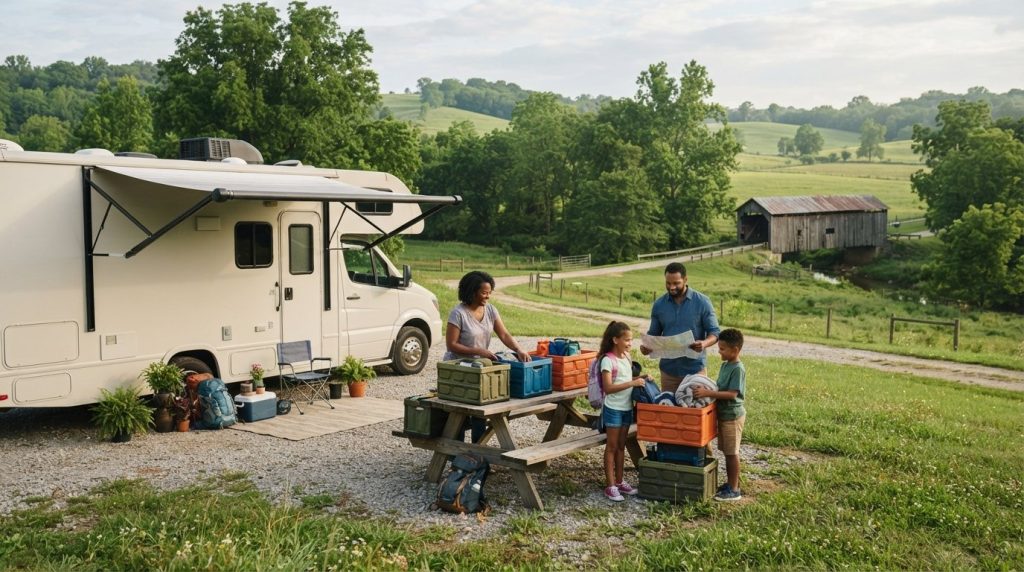
What if the secret to an incredible family vacation isn’t packing every hour with activities, but actually doing less? If the thought of cramped living quarters, endless choruses of “Are we there yet?”, and wrestling with complex hookups makes you break into a sweat, you aren’t alone. Planning a stress-free RV trip with kids doesn’t require military precision. It just takes managing daily energy and cutting out campsite friction before you ever leave the driveway.
It is easy to feel overwhelmed by massive gear checklists and the fear of keeping restless little ones entertained on long driving stretches. We get it. That is why this guide shows you how to plan a calm, organized, and truly unforgettable family adventure with practical packing systems, realistic routing frameworks, and smooth setup tips. Ahead, you’ll discover battle-tested strategies to build a kid-friendly itinerary, organize compact camper storage, and create simple campground routines that let everyone truly relax.
Key Takeaways
- Protect familiar sleep routines by choosing camper layouts with dedicated bunk beds, giving kids their own space without converting the dinette every night.
- Master planning a stress-free RV trip with kids by following the 3-3-3 travel rule to keep driving days short, relaxed, and meltdown-free.
- Organize compact camper storage by assigning each child a single collapsible bin for clothing, toys, and essentials.
- Create safe arrival routines with designated parent roles, or explore campsite delivery services to skip towing and utility setup entirely.
Why an RV Trip is the Ultimate Family Getaway
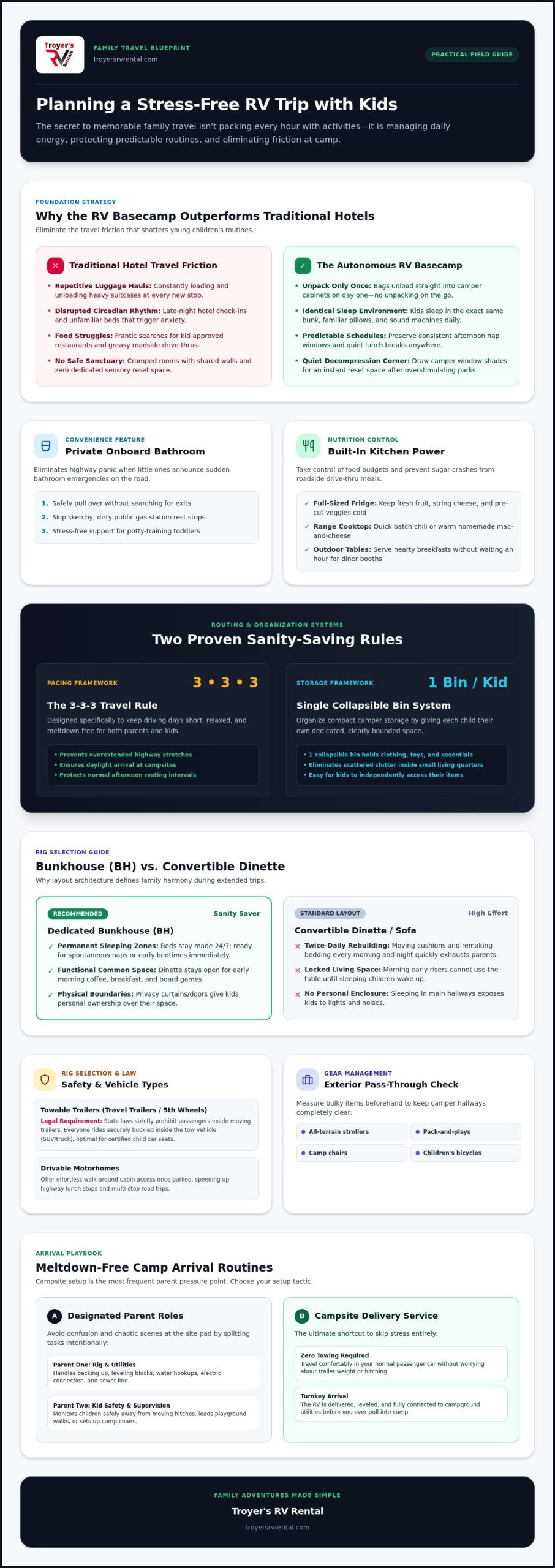
Family RVing means taking the familiar comforts of your own home wherever the road leads. You set the departure times, decide when to pull over, and change destinations on a whim. Unlike hotel stays that force you into cramped rooms with shared walls, an RV gives your crew an autonomous basecamp. You unpack your bags just once into camper cabinets instead of constantly loading and unloading heavy suitcases at every stop.
The secret to planning a stress-free RV trip with kids is preserving routine. Toddlers and school-aged children thrive on predictability. Traditional travel shatters that rhythm with late-night hotel check-ins, strange beds, and frantic searches for kid-approved restaurants. A camper solves this instantly. Your children sleep in the exact same bunk every evening, look at the same familiar pillows, and wake up ready for adventure.
Maintaining Familiar Routines on the Open Road
Stick to your normal daily schedule right from the start. A motorhome or camper rental lets you hold consistent afternoon nap windows and quiet lunch breaks regardless of where you are parked. Pack your child’s favorite bedtime books, trusted comfort blankets, and sound machines into their dedicated bunk space before heading out.
Outdoor exploration is exciting, but it can quickly overwhelm young sensory systems. When bright sun, park crowds, or trail fatigue cause a meltdown, step inside your rig. Drawing the camper window shades creates an instant, quiet decompression corner where kids can reset with a puzzle or a familiar storybook while staying close to the campsite action.
The Convenience of Built-In Kitchens and Private Bathrooms
Having an onboard bathroom changes highway travel forever. Eliminate panic-inducing scrambles for sketchy gas station rest stops when a potty-training toddler announces an emergency. Simply pull over safely, unlock the camper door, and handle business in a clean, private space.
Onboard galleys give parents unmatched control over nutrition and travel budgets. Instead of surviving on greasy roadside drive-thrus that lead to sugar crashes and tummy aches, you can easily:
- Stock fresh fruit, string cheese, and pre-cut veggies inside the full-sized refrigerator.
- Warm up homemade mac-and-cheese or batch-cooked chili on the range in minutes.
- Serve hearty camp breakfasts at picnic tables without waiting an hour for a diner booth.
When you take control of meals, sleep, and bathroom breaks, planning a stress-free RV trip with kids shifts from a daunting chore into an easy, rewarding getaway.
How to Choose the Best RV Layout for Traveling with Kids
Picking the right floor plan can make or break your vacation. Successful layouts match your children’s specific ages, bed routines, and daytime nap schedules. Families with toddlers need floor space for a portable playard or low bunk access. Families traveling with older kids need personal storage cubbies and room to stretch out without bumping elbows on rainy afternoons.
Storage space deserves equal attention before you hit the road. Bulky gear like all-terrain strollers, pack-and-plays, camp chairs, and bikes will quickly clutter your living area if your rig lacks exterior pass-through compartments. Measure your must-have gear beforehand to confirm it stows neatly beneath the rig rather than blocking the interior hallway.
Motorhomes vs. Campers: Matching Your Travel Style
Choosing between a drivable rig and a towable trailer comes down to safety regulations and how you travel. State laws strictly prohibit passengers from riding inside a moving travel trailer or fifth wheel. Everyone must ride buckled securely inside your tow vehicle. This works great for car seats since passenger trucks and SUVs meet stringent federal motor vehicle safety standards.
Drivable rigs provide walk-around cabin access once parked. They make quick lunch stops effortless. If your family wants to cover wide stretches of highway with minimal downtime, consider booking a spacious motorhome rental in Ohio to streamline your next multi-stop interstate adventure.
Why Bunkhouse Floor Plans Save Parents’ Sanity
When planning a stress-free RV trip with kids, nothing tops a dedicated bunkhouse (BH) layout. While many compact campers feature dinettes or couches that convert into beds, rebuilding those cushions twice a day quickly becomes exhausting. Bunkhouses eliminate this chore entirely. Here is why dedicated bunks make all the difference:
- Permanent sleeping zones: Your children’s beds remain made all day long, ready for afternoon naps or early bedtimes at a moment’s notice.
- Functional common space: You keep the dinette table free for early morning coffee, breakfast prep, and board games without rearranging bedding.
- Physical boundaries: Many bunkhouse units feature privacy curtains or pocket doors. Parents can stay up, watch a movie, or read with the lights on without waking sleeping children.
Taking time to choose the right floor plan lays the groundwork for seamless family road trips. If you want help finding the ideal bunk setup for your crew, browse the family-friendly options available through Troyer’s RV Rental before booking your site.
Planning a Kid-Friendly Route and Realistic Travel Itinerary
Pushing through marathon driving days is the quickest way to spark a backseat revolt. Long stretches cooped up in seatbelts drain patience quickly, especially for young travelers. A realistic schedule accounts for tiny bladders, movement breaks, and unpredictable traffic. When you adjust travel pacing to match your family’s rhythm, the journey feels like an adventure rather than an endurance test.
Adopt the popular 3-3-3 rule to keep travel days smooth. Drive no more than 300 miles in a day, pull into camp by 3:00 p.m., and book your stay for at least 3 nights per stop. Arriving before mid-afternoon guarantees plenty of daylight to settle in, explore the grounds, and unwind around the fire. Build buffer days into your schedule as well. Having an open, unscheduled afternoon gives you breathing room if bad weather hits or the kids need an extra nap.
Pacing Your Driving Days to Prevent Meltdowns
Cap your actual behind-the-wheel time at four to five hours each travel day. If you are traveling with toddlers, consider tightening this to 200 miles or about two to three hours between stops. Time your morning departure right after breakfast or line up longer highway stretches with normal afternoon nap windows so little ones sleep through the miles.
Map out strategic pit stops every two hours at local community parks, visitor centers, or state recreation areas rather than crowded highway gas plazas. Ten minutes spent on a playground slide burns excess physical energy much better than walking across hot asphalt. Keep boredom at bay with screen-free car games like the license plate hunt, collaborative storytelling, or downloadable family audiobooks.
Selecting Campgrounds with Engaging Family Amenities
Picking the right destination transforms campground life. Look for campgrounds that feature dedicated family loops positioned away from busy park entry gates and fast traffic. Paved loop roads are ideal for children learning to ride bikes or scooters safely within sight of your picnic table.
Choose parks loaded with interactive outdoor features. Splash pads, community playgrounds, and shallow recreation lakes keep kids entertained for hours without requiring extra driving. You can easily elevate your trip by planning an Ohio fishing trip with an RV, giving your crew instant access to shoreline casting, clean hiking trails, and relaxing water views.
Prioritizing kid-centric campground amenities and unhurried routes ensures planning a stress-free RV trip with kids stays fun for the grown-ups behind the wheel, too.
Packing Smart and Organizing Your Camper for Daily Sanity
Clutter collects fast in a camper. Five people living in a few hundred square feet can turn a tidy rig into total chaos within an hour if you do not have clear systems. Keeping items off the floor and off table surfaces is essential for daily peace of mind. Give every single item an assigned home before you leave home.
Start with safety and outdoor gear zones. Mount an over-the-door organizer for sunscreen, bug spray, and flashlights. Build an easily accessible family medical kit stocked with pediatric pain relievers, liquid antihistamines, tweezers for ticks, electrolyte packets, and extra adhesive bandages. Outside the door, lay down a heavy-duty outdoor mat with a lidded plastic tub for muddy footwear, keeping dirt outside where it belongs.
The Single-Bin Wardrobe System for Kids
Ditch bulky suitcases entirely. Assign each child a single collapsible fabric bin that fits directly into an overhead cabinet or onto their bunk. Pack full outfits, including socks and underwear, rolled tightly together inside gallon zip-top freezer bags. Kids can grab one bag every morning and dress themselves without tearing through stacks of folded clothes.
Cap shoes at two pairs per person: one pair of supportive sneakers for walking trails and one pair of waterproof slip-on shoes or clogs for quick bathroom trips around camp. Always pack extra sweatshirts, warm socks, and rain jackets, as campsite temperatures drop quickly once the sun dips below the trees.
Outdoor Living and Entertainment Essentials
Your outdoor awning area serves as your primary living room during good weather. Set up comfortable camp chairs, a weather-resistant patio rug, and a kid-sized picnic table or folding camp chair so small children can sit comfortably during outdoor meals. Here are a few low-prep items that keep campsite evenings magical:
- Glow sticks and headlamps: Hands-free lights make evening walks exciting and keep little ones visible after dusk.
- Nature scavenger hunts: Print simple checklists for spotting pinecones, bird species, and animal tracks around camp.
- Rainy-day emergency bins: Pack a sealed container filled with card games, coloring books, playdough, and washable markers for unexpected storms.
Streamlined organization takes the headache out of planning a stress-free RV trip with kids. If you want a spacious rig with plenty of cabinet storage and exterior compartments for all your family gear, check out the options at troyersrvrental.com to get your next getaway rolling smoothly.
Arriving at Camp: Streamlining Setup or Choosing Delivery
Pulling into your campsite after hours on the road is exciting, but it brings a spike in parental stress. Tired children want to run free immediately. Meanwhile, your rig needs backing up, leveling, slide-outs extended, and utility hookups connected. Rushing through mechanical setup while watching restless kids often leads to frayed tempers or accidental damage. A structured arrival routine ensures your family hits the ground running safely.
Take your time connecting lines methodically. Hook up your surge protector, plug in the electrical cable, attach your freshwater pressure regulator and hose, and secure the sewer connections before unlocking the camper door. When you establish an organized checklist, you protect your equipment and finish chores twice as fast.
The Two-Parent Arrival Strategy and Safety Boundary
Divide and conquer the moment the wheels stop. One parent should handle exterior positioning, leveling blocks, and utility hookups, while the other manages the kids completely. Keep younger children safely buckled inside the tow vehicle or walk them directly to the campground playground until the rig is parked and stabilized.
Before releasing children into the campsite, establish a firm physical safety zone. Walk the campsite perimeter together to identify low-hanging branches, poison ivy, fire rings, or steep drop-offs near creeks. Give older kids immediate, confidence-building responsibilities to keep them engaged:
- Unfold outdoor camp chairs around the fire pit.
- Place the outdoor patio mat squarely in front of the camper steps.
- Fill up the family water bottles from the kitchen sink.
Skipping the Stress with Campsite Delivery and Setup
The ultimate shortcut for planning a stress-free RV trip with kids is avoiding the towing and parking altogether. Many parents love the idea of camping in scenic areas like Holmes County, Ohio, but dread the thought of maneuvering a large rig through narrow rural lanes or backing into tight, tree-lined sites with an audience.
Campsite delivery eliminates that friction. You reserve your favorite local campsite, and a professional team handles the rest. Your rental camper arrives at your destination before you do, leveled precisely, slides extended, and connected to water, electric, and sewer utilities. Learn more about the convenience of RV delivery and setup in Ohio to start relaxing immediately upon arrival.
Working with reliable local rental specialists lets you focus on making memories around the campfire instead of wrestling with stabilizer jacks and sewer lines. Your family gets straight to vacation mode without the first-day setup headaches.
Hit the Road for Your Next Family Adventure
A memorable family getaway doesn’t require rigid schedules or exhausting driving days. When you protect sleep routines with dedicated bunk beds, embrace relaxed pacing, and organize storage ahead of time, everyone stays happier. Ultimately, successful planning a stress-free RV trip with kids comes down to removing campsite friction so you can focus on building campfires, roasting marshmallows, and exploring scenic trails together.
You don’t even have to tackle highway towing or tricky site hookups on your own. As a family-run business rooted right here in Holmes County, we offer spacious, well-maintained motorhomes and campers designed with active families in mind. Take advantage of our full-service campsite delivery and utility setup, and your camper will be leveled, hooked up, and waiting before you even arrive.
Ready for a seamless family adventure? Explore family-friendly RV rentals and delivery options at Troyer’s RV Rental today!
Frequently Asked Questions
What is the best age to take kids on an RV camping trip?
Kids of any age can enjoy camping, but ages three and up tend to get the most out of the experience. Toddlers and older children love exploring nature trails, helping around camp, and sleeping in dedicated bunks. When planning a stress-free RV trip with kids who are infants, prioritize models with enough floor clearance for a travel crib to preserve their existing sleep schedules.
How do I secure child car seats inside an RV legally and safely?
In a towable camper, passengers cannot ride inside the trailer while in motion. Children must ride safely buckled into your passenger vehicle, which meets full federal automotive crash standards. For motorhomes, car seats and boosters must only be installed on forward-facing vehicle seats equipped with factory-installed lap-and-shoulder belts and approved tether anchors. Never install car seats on side-facing sofas or rear-facing dinette benches.
What should I do if it rains for several days during our family RV trip?
Treat rainy campground days as cozy cabin retreats. Pull out your emergency bin of card games, coloring books, and craft supplies, or turn on the camper TV for an afternoon movie marathon with hot cocoa. If you are staying near Millersburg, use wet weather as an opportunity to visit indoor local bakeries, cheese chalets, or nearby family-friendly indoor exhibits across Holmes County.
How many miles should I plan to drive each day when RVing with kids?
Keep driving distances between 200 and 300 miles per day, which translates to roughly four or five hours on the road. Following this guideline leaves ample daylight for campsite setup, outdoor play, and dinner. Shorter legs keep young travelers from growing restless and give the driver plenty of patience to navigate highways and campground roads safely.
Can we rent an RV that has bunk beds already installed?
Yes, many camper rentals and motorhomes come standard with dedicated bunkhouse floor plans. Renting a model with built-in bunks is essential for planning a stress-free RV trip with kids because it provides permanent personal beds. You avoid the nightly hassle of breaking down dinette cushions or folding out sofas, keeping your central living area open and functional throughout your stay.
What are the advantages of having an RV delivered directly to our campsite?
Campground delivery removes the intimidation of towing, maneuvering, and backing a large rig into narrow sites. Professional delivery services bring the camper directly to your reserved site in areas like Millersburg and Holmes County. The rig is leveled, slide-outs are opened, and water, electric, and sewer lines are hooked up before you arrive, allowing your family to start relaxing right away.
How do I keep my children from getting bored on long driving days?
Plan ahead with an assortment of interactive, screen-free road games, new coloring pads, and compelling audiobooks that the whole family can follow. Schedule twenty-minute stops every two hours at parks with open green space or playground equipment so children can run off excess physical energy. Having an easily accessible snack bag inside the vehicle also helps prevent mid-afternoon slumps between stops.