
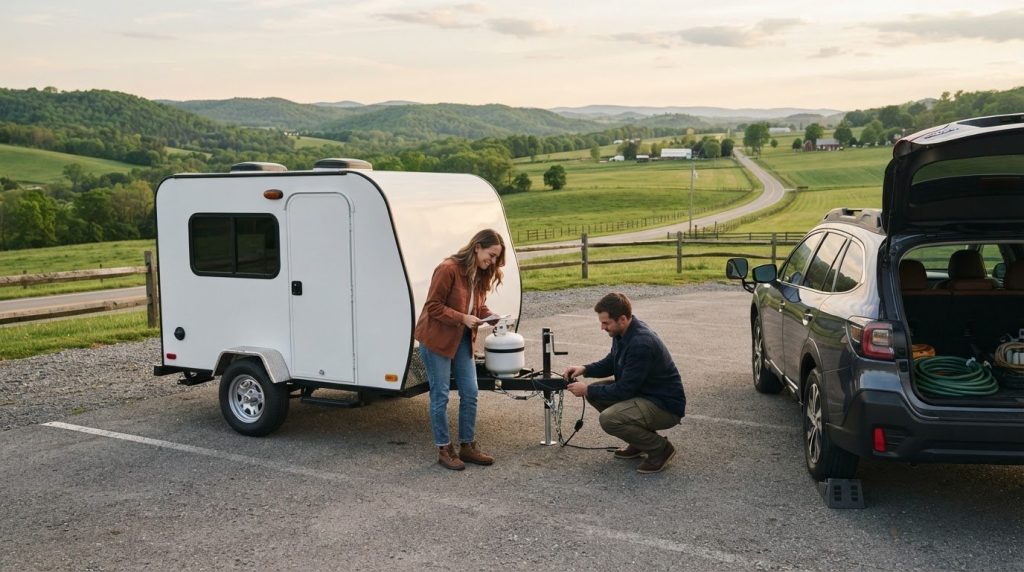
What’s the easiest type of camper to tow for a beginner? It may not be the smallest one. The best fit depends on your vehicle, your route, and how comfortable you feel towing. Pop-up campers, teardrop trailers, and compact single-axle travel trailers are often easier to manage than larger towables, but size alone doesn’t determine whether a camper is right for you.
If you’re unsure about towing capacity, payload, backing up, or handling a trailer on the road, start by checking your vehicle’s ratings. A camper’s dry weight doesn’t include your trip gear, and passengers and cargo count toward your vehicle’s payload. Comparing the loaded camper with your vehicle and hitch limits is an important step before setting off.
This guide compares beginner-friendly camper styles and explains what to check when matching a camper to your tow vehicle. You’ll also find a pre-trip routine and practical tips for turning, reversing, and parking. If you want to try RV travel without towing a rental, Troyer’s RV Rental offers camper and motorhome rentals in Ohio, with delivery and setup available.
Key Takeaways
- The easiest type of camper to tow for a beginner depends on your vehicle, the trailer’s weight and dimensions, the hitch setup, and your comfort behind the wheel.
- Compare teardrops, pop-ups, compact travel trailers, and fifth-wheels by their towing setup, living space, and the learning curve you’re ready for.
- Use your owner’s manual and door-jamb labels to understand towing capacity, payload, combined weight, and tongue weight before choosing a camper.
- Follow a pre-trip routine, then practice turns, braking, reversing, and parking in a safe, open area.
- Renting a camper or motorhome in Ohio, with delivery and setup, lets you try RV travel without towing the rental yourself.
What Is the Easiest Type of Camper to Tow for a Beginner?
For many first-time towers, a compact conventional travel trailer is an approachable starting point. But no one camper type works best with every vehicle or feels easy for every driver. The trailer’s loaded weight, length and width, hitch setup, and your experience all affect how manageable it is.
Towing ease is how manageable a camper feels when its loaded weight, dimensions, and hitch setup are matched to the tow vehicle’s ratings and the driver’s comfort level. Use that as your guide rather than assuming one style is automatically easy to tow. Even a small trailer can be a poor match for a particular vehicle.
Why compact travel trailers often appeal to first-time towers
A shorter trailer may be easier to place in a campsite or parking area than a longer one. It can also feel less intimidating when turning or backing up because there’s less trailer behind the vehicle to account for. Compact travel trailers offer a familiar towing setup and can provide useful indoor space.
Other small styles are worth comparing, too. A pop-up camper folds down for travel and opens up at camp, while a teardrop keeps the trailer footprint compact. Their layouts and camping comforts differ. A smaller trailer may have less interior room or fewer amenities, so think about what you’ll want once you’re parked, not just how the camper might feel on the road.
Compact size is a starting point, not a safety check. Compare the trailer’s loaded weight and hitch demands with your vehicle’s ratings and the hitch’s limits. A short trailer that exceeds a rating isn’t a suitable choice just because it seems easy to maneuver.
Why there is no single easiest camper for everyone
Your vehicle is only part of the picture. Passengers and cargo add weight, while your trip plans determine how much living space and storage you’ll need. A couple heading out for a short getaway may want a different layout from a family carrying more gear. The roomiest option may not be the most comfortable one to tow.
Driver confidence matters, too. Practicing wide turns, steady braking, and reversing in an open area can help you feel more at ease before heading into tight spaces. Trailer width affects how much room you need, and the hitch setup affects how the trailer connects and responds. Consider the roads and parking situations on your trip, then choose a setup you can handle calmly.
The easiest choice is the one that fits both your vehicle and your travel needs. Don’t choose by length alone or assume one weight or size is safe for every vehicle. Start with a manageable style, then use the ratings, your plans, and practice to guide your decision.
Camper Types Compared: Which Ones Feel Most Manageable to Tow?
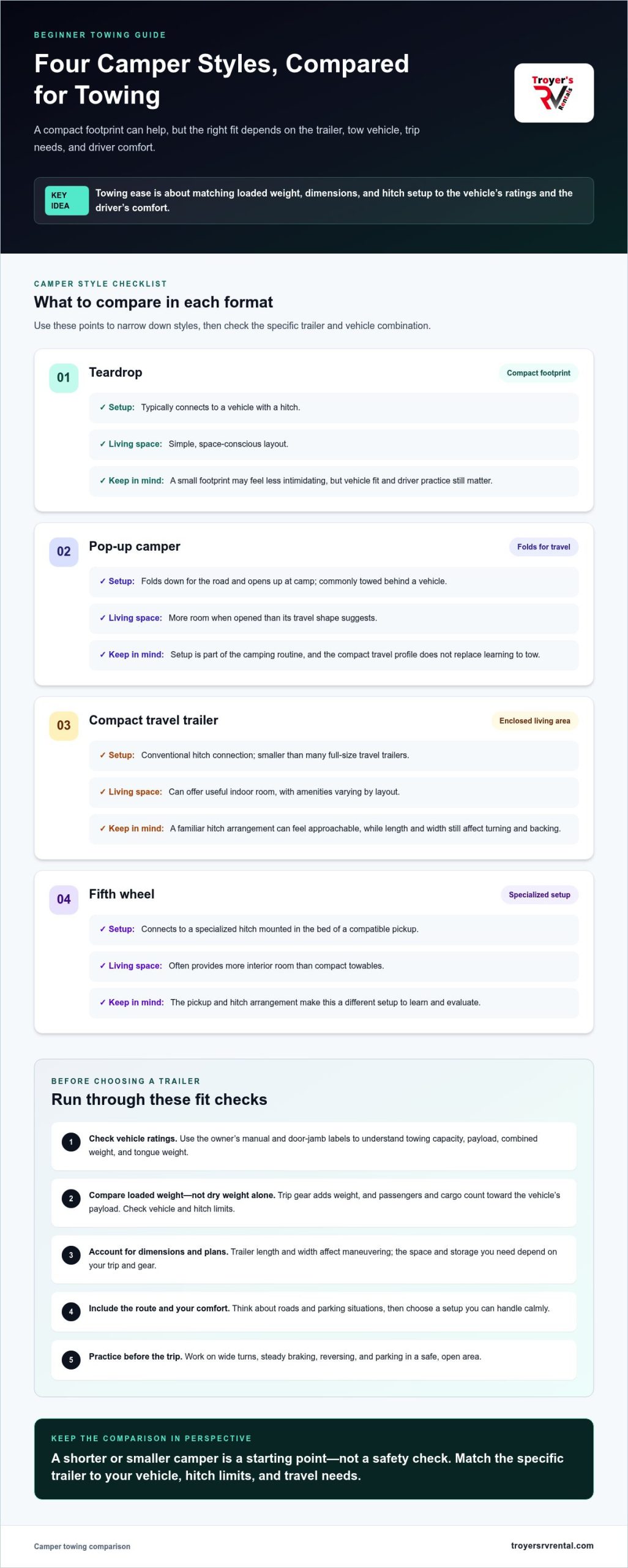
Teardrops, pop-ups, and compact travel trailers are common options for first-time towers because they have a smaller footprint than larger towable RVs. But a compact shape doesn’t settle the question of the easiest type of camper to tow for a beginner. The towing setup, available living space, and your tow vehicle all matter. Use this comparison to narrow down the styles you want to explore, then check the specific trailer and vehicle combination.
| Camper type | General size and towing setup | Living space | Potential learning curve |
|---|---|---|---|
| Teardrop | Compact; typically connects to a vehicle with a hitch. | Simple, space-conscious layout. | Its small footprint may feel less intimidating, but towing still depends on vehicle fit and driver practice. |
| Pop-up | Folds down for travel and opens at camp; commonly towed behind a vehicle. | More room when opened than its travel shape suggests, though setup is part of the camping routine. | The compact travel profile may appeal to beginners, but it doesn’t remove the need to learn towing and setup. |
| Compact travel trailer | Conventional hitch connection; smaller than many full-size travel trailers. | Can offer an enclosed living area, with amenities varying by layout. | A familiar hitch arrangement can be approachable, while trailer length and width still affect maneuvering. |
| Fifth wheel | Connects to a specialized hitch mounted in a compatible pickup’s bed. | Often provides more interior room than compact towables. | The pickup and hitch arrangement make this a different setup to learn and evaluate. |
Teardrop, pop-up, and compact travel trailer differences
These three formats trade space and convenience in different ways. A teardrop keeps the living area simple and compact. A pop-up folds down for travel, then expands at camp, so include setup in your plans. A compact travel trailer stays enclosed on the road and may offer more indoor room, but can take more space to maneuver. A smaller exterior may help in tight places, but it doesn’t guarantee easier towing.
When a fifth wheel or motorhome may not fit the same question
A fifth wheel requires a suitable pickup and compatible hitch installation, so it isn’t a standard hitch-towed trailer option. A motorhome is different: you drive the RV rather than tow it behind your vehicle. That may suit travelers who prefer not to manage a trailer, though driving a larger vehicle has its own learning curve.
Match the format to your trip, not just to a beginner ranking. Consider how much room you want, what vehicle you have, and whether you’re comfortable learning the towing setup. For Ohio travelers who want to try RV life without towing a rental, Troyer’s offers camper and motorhome rentals, plus delivery and setup.
The linked OSHA rim-wheel standard covers workplace servicing of rim wheels, not camper towing. Use your vehicle and trailer documentation to assess your setup.
How to Tell Whether a Camper Matches Your Tow Vehicle
Start with your vehicle’s owner’s manual and door-jamb labels. The manual can identify towing and combined-weight ratings for your vehicle’s configuration. The door-jamb label provides information about how much weight the vehicle can carry. Use the ratings for your exact vehicle, not a similar model or a general online estimate.
The lowest applicable vehicle or hitch limit governs the match. A tow rating alone doesn’t prove that a particular camper is suitable. Account for passengers, cargo, the trailer’s loaded weight, and the limits of the hitch and other towing equipment.
Which vehicle and trailer ratings should beginners compare?
These terms help you read your vehicle and trailer documents:
- Towing capacity: The maximum trailer weight the vehicle is rated to tow.
- Payload: The weight the vehicle can carry, including passengers, items inside the vehicle, and the trailer’s tongue weight.
- Gross combined weight rating (GCWR): The maximum permitted combined weight of the loaded tow vehicle and loaded trailer.
- Tongue weight: The downward force the trailer places on the hitch. It also uses part of the tow vehicle’s payload.
- Trailer gross vehicle weight rating (GVWR): The maximum loaded weight the trailer is designed to carry.
Compare the trailer’s GVWR with your vehicle’s towing and combined-weight limits. Check the hitch’s rated towing capacity and tongue-weight limit, too. The trailer must also be loaded within its own rating. One limit may be lower than another, so don’t rely on just one number.
Pay attention to weight descriptions. A camper’s dry or unloaded weight doesn’t include everything you’ll bring. Water, food, clothing, luggage, and camping gear add weight. The loaded travel weight is more useful for judging what you’ll actually tow. Don’t assume the dry-weight number represents the finished setup.
How passengers, cargo, and trip plans change the match
Make a realistic list before choosing a camper. Count everyone riding in the tow vehicle, then consider luggage, food, water, and gear. Those items affect the vehicle’s payload, while the trailer’s load affects its actual towing weight. A trip with extra equipment or supplies may call for a different match than a light weekend away.
Your vehicle’s maximum rating is a limit, not a target to exceed. If the figures are close, don’t guess or treat one rating as a substitute for another. The exact vehicle, trailer, hitch, and loaded weights matter. Choose a conservative match, and if you can’t interpret the ratings or equipment instructions, pause and review the documentation before towing. A careful check makes it easier to head out with confidence.
First-Time Towing: A Simple Plan for a More Confident Trip
A calm first trip starts before you pull out of the driveway. Follow a repeatable checklist, give yourself time to practice, and choose a route that doesn’t force rushed decisions. Your vehicle and trailer manuals take precedence over general advice in this guide. Follow their instructions for setup, loading, and checks.
A pre-departure check for the tow vehicle and camper
Use this sequence before each trip. If a step differs from the instructions for your equipment, follow the relevant manual.
- Confirm the match and load. Check the vehicle, trailer, and hitch ratings against the camper’s loaded weight. Account for passengers and cargo, and secure the load as directed.
- Connect the hitch. Follow the hitch and trailer instructions to attach and secure the connection. Fit the safety chains as instructed, and attach them to the intended points.
- Connect the electrical plug. Check that it’s seated properly, then test the trailer lights and signals with help from someone outside the vehicle.
- Set mirrors for visibility. Adjust them so you can see traffic beside and behind the vehicle and trailer. Don’t start out if the trailer blocks your view.
- Check tires and loading. Use the vehicle and trailer manuals for tire pressure guidance. Confirm that cargo is secured and the camper is loaded within its ratings.
Practice the skills that make towing feel less intimidating
Choose a safe, open area before tackling busy roads or a tight campsite. Practice slow, wide turns and watch how the trailer tracks behind the vehicle. Leave more room to stop than you would while driving without a trailer. Pay attention to overhead and side clearance, especially when turning or approaching obstacles.
Reversing takes patience. Practice with a spotter in a visible, safe position, and agree on simple signals before you begin. Move slowly, pause often, and get out to look if you’re unsure about clearance. Include parking in your practice so arriving at your destination feels less like a first attempt.
Plan a beginner-friendly route with room for turns and places to stop safely. Before leaving, review the roads and destination access so you can avoid routes that seem too narrow or difficult for your setup. Allow extra time. If traffic, weather, or a maneuver feels uncomfortable, pull over only where it’s safe and reassess rather than rushing.
Practice and preparation matter more than finding a camper that simply sounds easy to tow. Even if you’ve chosen what seems like the easiest type of camper to tow for a beginner, confidence comes from knowing your setup and taking each step at a comfortable pace.
If you’d rather enjoy an RV trip without towing a rental, explore camper rentals with delivery and setup from Troyer’s RV Rental in Ohio.
Want an RV Trip Without Towing? Consider Renting in Ohio
You don’t have to own a camper or tow one to find out whether RV travel suits you. Renting lets you experience life on the road, see what kind of space works for your trip, and learn what you enjoy before deciding whether to buy. It can also take the pressure off choosing the easiest type of camper to tow for a beginner right away.
Troyer’s RV Rental serves travelers in Ohio, including the Millersburg area, with camper and motorhome rentals for short-term and longer-term trips. If you don’t want to tow a rental, RV delivery and setup brings the rental unit to your destination. For trip-planning details, see the Ohio motorhome rental guide.
Choose between towing a camper and driving a motorhome
With a towable camper, you drive your own compatible vehicle and pull the camper behind it. You’ll need to learn how the trailer changes turns, braking, parking, and reversing. With a motorhome, the RV itself is your vehicle. You won’t tow a separate camper, but you’ll need to feel comfortable driving the motorhome and planning for its size.
Think about which part of the trip feels easier for you. If you’re comfortable towing and want to use your vehicle, a camper may suit your plans. If managing a trailer sounds stressful, a motorhome or delivered rental offers another way to try RV travel. Troyer’s delivery service transports and sets up a rental at your destination. Learn more in this Ohio RV delivery and setup guide.
Plan a beginner-friendly RV getaway near Millersburg
Start with the kind of getaway you want, then choose the travel style that fits your comfort behind the wheel. If towing is part of the plan, account for the route and the places you’ll need to turn, stop, and park. If you’d rather skip towing, delivery and setup can let you focus on settling in at your destination.
Millersburg and the surrounding Holmes County area are a local starting point for exploring RV travel in Ohio. Keep your first trip simple. Choose a destination and schedule that give you room to get comfortable, whether you’re driving a motorhome, towing a camper, or having a rental delivered.
You don’t need to settle on a camper to buy before you know what works for you. Explore Troyer’s camper and motorhome rentals as a practical way to try RV travel and find the style that feels right for your next trip.
Make Your First RV Trip a Test Run
Your first outing doesn’t need to settle every question about RV life. Treat it as a chance to notice what makes you comfortable: how you like to travel, what kind of space matters, and whether you’d rather tow or drive the RV. That experience can guide a future choice without making the trip a major commitment. A relaxed getaway can be a success even if you come home with a few new questions.
If you’re still weighing the easiest type of camper to tow for a beginner, choose a next step that gives you experience on your terms. Troyer’s RV Rental serves travelers in the Holmes County area, including Millersburg. Delivery includes transporting and setting up a rental at your destination, an option if you’d prefer to leave towing out of the plan.
Explore RV rentals and plan your Ohio getaway. Start with the kind of trip that feels right for you, then enjoy the road at your own pace. A little experience can make the next decision feel much easier.
Frequently Asked Questions
Is a teardrop camper easier to tow than a travel trailer?
A teardrop may feel less imposing than a larger travel trailer, but it isn’t automatically easier for your vehicle or trip. Compare the specific trailer’s loaded weight and dimensions with your vehicle’s ratings, then consider the route and where you’ll park. Also think about how you’ll use the camper. If you need more indoor space or facilities, a larger trailer may better fit your plans, even if it takes more practice to maneuver.
Can an SUV tow a camper?
Some SUVs can tow campers, but the answer depends on the exact SUV and trailer combination. Vehicles in the same general category can have different ratings, so don’t decide based on the word “SUV.” Check the information for your vehicle’s specific configuration and account for who and what will be riding inside. Passengers and luggage affect whether a particular camper is a suitable match.
How do I know if my vehicle can tow a camper?
Compare the ratings for your exact vehicle, hitch, and camper rather than relying on a broad rule of thumb. Gather the vehicle’s owner’s manual and labels, along with the trailer and hitch information. Include expected passengers and cargo in your comparison. If you can’t confidently interpret a rating or the numbers don’t appear to align, pause and review the relevant documentation before towing.
Is a pop-up camper easier to tow than a hard-sided camper?
A pop-up folds down for travel, which may make its road profile feel less bulky than some hard-sided campers. But shape alone doesn’t determine towing ease. Review the camper’s loaded weight, dimensions, and towing requirements. Then consider the full camping routine: a pop-up needs to be opened and set up at the destination, while a hard-sided camper offers a different balance of road size and indoor space.
What should a beginner check before towing a camper?
Before departure, secure the connection and safety chains as directed, and confirm that the electrical plug, lights, mirrors, and tires are ready according to the manuals. Ask a travel companion to help check the lights while you operate them. Before your first road trip, learn the vehicle’s controls and practice in an open area. Keep your first drive simple, with room to pause safely if needed.
Can I rent an RV without towing it myself in Ohio?
Yes. Troyer’s RV Rental offers camper and motorhome rentals, as well as delivery and setup that transports a rental unit to your destination. That can suit a first RV stay near Millersburg if you’d rather not tow a trailer on unfamiliar roads. Renting also gives you a chance to try RV travel before deciding whether to buy. Explore Troyer’s RV rentals and plan your Ohio trip.