
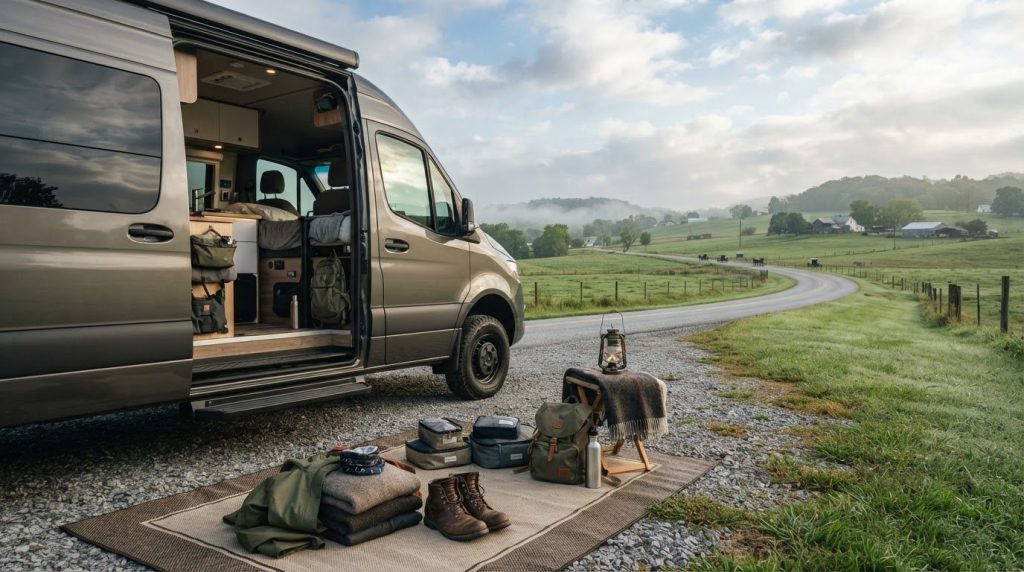
More clothes won’t necessarily make a better-packed RV. To learn how to pack for a week in an RV, plan one outfit for each day, then add layers and activity-specific gear for changing weather. Your list also depends on who’s traveling, what you’ll do, whether you’ll have hookups, and the RV’s storage and weight limits.
It’s easy to pack for a sunny forecast and forget chilly mornings, wet trails, or a change of plans. A little planning helps you bring what you’ll use without filling every cabinet or hauling supplies the trip doesn’t need.
Use this guide to choose clothing and outerwear, prepare for off-grid water and power, organize storage, and pack a day bag. You’ll also learn how to tailor your list to your travel party, destination, activities, and rental provisions, so you can spend less time sorting gear and more time enjoying the road.
Key Takeaways
- Pack a daily outfit, then add layers and weather-ready outerwear to handle changing conditions.
- Plan water, power, and waste supplies around whether your campsite has hookups.
- Group clothing and gear by activity, and keep day-trip essentials easy to reach.
- Tailor your list to your travel party, plans, local weather, and the RV’s storage and weight limits.
1. Clothing layers and weather-specific outerwear
Start with the forecast for each stop, not just the temperature on departure day. In the United States, winter temperatures can range from freezing to 70 degrees, so a single heavy coat may not suit every outing. For camping near Millersburg, plan for chilly mornings, warmer afternoons, and rain by bringing layers you can add or remove. Check the forecast again before packing, then choose outerwear for the conditions and activities you expect.
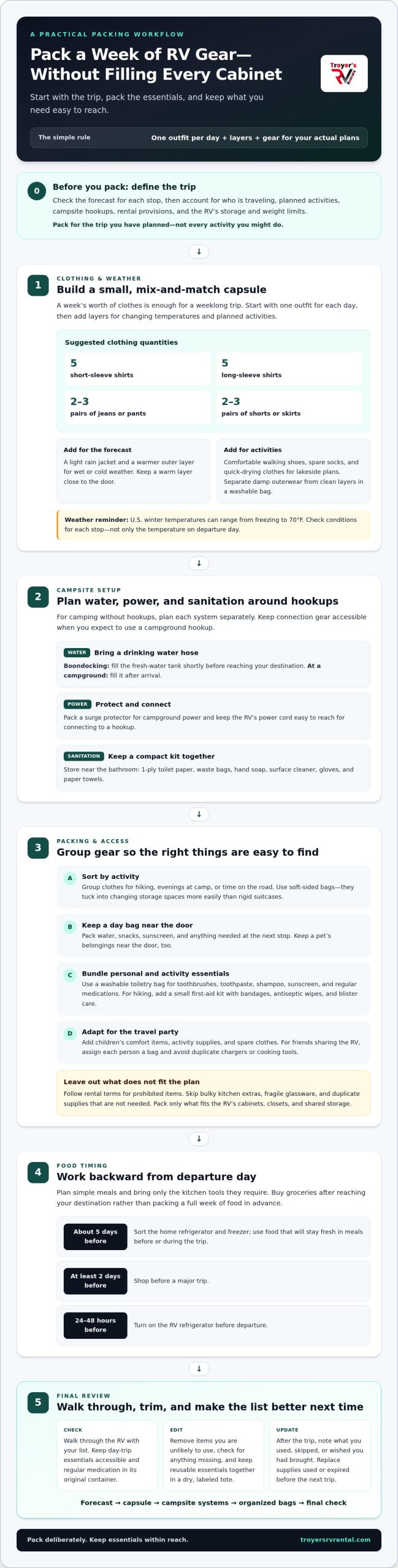
Build a small clothing capsule with pieces that work together. Pack five short-sleeve shirts, five long-sleeve shirts, two or three pairs of jeans or pants, and two or three pairs of shorts or skirts. Choose versatile colors and layers, so one pair of pants works with several shirts. Add a light rain jacket and a warmer outer layer if wet or cold weather is in the forecast. This keeps clothing organized without filling the RV with outfits you’ll wear only once.
Choose extras to match your plans. A lakeside stop may call for quick-drying clothes, while a wooded trail calls for a layer suited to cool shade and light rain. Bring comfortable walking shoes and spare socks for muddy paths. If friends are joining, ask everyone to bring their own weather-ready layers instead of relying on one shared jacket. For a longer seasonal stay, use the same capsule approach and add clothes for the activities you’ve planned.
Separate clean layers from damp outerwear with a washable bag, then keep a warm layer close to the door for quick stops. For context, the U.S. Geological Survey gives water’s density as 62.424 pounds per cubic foot at 39.2°F (4.0°C). That figure is a reminder that cold-weather conditions can involve more than chilly air, so include rain protection when wet weather is on the route. A forecast-based list makes packing for a week in an RV more deliberate and keeps useful layers within reach.
2. Off-grid water, power, and waste supplies
For camping without hookups, plan separately for water, electricity, and waste. Bring a drinking water hose to fill the RV’s fresh-water system. If you’re boondocking, fill the tank shortly before reaching your destination. At a campground, you can fill it after arrival. Pack a surge protector to protect electronics from faulty campground power, and keep the RV’s power cord accessible for connecting to a hookup.
What items are prohibited or best left at home in a rental RV? Follow the rental terms for prohibited items. Leave bulky kitchen extras, fragile glassware, and duplicate supplies at home if they don’t suit your plans.
Make a compact sanitation kit. Include 1-ply toilet paper, waste bags, hand soap, and surface cleaner, then store them together near the bathroom. Add gloves for handling waste equipment, plus paper towels for quick spills. Keep personal-care essentials in a washable toiletry bag: toothbrushes, toothpaste, shampoo, sunscreen, and any regular medications. For hiking days, add a small first-aid kit with bandages, antiseptic wipes, and blister care. Pack supplies around the activities planned, not every possible emergency.
Some essentials can stay together in a labeled tote between trips. Keep the tote dry and easy to reach, and replace anything used or expired before leaving again. Don’t pack every kitchen item from home; choose the utensils and cleanup supplies needed for your planned meals. A simple checklist helps you avoid bringing duplicates while keeping key gear ready. If you’re still planning the vehicle for your trip, RV rental options can help you match your travel plans with the right kind of RV.
3. Packing checklists, storage containers, and a road-trip day bag
Start your packing list with one outfit for each day, plus clothing for planned activities. A week’s worth of clothes is enough for a weeklong trip. Group outfits by activity, such as hiking, evenings at camp, or time on the road, and pack each group in a soft-sided bag. This keeps clothing organized and makes it easier to find a favorite layer without unpacking everything.
How much luggage can a typical RV store, and what bags work best? Storage depends on the RV’s cabinets, closets, and shared space, so pack only what fits. Soft-sided bags are easier to tuck into changing spaces than rigid suitcases. Keep a small day bag near the door with water, snacks, sunscreen, and anything you’ll need at the next stop.
For cooking, plan simple meals and bring only the kitchen tools they require. Buy groceries after reaching your destination rather than packing the entire week’s food in advance. Turn on the RV refrigerator 24 to 48 hours before departure, and shop at least two days before a major trip. Sort the home refrigerator and freezer about five days before leaving; use food that will stay fresh in meals before or during the trip.
What should I pack for a week of RV camping with children or pets? Add each child’s comfort items, activity supplies, and spare clothes, and keep your pet’s belongings near the door. A small coloring kit or favorite toy can make road time easier to manage.
Keep medication in its original container and include the details needed to manage regular doses. One RV owner recommends planning around insurance that covers only one medication refill a month. Add emergency supplies suited to your plans, such as bandages for a hiking day, and keep them easy to reach.
Before leaving, walk through the RV with your list. Remove items you’re unlikely to use, check that day-trip essentials are accessible, and note anything missing. After the trip, update the list with what you used, skipped, or wished you’d brought. This simple step makes the next RV trip easier to organize.
4. Assessing the travel party, destination, activities, weather, RV weight limit, and rental provisions
Build your packing list around the people traveling, then the route. A toddler may need comfort items and spare clothes, while a hiking group needs trail gear and water bottles. For friends sharing the RV, assign each person a bag and avoid duplicates such as extra chargers or cooking tools. The best list reflects your actual plans, not every activity you might do.
Next, match your gear to the destination and expected weather. A lakeside weekend calls for different clothing and equipment than a wooded Ohio campground, while rugged overland expeditions—like the remote routes explored by My African Adventures—require specialized gear for extreme sun, dust, and off-grid conditions. Check conditions for each stop, then set aside rainwear, warm layers, or sun protection as needed. If the forecast changes during the trip, keep a flexible layer and essential weather gear within reach instead of burying them under luggage.
Account for the RV’s weight limit before loading. Class A RVs can weigh from 13,000 to 30,000 pounds, so vehicle size alone doesn’t tell you how much cargo it can carry. Use the specific RV’s stated capacity, and remember that passengers, water, food, and personal belongings all contribute to the load. Prioritize essentials and remove bulky items that don’t support your route or activities.
For a rental, make separate lists of personal belongings and items covered by the rental provisions. This helps you avoid duplicate kitchen gear or bedding while remembering medications, chargers, and personal essentials. Match electronic devices to the outlets and power setup you expect to use. For an off-grid night, prioritize supplies that don’t depend on campground hookups.
Do a final walkthrough in packing order: people’s needs, destination gear, weather layers, and RV capacity. Then remove anything that doesn’t fit those four checks. For a trip that calls for a motorhome, plan your RV rental and build your list around the vehicle and itinerary.
Troyer’s RV Rental: Motorhome Rentals
Troyer’s RV Rental offers motorhome rentals for travelers who want to bring their plans and packing list on the road. Choose an RV trip when you want a place to rest between destinations, or consider a camper for a different setup. Monthly RV rentals can suit longer stays, and fishing boat rentals are another option for trips built around time on the water.
Once you’ve matched your travel party, route, and gear to your plans, choosing the right rental is a natural next step. Keep your packing list focused on what you’ll use, and leave room for the scenery, shared meals, and memorable stops along the way.
Explore your options or get in touch with Troyer’s RV Rental to plan your trip.
Make Your Packing List the Start of the Adventure
Let your packing list do more than track belongings. Use it to set the pace for your trip: choose the stops that matter, decide what you want to do together, and leave room for unplanned discoveries. Planning how to pack for a week in an RV gets easier when every item supports the kind of time you want on the road.
Before you head out, share the final list with your travel group. Give everyone a chance to flag a must-have, then make the final edit together. That small step can turn packing from separate tasks into the first part of the trip.
Troyer’s RV Rental offers motorhome rentals, camper rentals, and fishing boat rentals for different kinds of getaways. Choose the option that fits your plans, then get ready to enjoy the journey.
Contact Troyer’s RV Rental to start planning. Your next memorable trip is waiting!
Frequently Asked Questions
What clothes should I pack for a week in an RV?
Pack comfortable layers suited to your planned stops, along with sleepwear and clothes for relaxing indoors. Add a swimsuit if swimming is on the itinerary, and bring a separate outfit for messy activities such as campfire cooking. Choose items you can wear in different combinations. If you plan to do laundry, pack clothes that dry easily and bring a small bag for worn items.
What toiletries and personal items should I bring on an RV trip?
Bring the personal-care products you use every day, including a toothbrush, toothpaste, deodorant, and hairbrush. A hanging toiletry bag keeps small items together in a compact bathroom. Add glasses or contact lenses, charging cords, and personal comfort items you rely on. Keep medications together in a clearly labeled pouch, with the details you need to follow your usual routine while traveling.
What safety and emergency supplies should I pack for an RV trip?
Keep a first-aid kit, flashlight, spare batteries, and a portable phone charger where you can reach them quickly. Add a paper copy of your itinerary and important contact details in case your phone battery runs low. Pack personal medication and emergency items specific to your travel party. Before leaving Millersburg, put these essentials somewhere accessible, not beneath luggage or food.
What RV-specific supplies do I need for hookups, dumping, and maintenance?
For hookups, group the relevant hoses, power cord, and surge protector so setup gear is easy to find. For waste handling, pack gloves and sealable bags for cleanup. Keep a small flashlight handy for making connections in low light. With a rental, focus your personal kit on items you’ll use during setup and cleanup, and avoid bringing tools or equipment that duplicate the RV’s supplied gear.
How should I pack differently for hot, cold, or rainy weather in an RV?
For hot weather, choose breathable clothing, a hat, and sun protection, and keep a change of clothes accessible after outdoor activities. For cold conditions, pack warm sleepwear and layers that are easy to add indoors or outside. In rainy weather, bring waterproof footwear and a bag for damp gear. Check conditions along your route from Millersburg, as weather can vary from stop to stop.