
Could an RV solve your crew’s housing needs, only for a site-placement rule to derail the plan? If “construction project temporary housing RV Millersburg” is on your planning list, look beyond the rental itself. An RV can provide a practical place to stay, but the crew’s needs, project site, local rules, and timeline all need to line up.
That’s especially important in Millersburg. Village ordinances restrict occupying a house trailer or similar vehicle on lots outside an approved mobile home park, while requirements can differ beyond village limits. A convenient spot at the jobsite may not be an option. Plan where the RV can legally stay before building your housing plan around it.
This guide will help you decide when an RV rental makes sense and what to consider about crew needs, placement, and a changing project schedule. Troyer’s RV Rental serves Millersburg and Holmes County with daily, weekly, and monthly rentals, plus delivery and professional setup at a specified destination. Use the steps below to match the rental period to the work and plan delivery around the site.
Key Takeaways
- Decide whether an RV suits your crew’s housing needs and the length of the construction project.
- Compare on-site and nearby placement by assessing access, parking space, ground conditions, and safe positioning.
- Use the construction project temporary housing RV Millersburg checklist to organize dates, crew details, delivery access, and a responsible contact.
- Match the rental period to your project window, considering daily, weekly, and monthly options.
- Plan delivery and professional setup alongside the site and schedule so the arrival fits the work plan.
Why consider an RV for construction project temporary housing in Millersburg?
Temporary project housing is accommodation arranged around a construction job’s location and expected duration. Instead of commuting from a distant home or arranging a conventional stay that may not match the work schedule, a crew may use an RV as a nearby place to stay. That can simplify daily routines, especially when a project runs for weeks or longer. Still, an RV is an option to assess, not a fit for every worker, site, or job.
Construction housing has different priorities from a vacation stay. Start with three practical questions: who needs a place to sleep, how long will they need it, and where can the RV be placed appropriately? A campground stay may suit some projects, while another job may call for a different housing plan. Don’t assume an RV can be parked or occupied at the worksite. The project location and local requirements matter.
A useful rule of thumb: Match the rental period to the project timeline, the placement to the site, and the sleeping arrangements to the crew.
An RV is a broad category of vehicle designed for travel and living on the road. The Recreational Vehicle (RV) Overview provides background on common RV types and uses. For a construction project, focus less on vacation features and more on whether the rental arrangement suits the job’s location, schedule, and occupants.
Which construction projects can benefit from temporary RV housing?
A homeowner overseeing a major renovation may want to stay close while parts of the house are disrupted. A new home build may involve workers traveling from outside the area, while a longer assignment could bring a contractor or specialist to Holmes County for an extended stretch. Each situation creates different housing needs. One worker may need an individual arrangement; a small crew needs suitable sleeping space; a household staying nearby may have different routines and priorities. Identify who will stay and for how long before settling on a plan.
Why Millersburg and Holmes County matter to the plan
Location affects more than the drive to work. A nearby stay may help workers manage early starts, changing shifts, or repeated trips to the site, but the closest spot isn’t automatically the right one. Consider the daily route and where the RV can be accommodated. Troyer’s RV Rental serves Millersburg and Holmes County through two local locations, with motorhome and camper rentals for project housing plans. Choose a location that supports the work routine without assuming every jobsite is suitable for RV placement.
How RV temporary housing fits a construction project’s schedule and crew
A useful housing plan follows the work, not just the original calendar estimate. Mark the project start, major phases, and expected completion window, then decide when workers will actually need accommodation. For example, a specialist joining for one part of a renovation may need a shorter stay than a crew working through several stages. Allow for schedule shifts instead of treating the first target date as certain.
Build room for construction schedule changes. Delays or phased work can shift the crew’s housing needs, but don’t assume a rental can be extended automatically. Think through the likely end date early and keep the housing plan connected to project updates.
Match the rental period to project milestones
Troyer’s RV Rental offers daily, weekly, and monthly rental periods. A brief work phase may suit a daily or weekly plan, while a longer assignment may call for a monthly rental. Compare the expected stay with project milestones, such as site preparation, a major renovation phase, or finishing work. Choose a realistic start and end window, then revisit it as the schedule develops.
For construction project temporary housing RV Millersburg, the right rental period depends on when people need to be nearby, not simply the project’s total length. If work is phased, note which workers need housing during each phase and avoid setting dates that don’t reflect the crew’s schedule. If the plan involves a campground or temporary park-camp, the Ohio Revised Code Chapter 3729 outlines state provisions related to RV parks, recreation camps, and temporary park-camps. Placement requirements can depend on the location, so include that planning alongside the rental dates.
Plan housing around the people using it
Start with a clear count of who will stay overnight and whether everyone needs housing for the same dates. One worker may have different needs from several crew members sharing a stay. A household living near a renovation may also have daily routines and privacy priorities to weigh. Consider sleeping arrangements, personal space, work start times, and how people will share the space before deciding what type or number of units makes sense.
Make the plan specific. Write down who is staying, when each person arrives and leaves, and whether the group’s needs change between project phases. Don’t assume one RV arrangement will suit every crew or household. A clear schedule connects the rental period to the people who’ll use it.
Once you’ve mapped the dates and headcount, browse Troyer’s RV rental options as part of your planning. That gives you a practical next step while you coordinate the project timeline and the crew’s housing needs.
Is a construction site near Millersburg suitable for RV housing?
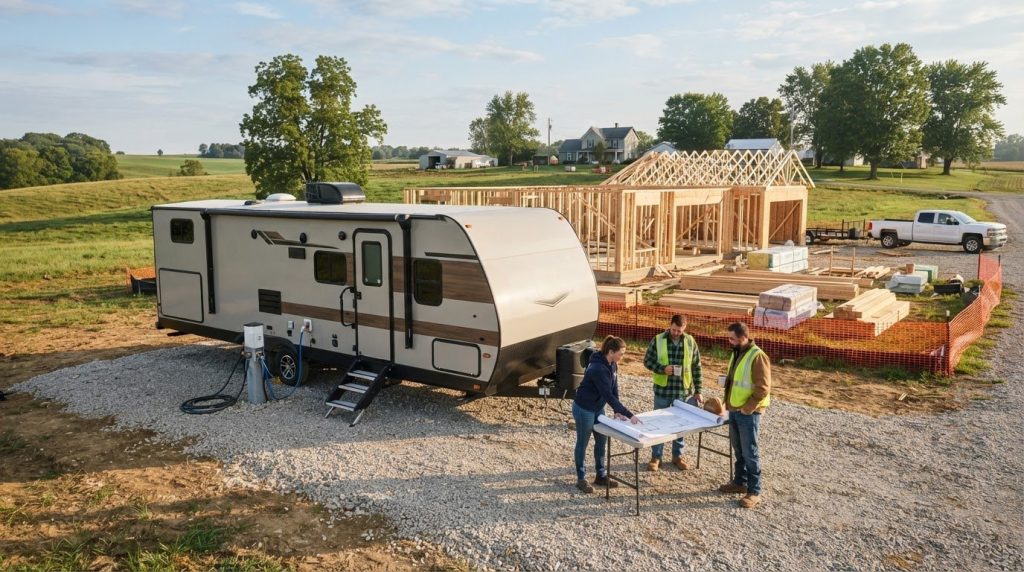
An RV can be delivered to a specified destination, but not every jobsite is ready to receive or house one. Before planning an on-site stay, assess the physical space, daily work activity, and rules that apply to the exact location. Construction sites also change as work progresses. A clear area today may become a staging zone or access route tomorrow.
Local rules are part of the decision. Village of Millersburg ordinances restrict occupying a house trailer or similar vehicle on lots outside an approved mobile home park. Requirements may differ beyond village limits, so don’t assume a site just outside town follows the same rules or has no restrictions. Identify who controls placement and verify applicable requirements with the relevant local authority before settling on an arrangement.
For construction project temporary housing RV Millersburg, separate two questions: can an RV physically reach and fit at the proposed spot, and is it appropriate to place and occupy it there? Answer both before planning delivery.
What to assess before choosing an RV placement
Walk the proposed route and parking area with delivery in mind. Consider the entrance, turning space, overhead and side clearance, ground conditions, and whether the area will remain safe as construction continues. Compare the space with the specific rental’s dimensions rather than relying on a general idea of what an RV needs.
- Access: Identify gates, narrow approaches, work equipment, and other obstacles along the route.
- Space and ground: Allow room for the unit and assess whether the placement area is stable and clear.
- Control and approval: Identify the property owner or site manager who can approve the location, then verify local placement rules.
- Changing conditions: Consider whether deliveries, active work, or site changes could affect safe access during the stay.
Don’t assume utility connections are available or that the site is ready just because there’s open ground. Plan the practical arrangements for the proposed location before finalizing the rental.
On-site or nearby: which arrangement fits the project?
On-site placement may reduce daily travel, but it can conflict with active work, limited space, safety needs, or privacy. A nearby location may be more practical when the jobsite is crowded or conditions change often. Weigh the commute against safe access, the crew’s routine, and the need to keep living space separate from work activity.
Troyer’s RV Rental provides delivery to a specified destination and professional setup. Include clear placement details in your plan, and make sure the proposed location is approved and prepared for the unit. The right option fits the project’s logistics as well as the crew’s stay.
Construction project RV housing checklist for Millersburg renters
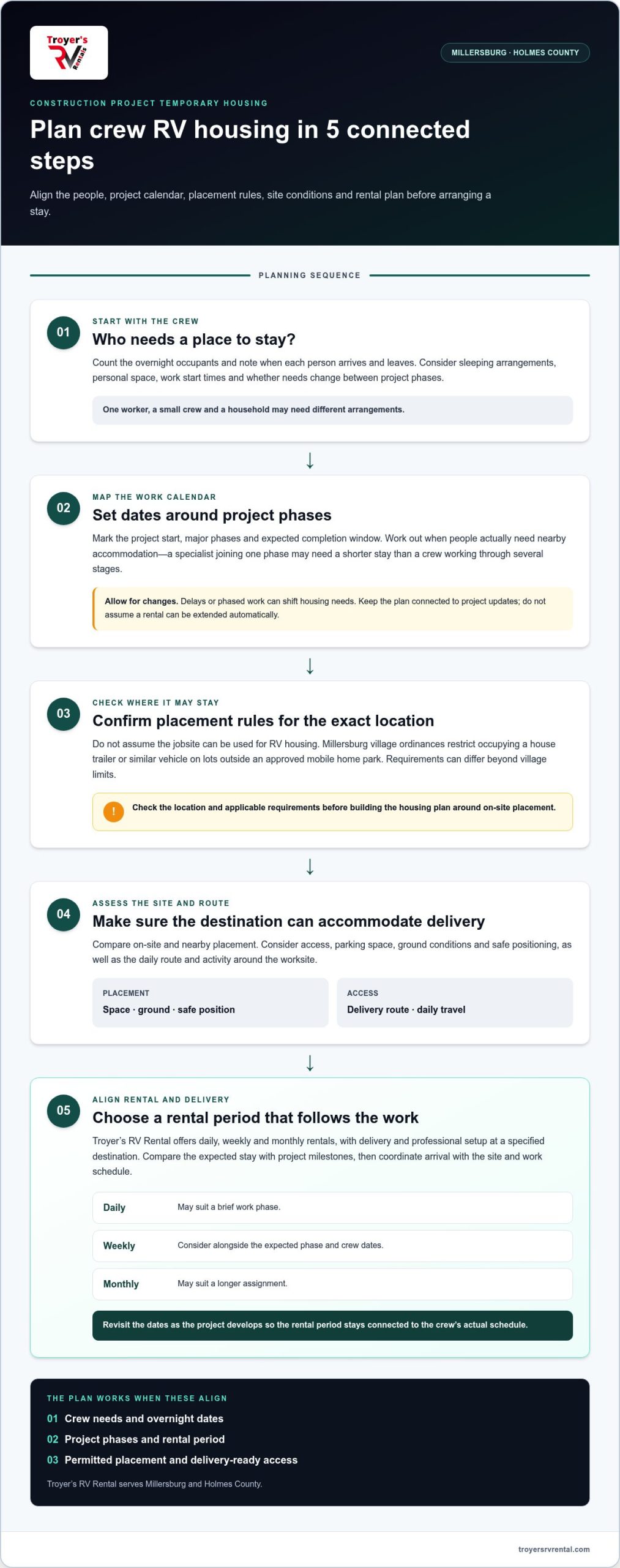
A little preparation connects the rental, the jobsite, and the people who’ll use the RV. Before arranging construction project temporary housing RV Millersburg renters can use, gather the details below. Clear information helps you plan the rental period and delivery around the project.
What information to prepare before arranging the rental
Start with the basics, then add the site details. Be ready to describe who needs housing, when they need it, and where the RV is intended to go. If the project schedule or work phases shift, update the plan so the rental dates still match the crew’s needs.
- Set the project dates. Note the expected start, key work phases, and likely end window. Include a reasonable buffer for schedule changes rather than treating the target completion date as certain.
- Count the occupants. Record how many workers or household members need a place to stay and whether their arrival and departure dates differ.
- Describe the housing need. Explain whether the rental is for one person, a shared crew, or a household. Include privacy and daily-routine considerations that may affect the plan.
- Provide the location. Gather the full project address and identify the preferred RV placement area. A nearby location may be more suitable if the active site is constrained.
- Record access details. Note gates, narrow approaches, overhead clearance concerns, parking limits, ground conditions, and any arrival-time restrictions.
- Name the responsible contact. Identify the site owner, manager, or project lead who can approve placement and be reached about site access on delivery day.
How to prepare for delivery and setup
Before delivery, confirm permission for the proposed placement with the site decision-maker and verify requirements for that specific location with the relevant local authority. Make sure the chosen area is accessible and clear, and decide who will be present to direct the delivery. Plan site services and placement with the person responsible for the property. Don’t assume connections are available or the site is ready.
Use the Ohio RV delivery and setup guide to prepare for the arrival process. If the project is expected to run longer, the monthly camper rental guide can help you think through a longer stay. Keep the rental dates, placement plan, access notes, and site contact together so everyone is working from the same details.
Have your project dates and location ready? Explore RV rental options for your project and plan delivery around your crew’s needs.
Plan construction project temporary housing with Troyer’s RV Rental
RV housing can be a practical part of a construction plan when the crew’s needs, placement location, and rental period line up. Before choosing a rental, identify who will stay, how long they’re likely to need housing, and where the RV can be placed appropriately. The project site may not be the right location, so include permission, local placement requirements, and delivery access in the plan.
Troyer’s RV Rental serves Millersburg and Holmes County with motorhome and camper rentals available daily, weekly, or monthly. Choose a rental period that reflects the expected housing need, then account for project phases and possible schedule changes. This keeps the rental plan grounded in the work rather than relying on a single completion date.
What to expect when planning a Troyer’s rental
Keep the details straightforward. Share the intended destination, rental period, and kind of housing arrangement the project calls for. Troyer’s offers delivery to a specified destination with professional setup, so include delivery in your planning. Clear location details connect the rental arrangement to the project. Site permission and placement requirements remain part of your planning with the relevant site decision-maker and local authority.
Before settling on a plan, make sure these pieces fit together:
- Crew needs: Identify who will stay and whether their dates overlap.
- Rental period: Align daily, weekly, or monthly timing with the expected work window.
- Destination: Select a location that works for the crew’s routine and is approved for the intended placement.
- Delivery plan: Share access information and coordinate who will be present for delivery and setup.
Take the next step for your Millersburg-area project
A clear plan doesn’t need to be complicated. Gather the project dates, occupant count, preferred destination, and access details in one place. Then consider how the rental period can support the project if work shifts or the crew’s housing needs change. For construction project temporary housing RV Millersburg renters can plan around, connect the practical details before delivery instead of assuming every site is ready for an RV.
Whether you’re coordinating a home build, renovation, or longer work assignment in Millersburg or elsewhere in Holmes County, choose the rental period and destination that fit the job. Explore RV rentals with Troyer’s and take a practical next step for your project housing plan.
Turn your project plan into a clear next step
Give your housing decision a place in the project plan, not just a line on the schedule. A short written brief can help the project lead and future occupants stay aligned as work evolves. Note who is responsible for the decision, what would trigger a change, and when you’ll revisit the arrangement. That way, the housing plan can respond to the job instead of becoming another source of uncertainty.
A construction project temporary housing RV Millersburg plan doesn’t need every detail settled at once. Start with what you know, keep the key decisions visible, and adjust as the project takes shape. A clear plan helps you weigh whether an RV rental suits the people and work involved.
For your next step, explore the rental options and consider how they could fit your project housing needs. Explore RV rentals with Troyer’s. A practical plan can make the road ahead feel more manageable.
Frequently Asked Questions
Can an RV be used as temporary housing at a construction site in Millersburg?
It can work if the project location, placement, access, and crew’s housing needs align. Before planning an on-site stay, identify who controls the property and who can approve the placement. Consider how workers will get between the RV and active work areas without disrupting site operations. Troyer’s RV delivery and professional setup can be part of the plan, but the destination still needs to suit the intended use.
Can Troyer’s deliver an RV to a construction project location?
Yes. Troyer’s offers delivery to a customer’s specified destination with professional setup. For a Millersburg-area project, prepare the exact address, describe the preferred placement, and share useful details about the approach and access. Have a project contact ready to coordinate arrival and direct delivery to the approved spot. Plan site permission and placement requirements before delivery rather than treating delivery as approval to occupy the location.
How long can I rent an RV for a construction project?
Troyer’s offers daily, weekly, and monthly rental periods. Choose a timeframe based on when occupants need housing, not only the overall construction estimate. For example, a worker assigned to one phase may need a different rental period from someone staying through the project. Estimate around milestones and a realistic end window. If you’re considering a longer stay, review the monthly camper rental guide.
What should I check before placing an RV at a jobsite?
Start by confirming site permission and identifying who can approve the location. Then assess the route and placement area for access, turning room, clearance, ground conditions, and changes caused by ongoing work. Plan how the RV will fit into the crew’s daily routine and who will meet the delivery. Site services and utility arrangements need project-specific planning. Don’t assume an active construction site is ready just because a parking area looks open.
Is an RV better than a hotel for construction project housing?
Neither option is best for every job. An RV may suit a project when its location works for the crew and an appropriate placement is available. A hotel may be a simpler fit for a brief assignment or when the site cannot accommodate an RV. Compare the daily commute, length of stay, and number of people needing housing. For construction project temporary housing RV Millersburg plans, let those practical needs guide the choice.
What information should I have ready to plan an RV rental for a project?
Have the project address, expected dates, number of occupants, and preferred placement ready. Add access notes, arrival-time limits, and the name of the person responsible for site permission and delivery coordination. It also helps to explain whether occupants will arrive or leave at different stages. For a project near Millersburg, these details help shape the rental plan around the actual work schedule and intended destination.