

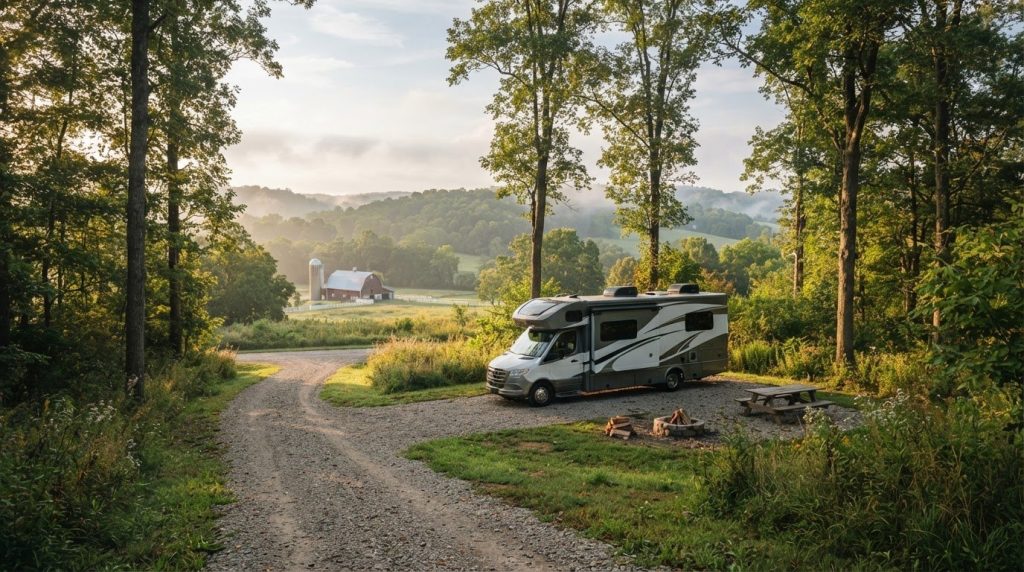
What if the best quiet getaway isn’t the most remote campsite, but one your RV can reach and use comfortably? Finding secluded RV camping Ohio travelers can enjoy takes more than searching for a hidden spot. Consider privacy, access, and the facilities that will make your stay comfortable. A primitive site may not suit every RV or travel group.
If busy campgrounds leave you craving more room to relax, a quieter Ohio trip can take different forms, from a less crowded public campground to a private site with more breathing room. Compare the options, look beyond listing photos, and match a site to your RV and comfort needs. An RV rental, with delivery and setup, can simplify trip logistics. This guide covers the details to consider so you can enjoy the quiet with fewer surprises.
Key Takeaways
- Seclusion means finding the level of quiet and privacy that suits you, not assuming you’ll be completely alone.
- Compare private rural properties, public campgrounds, and primitive areas to find the kind of secluded RV camping Ohio offers that fits your trip.
- Check road access, site surface, facilities, and nearby activity against your RV’s size and needs before choosing a site.
- Use a planning checklist to narrow your options, review current rules, and prepare for arrival.
- Troyer’s RV Rental offers motorhome and camper rentals with daily, weekly, and monthly options for Ohio getaways.
What Does Secluded RV Camping in Ohio Actually Mean?
Secluded RV camping offers the level of privacy and quiet you prefer while still providing access that works for your RV and the amenities you need. It doesn’t promise complete isolation. You may share a campground with other travelers, use common facilities, hear nearby activity, or need to follow posted rules.
That distinction matters when you search for secluded RV camping Ohio. Listings may describe sites as private or peaceful, but those words can mean different things. You might be happy with trees between sites and a quiet place to unwind. Your group may prefer more distance from restrooms, gathering areas, and neighboring RVs. Decide what “quiet” means to you before comparing locations.
Separate the feel of a site from its setup. Privacy describes your experience. Primitive camping usually means a less-developed arrangement with fewer facilities. A site can feel tucked away without being primitive, and a primitive site may still be close to other campers. Neither description tells you on its own whether your RV can reach, park on, or comfortably use the site.
Private, primitive, and quiet: what is the difference?
A private site is managed by a private owner or campground. A primitive site has a more basic setup, but that label doesn’t tell you whether RVs are permitted or what access is like. Look for site-specific details about vehicle access, parking, and facilities. Privacy can also vary from one site to another within the same campground, so don’t assume every spot offers the same experience.
What makes a campsite feel secluded?
Look for clues such as generous spacing, tree cover, an orientation away from neighboring sites, and distance from busy shared areas. Photos and campground maps can help you picture the layout, but they may not show every nearby site or activity area. Compare what you can see with your priorities: more separation, convenient facilities, or a balance of both.
Use this quick preference check before shortlisting places:
- Set your privacy level. Is a natural screen between sites enough, or do you want more distance from other campers?
- Choose your comfort needs. Decide which shared facilities matter and whether a basic setup would suit your travel group.
- Keep RV access in view. A secluded setting is only a good fit if the road, parking area, and site can accommodate your rig.
Think about the whole stay, not just the view from the campsite. A site near a shared area may be easier to reach but feel busier at certain times. A more tucked-away spot may offer the quiet you want but require a simpler setup. There’s no single definition of secluded. The best match gives you the privacy you want without compromising on RV access or the comforts your group expects.
Ohio Secluded RV Camping Options: Private Sites, Parks, and Forests
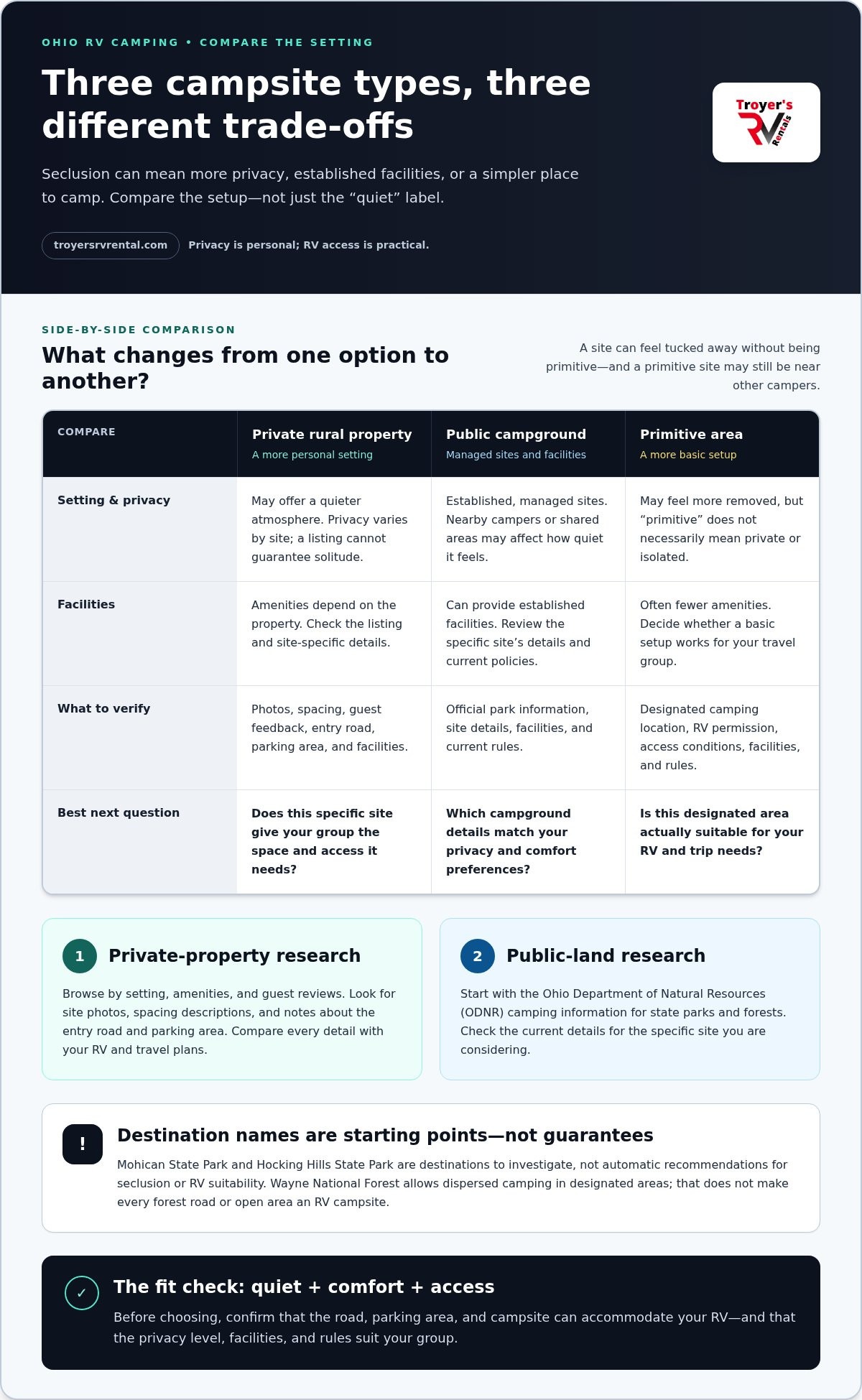
Ohio has several kinds of camping settings, each with different trade-offs. Private rural properties may offer a more personal atmosphere. Public campgrounds can provide established facilities and managed sites. Primitive areas may feel more removed, but often have fewer amenities and may not suit every RV. For secluded RV camping Ohio travelers should compare the setting, access, and rules together rather than relying on a destination’s name or a “quiet” label.
Start public-land research with the Ohio Department of Natural Resources (ODNR), which provides information about camping in state parks and forests. Treat destination names as starting points, not proof that a particular site offers privacy or suits your rig. Conditions and rules can vary at private sites too, so review the details for the location you’re considering.
Private Ohio campsites for a more personal setting
Private camping listings make it easier to browse by setting, amenities, and guest reviews. A rural property may appeal if you want a quieter atmosphere, but a listing can’t guarantee solitude. Study site photos, descriptions of spacing, and notes about the entry road and parking area. Reviews may add context about the experience, but compare the site details with your RV and travel plans.
Public parks and primitive camping areas
Use ODNR’s official camping information to explore public options, then review each site’s current details. Mohican State Park and Hocking Hills State Park are destinations to investigate, not automatic recommendations for seclusion or RV suitability. Primitive camping areas also require careful research. Before choosing a spot, verify whether it permits your intended RV type, how you can access the site, and which facilities and rules apply.
Wayne National Forest is another public-land option to research. Dispersed camping is allowed in designated areas there. That does not mean every forest road or open area is an RV campsite. Review current land-manager information about designated locations, access conditions, and applicable rules before planning around one.
Use this quick comparison to keep the options clear:
- Private rural property: Browse photos, amenities, guest feedback, and site-specific access details.
- Public campground: Review official park information for facilities, site details, and current policies.
- Primitive area: Confirm designated camping locations, RV suitability, and what a basic setup means for your group.
Holmes County, including Millersburg, is a useful regional starting point for planning an Ohio getaway. The location alone doesn’t tell you how private a campsite will feel, so compare individual sites and travel logistics. If renting is part of your plan, explore Ohio motorhome and camper rentals as one way to prepare for a trip that suits your preferred setting.
How to Compare Secluded Ohio Campsites for Your RV
A promising campsite needs more than a quiet-sounding description. Compare the details that affect your comfort and whether your RV can reach and use the site. A secluded setting may come with a narrow approach or fewer facilities, so weigh the trade-offs before making plans. The best secluded site balances privacy with a practical setup for your RV and travel group.
Use a comparison like this to organize what you learn. Separate concrete details in a listing or official site information from impressions in reviews. “Electric hookup available” is a specific claim. “Peaceful and secluded” is a visitor’s description that may reflect their own experience.
| Factor | What to compare | What to clarify |
|---|---|---|
| Privacy | Spacing, tree cover, and the site’s orientation | Whether nearby sites or shared areas may affect the feel |
| Road access | Approach roads, turns, and the route into the site | Whether the route suits your RV’s dimensions and access needs |
| Site surface | Described parking surface and level area | Whether the space appears suitable for the rig |
| Facilities | Listed restrooms, water, electricity, and other amenities | Which facilities are available at the specific site |
| Nearby activity | Shared facilities, gathering spots, and neighboring sites | How close these are and whether activity may affect your preferred quiet |
Check access, parking, and the site layout
Read current campsite information for the approach, turns, parking space, and surface. Compare listed site dimensions with the actual length, width, and access needs of your RV. If you’re renting, use the measurements for the specific vehicle you plan to take rather than assuming every rental fits every campsite. Troyer’s RV Rental provides delivery and setup to help simplify arrival. Include the route and site access in your plans so the RV can be delivered and set up at your destination.
Balance privacy with facilities and comfort
Make a short list of the amenities your group needs, then note which ones are optional. Restrooms, water, and electricity aren’t standard at every site, so rely on location-specific details instead of assumptions based on a campground’s name. Recent reviews can offer context about noise, site spacing, or changing conditions, but they describe a point in time, not a guarantee of what you’ll find.
Before settling on a site, mark each comparison item as confirmed, unclear, or preference-based. Confirmed details can guide your RV-fit decision. Unclear access or amenity information needs a closer look in current site materials. Preference-based comments, such as a reviewer calling a place “quiet,” can help you picture the experience, but your comfort level may differ. This distinction makes it easier to choose a spot that feels peaceful without overlooking practical details that help the trip go smoothly.
Plan a Quieter Ohio RV Trip With This Site-Research Checklist
A little planning can help you find a quieter place without leaving important RV details to chance. Use this checklist in order, and keep notes for each site you’re considering. Policies, access, and conditions vary by location, so use current information from the campground or land manager before settling on dates.
- Choose your preferred setting. Decide whether you want a private rural property, a public campground, or a more basic camping area. Think about how much quiet you want and which comforts your group needs.
- Shortlist possible sites. Compare current maps, site descriptions, amenities, rules, and recent visitor feedback. If public land is on your list, use the Ohio Department of Natural Resources as a starting point for state park and forest information. Look for details about reservations, arrival windows, and seasonal restrictions.
- Check the RV fit. Compare the site’s access information and dimensions with the actual RV you’ll travel in. Consider the approach road, turns, parking area, and site surface. If you’re renting, choose a motorhome or camper that suits your group size and trip plans, then compare its measurements with the site details.
- Review current rules and conditions. Read the location’s policies for camping, facilities, and arrival. Don’t rely on an old review or general description when current conditions or posted rules may affect your plans.
- Plan your arrival. Save the route, note the check-in or arrival instructions, and leave enough time to get oriented at the site. A calmer arrival can make it easier to settle in, especially if the campground has specific directions or access requirements.
Research the campsite before choosing dates
Check the latest site map and description, then compare them with recent visitor feedback for useful context. Confirm whether reservations, set arrival times, or seasonal limits apply to your chosen location. If information differs across sources, follow the current guidance from the campground or land manager. Traveling in late spring before Memorial Day or early fall after Labor Day may be worth considering, but quieter periods don’t guarantee solitude.
Match the rental and arrival plan to the site
Pick a motorhome or camper that fits your group and travel plans, then consider the route and site layout before finalizing your arrival plan. Troyer’s RV Rental provides delivery and setup to help make arrival easier. Include site access and the route in your plans. For details to factor into your planning, review this Ohio RV delivery and setup guide.
Planning a rental trip? The Ohio motorhome rental guide can help you think through the travel side of secluded RV camping Ohio. Explore motorhome and camper rental options as you put your getaway plan together.
Make Your Secluded Ohio Getaway Easier With an RV Rental
A quieter trip starts with a site that suits your preferences, but your RV is part of the plan too. Troyer’s RV Rental offers motorhome and camper rentals in Ohio, with daily, weekly, and monthly rental options. Choose a rental period that fits your trip, whether you’re planning a short break or a longer stay.
Choose a rental approach that fits your getaway
Think about how you want to travel. A motorhome or camper may suit different trip plans, so consider your group, route, and length of stay before deciding. Then compare the rental’s actual dimensions and access needs with the campsite information. For a closer look at the local area, the Millersburg camper rental guide offers helpful context for planning around Holmes County.
Keep the campsite in mind as you choose. A rental that works well for your travelers still needs to fit the approach road, parking space, and site layout. Don’t assume every rental suits every campsite. Match the RV to the location’s current access details, and leave time to understand the site’s arrival instructions.
Take the next step toward a quieter Ohio trip
Before finalizing your plan, bring three things together: the level of privacy you want, a campsite that can accommodate your RV, and a rental that fits your group and travel plans. Troyer’s RV Rental provides delivery and setup to simplify trip logistics. Include the destination and route in your arrangements to plan a smooth arrival.
Planning secluded RV camping Ohio style doesn’t mean choosing between quiet and comfort. Compare the campsite and rental details, then shape the trip around what matters most to your group. If a rental is part of your plan, explore RV rentals with Troyer’s and start putting together a quieter Ohio getaway.
Make Space for a Quieter Ohio Getaway
Your next trip doesn’t need a packed itinerary. Choose a place where you can slow down, enjoy an unhurried morning, and spend time together without rushing from one activity to the next. That intention can help guide your secluded RV camping Ohio getaway around what feels restful to you.
Start with one small step: pick a travel window, then save a few campsite possibilities that match your idea of a peaceful stay. Keep your plans flexible as you compare locations and the RV that suits your group. Room to adjust can make the journey feel easier, even before you arrive.
Troyer’s RV Rental is a local Ohio resource for planning your time away. Explore the options, picture the kind of trip you’d enjoy, and take the next step when you’re ready. Explore RV rentals with Troyer’s and start looking forward to a quieter getaway.
Frequently Asked Questions
Where can I find secluded RV camping in Ohio?
Search private-site directories and Ohio public-land resources to build a shortlist. Directories can help you browse rural properties, while the Ohio Department of Natural Resources is a starting point for state park and forest camping information. For secluded RV camping Ohio, narrow options by region, then check each site’s current RV access, parking, and amenities. A listing’s “quiet” description is a useful lead, not a promise of privacy.
Can you take an RV to primitive campsites in Ohio?
Sometimes, but permission and facilities depend on the specific location. “Primitive” doesn’t automatically mean RV-friendly, so check official site information for permitted vehicle types, road access, parking, and any limits. Ohio State Parks generally don’t allow dispersed camping; designated areas of Wayne National Forest do. Review current rules from the relevant land manager before planning a route or choosing a rental.
What is the difference between private camping and primitive camping?
Private camping describes who owns or manages the property, while primitive camping describes a less-developed setup. A privately managed site may have facilities or offer a simpler experience. A primitive area may be public, but its rules and access depend on the location. Neither term guarantees a private-feeling stay. Check the individual site’s layout and details to understand what your group can expect.
How do I know if a secluded campsite can fit my RV?
Compare your RV’s actual length, width, and height with the campsite’s current information. Also consider the full approach, including narrow roads, sharp turns, low clearances, and room to park once you arrive. A site’s parking space may be suitable even if the route isn’t. If you’re renting, use the measurements for the specific vehicle, then compare them with the site details rather than relying on a general RV category.
Are there secluded RV campsites near Millersburg, Ohio?
Holmes County and the Millersburg area are useful regional search points for an Ohio RV trip. Search private properties and public camping options, then assess each location on its own merits. Being near Millersburg doesn’t mean a site is secluded or suitable for an RV. Look for current information about neighboring sites, road access, parking, and facilities before choosing dates or planning your route.
Is dispersed camping the same as staying at a private campsite?
No. Dispersed camping takes place in designated public-land areas under the land manager’s rules; a private campsite is on property managed by an owner or private campground. The setup, permissions, and available facilities can differ. In Ohio, dispersed camping is generally not permitted in state parks, while designated areas of Wayne National Forest allow it. Check the rules for the exact location, including local restrictions and stay limits.
What should I check before booking a quiet RV campsite in Ohio?
Before committing, review the site’s current rules, access route, parking details, amenities, and dates. Compare these with your RV’s measurements and your group’s needs. Recent reviews may mention noise or changing conditions, but they reflect visitors’ experiences at a particular time. Look for reservation requirements and arrival instructions so you know what to expect. A quiet description is only one part of choosing a workable campsite.