
If you’re asking, “do I need a 50 amp or 30 amp site for my rental,” start with the electrical requirements of the specific RV you’ll be taking. Match those requirements to the hookup listed for your campsite. Doing that before you reserve can help you avoid a power mismatch and make arrival day less stressful.
It’s easy to assume an adapter can solve any difference between your RV’s plug and the campsite pedestal. An adapter can help with plug compatibility, but it doesn’t increase the power available. A 30-amp RV remains limited to 30 amps, while a 50-amp RV connected to a 30-amp outlet has less power available than it would at a 50-amp site.
This guide explains how to identify the rental’s electrical needs, compare them with a campsite hookup, and understand what adapters can and can’t do. You’ll also find practical tips for planning an Ohio stay, including what to consider when your RV rental includes delivery and setup. Check the hookup details before you reserve your campsite so you know what to expect.
Key Takeaways
- Wondering, “do I need a 50 amp or 30 amp site for my rental”? Start with the specific RV’s stated electrical service, not its size or style.
- A campsite hookup describes the power connection available at the site. Compare it with the rental RV’s requirements before reserving.
- Plan which appliances you’ll use at the same time. Air conditioning, a microwave, and other electrical loads all draw from the available power.
- An adapter can help connect different plug types, but it can’t increase the power available to the RV.
- Use the rental’s electrical requirements and the campsite listing to plan your hookup and electrical use for your Ohio trip.
30-Amp or 50-Amp Site for an RV Rental: What Are You Choosing?
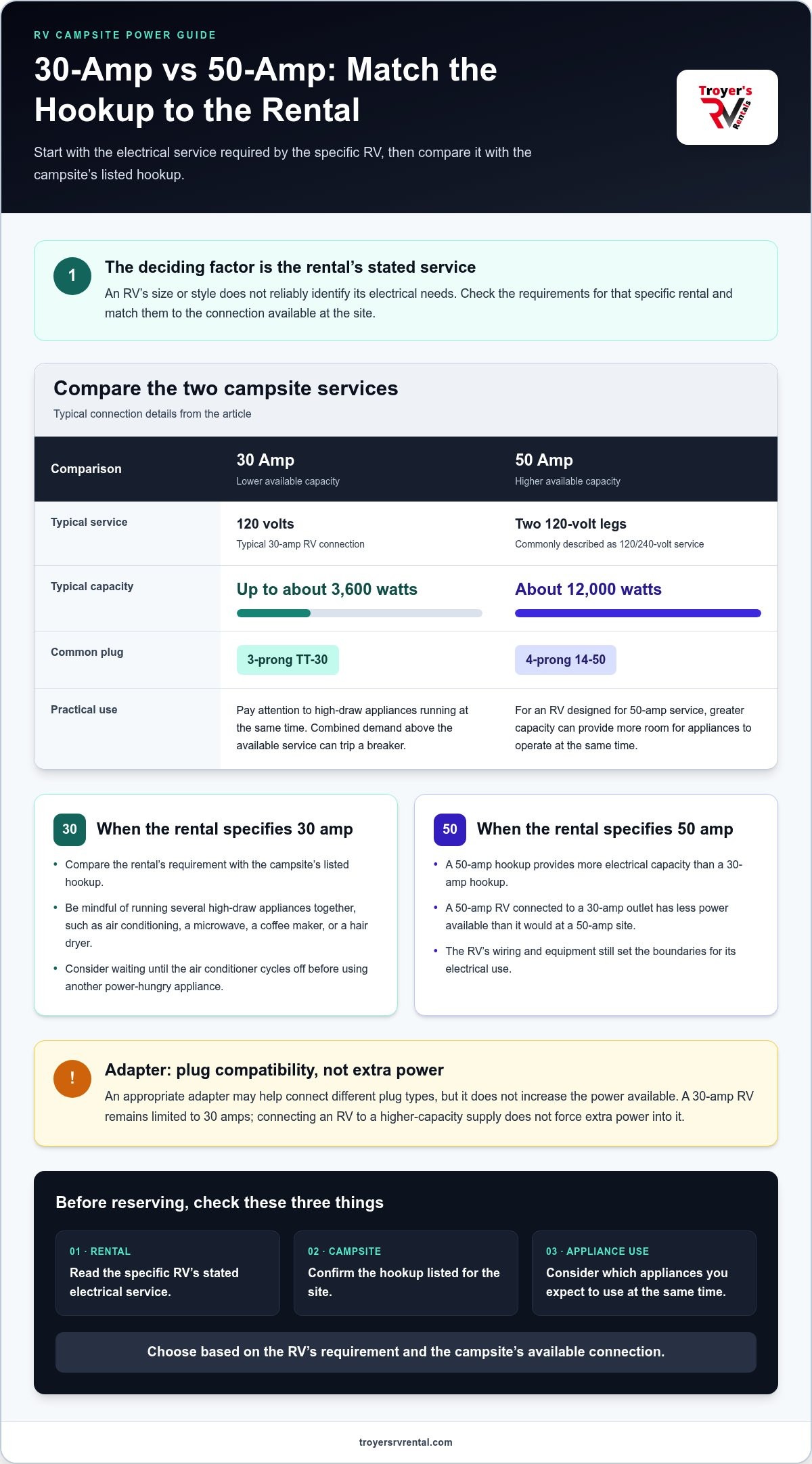
Reserve a campsite with an electrical hookup that works with the rental RV’s stated service. The campsite’s service describes the power connection available at the site; the RV’s rating describes the service it’s designed to use. Start with the specific rental’s requirements rather than guessing based on its size or type.
In short: The RV’s service rating is the connection it’s built to use, and the campsite’s hookup is the connection the site provides. Compare the two before booking.
What does a 30-amp or 50-amp campsite hookup mean?
Amperage describes the capacity of an electrical service. A typical 30-amp RV connection supplies 120 volts, up to about 3,600 watts, and uses a three-prong TT-30 plug. A typical 50-amp RV connection has two 120-volt legs, commonly described as 120/240-volt service. Together, those legs can provide about 12,000 watts and use a four-prong 14-50 plug.
The plug styles differ, and the services provide different amounts of power. For a general overview of recreational vehicle electrical systems, including common hookup types, see the RV overview. When choosing a campsite, focus on the rental RV’s specified service and the connection listed for the site.
Why the rental RV’s electrical rating matters
The RV’s rating indicates which type of hookup it’s designed to use. Connecting a 30-amp RV to a 50-amp supply doesn’t mean it will use more power than its system is designed for. The campsite’s higher service rating doesn’t push extra power into the RV.
However, a higher-rated site doesn’t automatically make every connection suitable. A plug mismatch may require an appropriate adapter, but an adapter doesn’t change the RV’s service rating. Treat the stated requirement for the specific rental as your starting point, then compare it with the campsite’s listed hookup.
Don’t guess based on the RV type
A motorhome or camper’s general category doesn’t tell you its exact electrical service. Vehicles of similar size or style can have different equipment and power requirements. The exterior alone won’t reliably tell you whether a particular rental needs 30-amp or 50-amp service.
If you’re asking, “do I need a 50 amp or 30 amp site for my rental,” use the electrical requirements for that specific vehicle. Then compare those requirements with the campsite listing and choose a site with a compatible hookup.
How 30-Amp and 50-Amp RV Power Work in Everyday Use
Think of campsite power as a shared supply for the RV’s electrical appliances. Total demand changes as equipment turns on and off. An RV may handle one combination of appliances but reach its limit when more are running. So the practical question isn’t only “do I need a 50 amp or 30 amp site for my rental?” It’s also how you plan to use electricity during your stay.
For example, an air conditioner may be running while someone heats food in the microwave. Add a coffee maker or hair dryer, and the combined demand can rise further. Each appliance’s actual draw varies by model and operating conditions, so there’s no universal rule that a particular pair will always work together.
What can change when using 30-amp service?
With a 30-amp connection, pay attention to which high-draw appliances are running at the same time. If the air conditioner is operating, consider waiting until it cycles off before using another power-hungry appliance. This is a cautious way to manage demand, not a guarantee that any particular combination will stay within the RV’s limit.
If combined demand exceeds the available service, a breaker can trip and interrupt power. Reduce the number of appliances running, then follow the RV’s operating instructions before restoring power. Both the campsite hookup’s capacity and the RV’s own electrical limits matter.
What does a 50-amp hookup provide?
A 50-amp hookup offers more electrical capacity than a 30-amp hookup. For an RV designed for that service, the extra capacity can provide more room for appliances to operate at the same time. It doesn’t mean every RV needs 50 amps or that every appliance can run without limits. The RV’s wiring and equipment still set the boundaries.
An adapter changes plug compatibility, not the source’s capacity. If an adapter lets an RV connect to a lower-capacity supply, the available power remains limited by that supply. Connecting an RV to a higher-capacity service doesn’t force extra power into it. Use a suitable connection and follow the RV’s instructions. If you’re unsure how to manage a particular appliance, consult the vehicle’s operating guidance instead of testing combinations at random.
As you plan a rental trip, consider which appliances you expect to use and whether you’ll need them at the same time. For example, you might pause one high-draw appliance while another runs, following the RV’s operating guidance. For an Ohio getaway, plan your campsite around the specific rental’s service and explore motorhome and camper rentals as part of your trip planning.
Which Campsite Is Better for Your Rental: 30 Amp or 50 Amp?
The better campsite is the one that matches the specific RV you’re renting and supports how you plan to use it. A 50-amp site offers more capacity, but that doesn’t make it a better fit if the RV is designed for 30-amp service. Start with the rental’s stated electrical requirement, then compare it with the campsite hookup and your trip needs.
| Service | Common plug | Typical capacity | Renter decision |
|---|---|---|---|
| 30 amp | Three-prong TT-30 | About 3,600 watts | Choose if the rental specifies 30-amp service and the site suits your plans. |
| 50 amp | Four-prong 14-50 | About 12,000 watts | Choose if the rental specifies 50-amp service, or if a compatible RV can benefit from the added capacity. |
These are typical service figures. The campsite’s capacity describes what the hookup can provide, not what every RV will use. The rental’s electrical design remains the deciding factor.
When is a 30-amp site the right fit?
A 30-amp site can be a good fit when the rental’s stated connection is 30 amp and the campsite provides that hookup. It isn’t automatically inadequate for a trip. The practical consideration is that you may need to manage which electrical appliances run at the same time, especially when using several high-draw items. Plan around the rental’s guidance and the activities you expect during your stay.
For example, if you’ll use air conditioning and prepare meals with electrical appliances, consider whether they may be running together. Actual power use varies by appliance and conditions, so don’t assume one combination will always work. Planning ahead can make a 30-amp connection a sensible match for a compatible rental.
When should you choose a 50-amp site?
Choose a 50-amp site when the rental RV specifies 50-amp service. Its additional capacity can also offer more flexibility for compatible RV systems and higher electrical demand. That can be useful if your plans involve running multiple appliances, but it doesn’t mean every rental needs the larger hookup.
A higher-capacity campsite doesn’t change the RV’s wiring, service rating, or appliance limits. The connection still needs to be suitable for the vehicle and made correctly. If you’re weighing the options and asking, “do I need a 50 amp or 30 amp site for my rental,” let the RV’s stated requirements take priority over a general preference for extra capacity. Then consider your expected electrical use and reserve a site with a compatible hookup.
How to Check the RV and Campsite Before You Reserve
A few checks before booking can prevent a hookup mismatch when you arrive. Use the specific rental RV’s stated electrical requirements, not assumptions based on its size, model category, or whether it’s a motorhome or camper. For an Ohio trip, compare those requirements with the hookup listed for the campground site you plan to reserve.
- Identify the RV’s service. Read the vehicle-specific rental details and note whether the RV requires 30-amp or 50-amp service.
- Check the campsite listing. Find the site’s amperage and connection details in the campground’s reservation information.
- Compare the connection. Make sure the listed service and plug type match the RV’s requirements. A common 30-amp RV plug has three prongs; a common 50-amp RV plug has four.
- Plan your electrical use. Consider which appliances you expect to use together and follow the RV’s operating instructions.
Read the rental RV’s electrical requirements
Start with the information for the specific rental you’ll be taking. Don’t guess its amperage based on size or general type. The stated hookup details should identify whether it uses a 30-amp or 50-amp connection. Commonly, a 30-amp RV plug has three prongs and a 50-amp plug has four, but use the rental’s written requirements as your guide.
This matters because motorhomes and campers can differ in their electrical setups, even if they look similar. Don’t assign an amp rating based on another RV you’ve seen or rented. Use the vehicle-specific details when comparing campsite options.
Match the campsite listing to the RV connection
Read the campground’s listing for the particular site you want. Check its service rating and connector description rather than relying on a general campground overview. Hookups and site details can vary, so make sure the information applies to the site you plan to reserve. Follow any site-specific instructions about electrical connections.
Choose a site with clearly listed amperage and connector details that match the rental’s requirements. Don’t assume an adapter makes a mismatch equivalent to a direct match. An adapter can’t increase the power available from the site.
Still wondering, “do I need a 50 amp or 30 amp site for my rental”? Follow the four checks above and let the rental’s stated requirements guide your decision. For Ohio motorhome rental planning, explore a rental that fits your trip and plan the campsite around its electrical needs.
Plan Your RV Rental Around the Right Campsite Hookup
Make the hookup part of your trip planning, not a last-minute detail. Match the campsite’s listed service to the specific rental RV’s stated electrical requirements, then consider how you’ll use power during your stay. If you’re asking, “do I need a 50 amp or 30 amp site for my rental,” start with the vehicle’s requirements rather than a general preference for more capacity.
Troyer’s RV Rental offers motorhome and camper rentals for travelers in Ohio, with delivery and setup services. Include those logistics in your trip plan, and keep the campground reservation details handy so you know where you’re going and what hookup the selected site provides.
Build a simple pre-trip hookup checklist
Before departure, put the key connection details in one place. This makes it easier to compare the RV with the campsite listing and have useful information ready for arrival. Keep the campground’s reservation information accessible, especially if you’re coordinating travel timing with delivery and setup.
- RV service: Record the specific rental’s stated amp service and connection details.
- Campsite hookup: Note the selected site’s listed amperage and connector type.
- Electrical use: Consider which high-demand appliances may run at the same time, and plan their use around the RV’s operating guidance.
- Reservation details: Save the campground name, site information, arrival instructions, and booking confirmation where you can find them easily.
Use the campground’s description for the specific site you reserved, not just a general page about the property. Clear hookup details help you avoid relying on assumptions at the campsite.
Choose a rental that fits the trip plan
Think about your travel dates, who’s coming, how you’ll use the RV, and the campsite setup you have in mind. These details can help you choose between a motorhome or camper rental and plan the trip as a whole. Keep the electrical decision tied to the specific vehicle’s stated requirements, since RV types and sizes alone don’t determine their service rating.
With the hookup matched and your plans in order, you can focus on the road and your time outdoors. Explore Troyer’s RV Rental to find a motorhome or camper for your Ohio getaway, and build your campsite plans around the selected RV’s electrical needs.
Make Your Next RV Trip Easier to Plan
Before you lock in your travel plans, picture how you want the trip to feel. A family getaway, a few days exploring Ohio, or a longer break may call for different choices around space, timing, and campsite setup. Let those priorities guide your rental plans, then use the vehicle’s specific information to answer “do I need a 50 amp or 30 amp site for my rental” with confidence.
A little preparation can leave more room to enjoy the journey. Choose an RV that suits your plans, keep campsite details easy to find, and include delivery or setup in your logistics if it fits your trip. Ready to start planning? Explore Troyer’s RV rentals and plan your Ohio getaway.
Frequently Asked Questions
Can I use a 30-amp campsite with a 50-amp RV?
Sometimes, if the RV’s instructions allow the connection and you use a suitable adapter. The adapter may let the plugs connect, but the RV will still have only the power available from the 30-amp site. For a stay near Millersburg, compare the campsite’s listed hookup with the rental’s requirements and consider whether reduced power suits your plans. Don’t assume an adapter makes the setup equivalent to a 50-amp connection.
Can I plug a 30-amp RV into a 50-amp campsite?
A compatible, properly rated adapter may allow a 30-amp RV to connect to a 50-amp campsite outlet. The RV remains limited by its own electrical system, so the larger site service won’t increase the RV’s capacity. Check the rental’s connection instructions and use equipment intended for that setup. Make sure the site’s listed connection suits the RV.
Does a 50-amp campsite give my RV too much power?
No, a 50-amp site rating doesn’t by itself force more power into a compatible RV. The RV draws power through its electrical system as appliances operate. The key is using the right connection and following the rental’s instructions, not simply avoiding a site with more capacity. Don’t use damaged or unsuitable adapters, and don’t treat a higher-capacity hookup as an upgrade to the RV’s electrical design.
What happens if my RV rental needs 50 amp but my campsite has 30 amp?
The RV may connect if its instructions allow the arrangement and a suitable adapter is used, but the available power will be lower. That can affect which appliances you can run at the same time. If combined demand exceeds the service, a breaker may trip. Before reserving, compare the campground’s connection details with the rental’s requirements to decide whether the site works for your trip.
Are 30-amp and 50-amp RV plugs the same?
No, they use different plug styles and aren’t directly interchangeable. A common 30-amp RV connection has three prongs, while a common 50-amp connection has four. An appropriate adapter may bridge some compatible setups, but it doesn’t increase power or make every connection suitable. Check the plug information for the rental and the site, and follow the instructions for any adapter you use.
Is a 50-amp site always better for an RV rental?
No. The right choice depends on the specific rental’s electrical requirements and the hookup available at your campsite. If you’re asking, “do I need a 50 amp or 30 amp site for my rental,” begin with the vehicle’s stated service, then consider how you’ll use its appliances. For trips around Millersburg, compare those needs with the selected campground’s site details rather than choosing extra capacity by default.