
Planning your first RV camping trip can be exciting, but campground hookups may seem confusing when you encounter terms such as full hookups, electric-only sites, freshwater connections, and dump stations. If you have never stayed at an RV campground before, you might wonder how everything connects and what you need to do to keep your camper comfortable throughout your stay.
The good news is that understanding campground hookups is easier than it might seem. Once you know how water, electricity, and sewer connections work, you can choose the right campsite, prepare for your trip, and avoid common beginner mistakes.
Whether you are planning a weekend getaway, a family vacation, or an extended stay in Ohio, this guide explains the basics of RV campground hookups for beginners, including what each connection does, how to use it safely, and what to check before reserving your campsite.
At Troyer’s RV Rental, we want your camping experience to be enjoyable from the moment you arrive. Understanding these essentials can help you prepare for your trip and make better decisions when choosing a camper and campground.
What Are RV Campground Hookups?
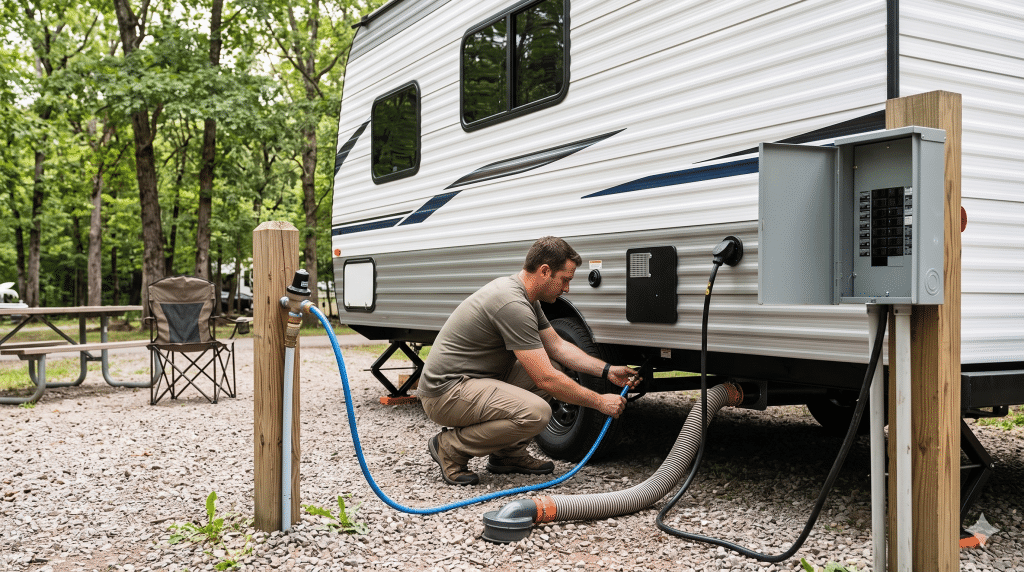
RV campground hookups are utility connections that allow you to access essential services while staying at a campsite. Depending on the campground and the site you reserve, these connections may provide electricity, fresh water, and wastewater disposal.
Instead of relying entirely on the RV’s onboard tanks and batteries, hookups allow you to connect certain systems to the campground’s utilities.
Most campground hookup arrangements fall into three categories:
- Electric hookups: Supply electrical power to compatible RV systems and appliances.
- Water hookups: Provide access to an approved freshwater supply through a suitable hose and connection.
- Sewer hookups: Allow wastewater to drain from compatible RV holding tanks into an approved campground sewer connection.
Some campsites offer all three services, while others provide only electricity or no utility connections at all.
Understanding the difference is important because your campsite determines how you will manage everyday activities such as cooking, showering, charging devices, and emptying wastewater tanks.
1. What Is a Full-Hookup RV Campsite?
A full-hookup campsite generally provides electricity, water, and sewer connections at the site. This arrangement is often convenient for campers who want to use their RV’s facilities without frequently refilling freshwater tanks or visiting a communal dump station.
However, the exact services and connection specifications vary by campground, so always confirm what is included before booking.
Benefits of Full Hookups
Full hookups can make your camping experience more convenient in several ways.
Convenient water access: A suitable water connection lets you access the campground’s water supply without depending entirely on the RV’s freshwater tank.
Electrical power: Compatible electrical service allows you to operate supported appliances and charge devices, subject to the RV’s electrical capacity and the site’s available amperage.
Convenient wastewater disposal: A sewer connection provides a designated place to discharge wastewater from the RV’s holding tanks according to the campground’s rules and the RV manufacturer’s instructions.
Full hookups can be especially helpful for families, longer stays, and campers who expect to use the kitchen, bathroom, and other onboard facilities regularly.
Are Full Hookups Necessary for Beginners?
Not always. A full-hookup campsite may be convenient, but it is not essential for every trip.
If you are planning a short weekend away, an electric-only site may be sufficient, especially if the campground provides restrooms, showers, and a dump station.
Your choice should depend on the RV you rent, the length of your stay, the facilities you want to use, and your comfort level with managing onboard tanks.
Before choosing your site, review the RV rental options at Troyer’s RV Rental and confirm which utilities the specific RV requires.
2. Understanding RV Electrical Hookups
Electricity is one of the most important campground services because it can power many of the systems that make RV camping comfortable.
Depending on your RV and electrical connection, campground power may support lighting, refrigerators, televisions, microwaves, air conditioning, battery charging, and other appliances.
However, not every appliance can operate simultaneously on every electrical connection.
What Do 30-Amp and 50-Amp Hookups Mean?
RV campgrounds commonly provide 30-amp or 50-amp electrical service for compatible recreational vehicles.
The correct connection depends on your RV’s electrical system.
| Electrical service | What beginners should know |
| 30-amp service | Commonly used by RVs designed for a 30-amp connection. |
| 50-amp service | Commonly used by larger RVs or units with greater electrical demands. |
| Adapter | May allow certain compatible connections, but does not increase the available power capacity. |
A 50-amp RV connection is not simply interchangeable with a 30-amp connection. The plugs, electrical configuration, and available power differ.
Always confirm the RV’s requirements and the campground’s available service before booking.
How to Connect RV Electricity Safely
If you are responsible for connecting the electrical supply, follow the instructions provided by the rental company and the RV manufacturer.
A basic safety checklist includes:
- Confirm that the campsite provides the correct electrical service.
- Inspect the power pedestal and connection for visible damage, moisture, or other hazards.
- Use only an appropriate, properly rated RV power cord and compatible equipment.
- Follow the manufacturer’s instructions for switching off power before making or removing connections.
- Check that the connection is secure before using appliances.
- Avoid overloading circuits by operating too many high-power appliances simultaneously.
Never touch damaged electrical equipment or attempt to repair a campground power pedestal yourself. Ask campground staff for assistance if a connection appears unsafe.
What Happens if You Have Too Much Electrical Demand?
Running several high-power appliances at once can overload a circuit.
For example, operating an air conditioner, microwave, and other high-demand appliances simultaneously may exceed the available capacity of some electrical connections.
If the power trips repeatedly, switch off unnecessary appliances and ask the campground or rental provider for guidance. Do not repeatedly reset a breaker without understanding why it is tripping.
Beginner tip: Ask the rental provider which appliances can operate together and whether your RV requires 30-amp or 50-amp campground service.
3. Understanding RV Water Hookups
Water hookups provide access to a campground’s water supply through a compatible connection.
With an appropriate setup, you can use the RV’s sinks, shower, and other supported plumbing fixtures without relying entirely on water stored in the onboard freshwater tank.
However, water hookups require the correct equipment and a basic understanding of the RV’s plumbing system.
What Equipment Do You Need for an RV Water Hookup?
Depending on the RV and campground, you may need:
- A potable-water-rated drinking water hose.
- A compatible connection fitting.
- A pressure regulator if required by the RV manufacturer.
- A suitable water filter, if desired or recommended.
- Any additional equipment specified by the rental provider.
Use a hose intended for potable water rather than an ordinary garden hose. Follow the manufacturer’s guidance for pressure regulation because excessive water pressure can damage plumbing components.
Before connecting, make sure the water supply is approved for the intended use and follow any campground instructions.
How Does an RV Water Connection Work?
The general process is straightforward:
- Confirm that the campsite has a suitable water connection.
- Check the RV’s water system instructions and identify the correct inlet.
- Inspect the hose and fittings for damage or contamination.
- Install any required pressure regulator or other approved equipment.
- Connect the hose securely to the designated water supply and RV inlet.
- Turn on the water gradually and inspect for leaks.
- Check that the plumbing fixtures work correctly.
The exact process can vary by RV model. Some units have specific instructions for using the onboard freshwater tank, city-water inlet, or water pump.
If you are renting a camper, ask the rental provider to demonstrate the correct setup before your trip.
What Is the Difference Between City Water and an RV Freshwater Tank?
These terms describe two ways of supplying water to your RV.
City water connection: The RV receives water directly from an external water supply through its designated inlet.
Freshwater tank: Water is stored in a tank onboard the RV and supplied through the vehicle’s plumbing system, usually with the help of a water pump.
When a campground connection is available, you may be able to use it instead of drawing from the onboard tank. The correct configuration depends on your RV.
Do not assume that every RV uses the same inlet or switching procedure. Follow the specific operating instructions.
Do You Need to Worry About Water Pressure?
Yes. Campground water pressure can vary, and excessive pressure may damage plumbing.
Use the pressure regulator specified or recommended for your RV, and do not assume every campground has the same water pressure.
If you notice leaks, unusual pressure, or unexpected plumbing behavior, turn off the supply if it is safe to do so and contact the campground or rental provider.
4. Understanding RV Sewer Hookups
Sewer hookups allow wastewater from an RV’s holding tanks to be discharged into an approved campground sewer connection.
For beginners, this can be the least familiar part of RV camping. However, understanding the purpose of each tank and following the correct procedure makes wastewater management easier.
What Are Gray Water and Black Water Tanks?
Most RV wastewater systems distinguish between two types of wastewater.
Gray water tank: Collects wastewater from sinks and showers.
Black water tank: Collects waste from the toilet.
These tanks hold wastewater until it can be emptied through an approved disposal system.
Even if your campsite has a sewer connection, you should not assume that every tank needs to remain continuously connected to it.
Why Should You Understand Your RV’s Sewer System?
Incorrect wastewater handling can cause unpleasant odors, leaks, sanitation problems, and damage to equipment.
Your rental provider should explain how the holding tanks work, which valves control them, and how to empty them safely.
If you are new to RV camping, ask for a demonstration rather than attempting to operate unfamiliar valves.
How Does a Sewer Connection Work?
The exact process varies by RV, but the basic principles are similar.
- Confirm that the campsite provides a designated sewer connection.
- Use a compatible, approved RV sewer hose and fittings.
- Secure the connection according to the campground’s and equipment manufacturer’s instructions.
- Follow the RV’s specific procedure for emptying its holding tanks.
- Ensure that wastewater flows into the designated sewer connection without leaks or spills.
- Close valves and disconnect equipment only as instructed.
- Store the sewer hose separately from clean-water equipment.
Wear suitable disposable or reusable protective gloves when handling wastewater equipment, and wash your hands thoroughly afterward.
Never discharge RV wastewater onto the ground, into storm drains, or anywhere other than an authorized disposal point.
Should You Leave the Sewer Valve Open?
For many RV systems, leaving the black water tank valve continuously open while connected to a sewer can allow liquids to drain away while solids accumulate. This may contribute to blockages and make the tank more difficult to empty.
Follow the RV manufacturer’s recommended procedure for holding tank use and disposal.
Your rental provider can explain the correct approach for the specific model you are using.
What if Your Campsite Does Not Have a Sewer Hookup?
You can still camp at many sites without an individual sewer connection.
Depending on the campground, you may be able to use a communal dump station to empty the holding tanks before departure or when needed.
Before booking, check whether a dump station is available, whether there are additional fees, and what procedures the campground requires.
5. What Is the Difference Between Full Hookups, Partial Hookups, and Dry Camping?
Understanding campground terminology can help you select a site that matches your needs.
| Camping arrangement | Typical services | Best suited for |
| Full hookups | Electricity, water, and sewer at the site | Campers seeking maximum utility convenience |
| Partial hookups | Some services, such as electricity and water | Campers comfortable managing one or more onboard systems |
| Electric-only site | Electricity, with no individual water or sewer connection | Shorter stays or campgrounds with shared facilities |
| Dry camping | No individual utility hookups | Campers who can manage onboard tanks and power supplies |
These labels can vary between campgrounds. Always review the specific site’s listed amenities rather than relying on the category name alone.
Which Option Is Best for First-Time RV Campers?
For beginners, an electric-only or full-hookup site can be a practical starting point, depending on the trip.
An electric-only site may be suitable if you mainly need power and plan to use campground restrooms and showers.
A full-hookup site may be more convenient if you want to use your RV’s bathroom and kitchen regularly and avoid relying on shared facilities.
If you are unsure, choose a campground with clear instructions and staff who can answer questions about utilities.
You can also review our RV camping tips for more advice on preparing for your first trip.
6. How to Choose the Right Campground Hookups for Your Trip
The best campsite depends on your travel plans, the RV you rent, and the services available at your destination.
Before making a reservation, review the following details.
Match the Campsite to Your RV
Confirm that the site can accommodate your RV’s length and layout. Check the required electrical service, water connection, sewer availability, and any restrictions on equipment.
Do not reserve a site based only on photographs or a general description.
Consider the Length of Your Stay
For a one-night stop, you may not need the same facilities as you would for a week-long vacation.
Longer stays can make convenient water access, electrical service, and wastewater disposal more valuable.
Think about how often you expect to cook, shower, use the toilet, and run electrical appliances.
Check Campground Rules
Some campgrounds have specific rules regarding sewer hoses, water connections, electrical adapters, and the use of generators.
Confirm these requirements before arrival so you can bring the right equipment and follow local procedures.
Ask About Delivery and Setup
If you prefer not to handle the technical side of setting up a camper, ask whether delivery and setup are available for your destination.
Troyer’s RV Rental offers rental options for travelers planning trips in Ohio. You can explore the camper rental options and review RV rental locations before planning your stay.
Confirm delivery availability, fees, campground permission, and exactly which setup tasks are included.
7. Common RV Hookup Mistakes Beginners Should Avoid
A little preparation can help you avoid common problems at the campground.
Booking a Site Without Checking Electrical Requirements
Not every RV can use every electrical connection without appropriate, compatible equipment.
Confirm your RV’s electrical specifications before reserving a site.
Using the Wrong Water Hose
Ordinary garden hoses are not intended to serve as drinking-water hoses in every situation.
Use a potable-water-rated hose and follow the RV manufacturer’s recommendations for pressure regulation and filtration.
Connecting Sewer Equipment Incorrectly
A poorly secured sewer connection can leak and create a sanitation hazard.
Inspect the hose and fittings, follow the correct tank-emptying procedure, and use protective gloves.
Forgetting to Check Water and Waste Tank Capacity
If you are camping without a full water or sewer hookup, monitor your freshwater and holding tank levels.
Avoid assuming that your onboard tanks can support unlimited use. Manage water consumption and identify the nearest approved dump station before your tanks reach capacity.
Overloading the Electrical System
Operating multiple high-demand appliances may exceed the available electrical capacity.
Understand your RV’s electrical limits and follow the manufacturer’s instructions for appliance use.
Leaving Without Disconnecting Utilities Properly
Before moving the RV, follow the required shutdown and disconnection procedures for electrical power, water, sewer, and any other connected equipment.
Check that all hoses, cables, fittings, and exterior equipment have been disconnected and stored safely.
If your camper is delivered and remains stationary at the campground, follow the rental provider’s departure instructions rather than assuming you need to perform every task yourself.
8. Your First-Time RV Hookup Checklist
Use this checklist before arriving at the campground.
Before booking
- Confirm whether the site has full, partial, or no hookups.
- Check the electrical amperage required by your RV.
- Verify water and sewer availability.
- Review campground rules and any additional fees.
- Confirm your RV’s utility requirements with the rental provider.
When you arrive
- Park in the designated space and follow the campground’s instructions.
- Confirm the electrical supply matches your RV.
- Inspect connections and equipment before use.
- Connect potable water using the approved equipment and procedure.
- Set up sewer equipment only if the site has an appropriate connection.
- Check for leaks and confirm that systems operate as expected.
Before departure
- Turn off and disconnect utilities according to the correct procedure.
- Empty holding tanks at an authorized location when necessary.
- Check that hoses and power cords are safely stored.
- Make sure no equipment remains connected to the campsite.
- Follow the rental provider’s return or checkout instructions.
If you are renting an RV for the first time, ask for a complete orientation before beginning your trip.
Frequently Asked Questions About RV Campground Hookups
What does full hookup mean at an RV campground?
Full hookup generally means a campsite provides electricity, water, and sewer connections. The exact electrical service and connection requirements vary, so check the campground’s site details before booking.
Do all RV campsites have water, electricity, and sewer?
No. Some campsites provide all three services, while others offer electricity only, partial hookups, or no individual utility connections. Many campgrounds also have shared facilities or dump stations.
Can I use an RV without campground hookups?
Yes, provided the RV and your plans are suitable for camping without external utilities. You will need to manage available battery power, freshwater, wastewater storage, and other onboard resources according to the RV’s capabilities.
Do I need a special hose for an RV water hookup?
Use a potable-water-rated hose designed for drinking-water applications. You may also need a compatible pressure regulator or other equipment specified by the RV manufacturer or rental provider.
What is the difference between a 30-amp and 50-amp RV hookup?
They are different electrical services with different connection configurations and power capacities. Your RV must be compatible with the service available at your campsite. An adapter does not increase the power capacity of the source.
How do I empty an RV’s sewer tank?
Follow the specific RV’s holding-tank procedure and the campground’s rules. Use approved sewer equipment, wear protective gloves, prevent spills, and discharge wastewater only into an authorized sewer connection or dump station.
Are full hookups worth it for a short RV trip?
They can be convenient, but they are not necessary for every trip. Consider how long you will stay, whether you plan to use the RV’s bathroom and kitchen frequently, and what shared facilities the campground provides.
Can Troyer’s RV Rental help beginners understand campground hookups?
Before booking, contact Troyer’s RV Rental to ask about the specific camper’s utility requirements, operating instructions, and any setup assistance available. If delivery and setup are offered for your destination, confirm which connections the service includes.
Make Your First RV Camping Trip Easier With Troyer’s RV Rental
Understanding water, electricity, and sewer hookups can make your first RV camping trip feel much more manageable. Once you know what each connection does, you can select a suitable campsite, prepare the right equipment, and avoid common setup mistakes.
Start by checking the campground’s available utilities, matching the electrical service to your RV, using the correct water equipment, and learning how the wastewater system operates. Always follow the instructions for your specific RV and ask for assistance whenever you are uncertain about a connection.
If you are planning an Ohio getaway, explore the camper rentals available through Troyer’s RV Rental. You can also review our RV rental locations to help plan your trip.
With the right preparation and a clear understanding of campground hookups, you can spend less time worrying about utility connections and more time enjoying the camping experience.
Ready to plan your next camping adventure? Visit Troyer’s RV Rental to explore your options and ask about the camper that best fits your trip.