

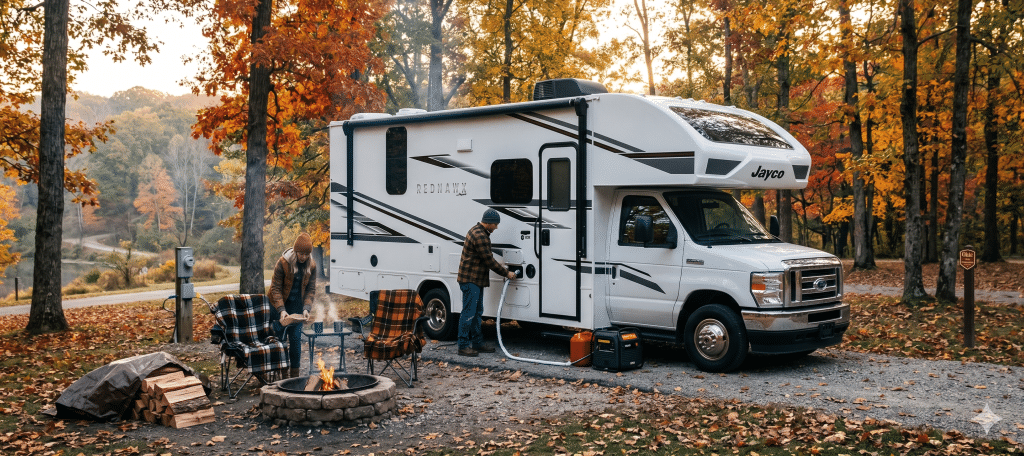
Fall is one of the most enjoyable seasons for an RV camping trip in Ohio. Colorful trees, crisp mornings, quieter campgrounds, and peaceful countryside views make autumn an excellent time to explore the Buckeye State. Whether you are planning a weekend getaway with family, a romantic retreat, or a scenic road trip through Ohio’s countryside, an RV offers a comfortable way to experience the season.
However, fall weather can change quickly. A sunny afternoon may turn into a chilly evening, overnight temperatures can drop significantly, and unexpected rain or strong winds can affect your camping plans. Preparing your RV, packing the right clothing, and understanding how to manage heating, water systems, and campground conditions can make a significant difference in your experience.
If you are planning fall RV camping in Ohio, this guide explains how to prepare for cold nights, handle changing weather, choose a suitable campsite, and make the most of your autumn adventure.
Why Fall Is a Great Time for RV Camping in Ohio
Autumn brings a different atmosphere to Ohio’s outdoor destinations. Summer crowds begin to decrease at many campgrounds, wooded areas display beautiful fall colors, and cooler daytime temperatures can make hiking and sightseeing more comfortable.
Here are some reasons to consider an autumn RV trip.
Enjoy Ohio’s Fall Colors
Ohio’s forests, hills, and scenic country roads become especially attractive during autumn. Areas around Hocking Hills, Mohican State Park, and Ohio’s Amish Country offer opportunities to enjoy wooded landscapes, hiking trails, and picturesque drives.
Peak foliage varies by location and year, so check local fall foliage reports before planning your route.
Experience More Comfortable Outdoor Activities
Cooler weather can make activities such as hiking, photography, fishing, and exploring small towns more enjoyable than during hot summer afternoons.
You can spend the day exploring local attractions and return to your RV for a warm meal and a comfortable place to relax.
Enjoy a Relaxing Camping Experience
Many travelers prefer autumn because of its peaceful atmosphere. Depending on the campground and travel dates, you may encounter fewer crowds and have more opportunities to enjoy quiet evenings outdoors.
Before leaving, check campground operating dates, available amenities, and seasonal restrictions. Some facilities close or reduce services as temperatures fall.
If you are still planning your trip, explore our guide to family camping in Ohio for ideas on organizing a memorable outdoor getaway with your family.
1. Check the Weather Before Your RV Camping Trip
The first step in preparing for fall RV camping is checking the weather forecast. Ohio’s autumn weather can vary considerably between regions, and conditions may change throughout a single day.
Do not plan your entire trip around the daytime temperature. Overnight lows, wind, rain, and possible frost are equally important.
Check More Than the Daily High
Review the forecast for every day of your trip, paying particular attention to:
- Overnight low temperatures.
- Daytime highs and temperature fluctuations.
- Rainfall predictions and thunderstorm risks.
- Wind speed and possible strong gusts.
- Frost advisories or freeze warnings.
- Road conditions along your planned route.
A forecast showing comfortable daytime temperatures does not necessarily mean your RV will stay warm overnight.
For example, a mild afternoon followed by a near-freezing night requires different preparation than a weekend with consistently moderate temperatures.
Keep Your Plans Flexible
Build flexibility into your travel schedule. If heavy rain or strong winds are expected, consider shortening a driving day, changing your route, or spending more time at a suitable campground.
Check the National Weather Service for forecasts and weather alerts at weather.gov.
Practical tip: Check the forecast before departure and again during your trip. Weather conditions can change, so use updated information when deciding whether to drive, hike, or remain at the campsite.
2. Choose an RV With the Right Cold-Weather Features
Not every RV is designed for the same weather conditions. Some models offer better insulation, heating systems, and protected plumbing than others.
Before reserving an RV for an autumn trip, ask about its features and operating limitations.
Ask About the Heating System
Confirm how the RV is heated and whether the heating system is appropriate for the temperatures expected during your trip.
Questions to ask include:
- What type of heating system does the RV use?
- Is the heating system designed to operate overnight?
- Does the furnace require propane, electricity, or both?
- Are there any restrictions on using the heater while connected to campground power?
- Are the water tanks and plumbing protected against freezing?
Do not assume that every rental RV has the same heating equipment or cold-weather capabilities.
Understand Insulation and Plumbing Protection
Insulation helps slow heat loss, but it does not make an RV completely resistant to freezing temperatures.
Water lines, holding tanks, valves, and other plumbing components can be vulnerable to cold weather, especially when exposed to outdoor temperatures.
Ask the rental provider whether the RV is suitable for your planned conditions and whether any special operating instructions apply.
Select an RV That Fits Your Group
Sleeping capacity, interior space, heating arrangements, and bathroom facilities can all affect comfort during a fall trip.
Review the available options on the Troyer’s RV Rental camper rental page to compare suitable RVs for your travel group.
Before booking, confirm the specific unit’s features, rental terms, availability, and any seasonal restrictions.
3. Prepare Your RV for Cold Nights
Cold nights are one of the biggest considerations when camping in autumn. Even when your RV has a heating system, preparing the sleeping area and reducing unnecessary heat loss can help you stay comfortable.
Pack Warm Bedding
Bring bedding that suits the expected overnight temperatures.
Useful items include:
- Insulated sleeping bags or warm comforters.
- Extra blankets.
- Flannel or thermal sheets.
- Warm pillows and pillowcases.
- Comfortable sleepwear and socks.
Layered bedding is useful because different people may prefer different sleeping temperatures.
If you are traveling with children, bring extra blankets and comfortable sleepwear so everyone can settle in without feeling cold.
Reduce Drafts Around Windows and Doors
Windows, doors, and other openings can allow warm indoor air to escape.
Before settling in for the night:
- Close windows and roof vents unless ventilation is needed.
- Check that exterior doors are properly latched.
- Use manufacturer-approved window coverings where available.
- Keep curtains closed after sunset to reduce heat loss through windows.
- Avoid blocking furnace outlets or return-air vents.
Do not cover ventilation openings or modify the RV’s structure to retain heat. Proper airflow is important for safe operation.
Maintain a Comfortable Indoor Temperature
Use the RV’s installed heating system according to the manufacturer’s instructions.
Avoid relying on unsafe heating methods, including outdoor grills, camp stoves, or generators used inside or near openings. These can create serious carbon monoxide hazards.
If you use an auxiliary electric heater, confirm that it is permitted, compatible with the RV’s electrical system, and operated according to its safety instructions. Keep it away from bedding, curtains, and other combustible materials.
Make sure working carbon monoxide and smoke alarms are installed and tested.
Remember: Warm bedding, appropriate heating, and proper ventilation work together. Never sacrifice ventilation or fire safety to make the RV warmer.
4. Protect Your RV’s Water System From Freezing
One of the most important parts of cold-weather camping is understanding how low temperatures affect your RV’s plumbing.
Water can freeze in exposed pipes, hoses, valves, and tanks. Frozen components may crack or become unusable, potentially causing leaks and expensive repairs.
Understand the Difference Between Freshwater and Wastewater Systems
Your RV may have several water-related components:
- Freshwater tanks that store drinking and household water.
- Water supply hoses connected to campground hookups.
- Interior plumbing lines that carry water to sinks and showers.
- Gray water tanks that collect wastewater from sinks and showers.
- Black water tanks that collect toilet waste.
These components may have different levels of protection from freezing.
Ask your rental provider how the specific RV’s water systems should be operated during cold weather.
Be Careful With Campground Water Hookups
A connected water hose may be more exposed to freezing temperatures than plumbing located inside the heated RV.
Before relying on a campground water hookup, check the expected overnight low and follow the campground’s and rental provider’s instructions.
If temperatures may reach freezing, ask whether you should disconnect the hose, use the onboard freshwater tank, or take another approved precaution.
Do not use an improvised heating method on water hoses or plumbing.
Know When to Seek Advice
If temperatures are expected to remain below freezing, verify whether your RV is suitable for those conditions.
Some RVs require specific winter operating procedures or may not be appropriate for extended freezing weather.
Never assume that running the interior furnace will protect every exterior water component.
For a rental trip, clarify these details before departure rather than trying to troubleshoot a frozen system at the campsite.
5. Pack Clothing for Ohio’s Changing Fall Weather
Packing for fall camping requires more than bringing a jacket. Temperatures may rise during the afternoon and fall sharply after sunset, so clothing that can be layered is especially useful.
Use a Layering System
A practical clothing system includes three layers:
Base layer: Wear moisture-managing clothing that helps keep you comfortable during outdoor activities.
Middle layer: Bring fleece, wool, or another insulating layer to retain warmth.
Outer layer: Pack a waterproof or water-resistant jacket that provides protection from wind and rain.
You can add or remove layers as the weather changes.
Include These Clothing Essentials
Consider packing:
- Long-sleeved shirts and comfortable trousers.
- Thermal tops and bottoms for colder nights.
- Warm socks and sturdy walking shoes.
- Waterproof footwear for wet campground conditions.
- Gloves, a warm hat, and a scarf.
- Rain jackets and compact umbrellas.
- Extra clothing for children.
Keep one set of dry clothes accessible inside the RV. If you get caught in rain or walk through wet grass, changing into dry clothing can make the evening more comfortable.
Plan for Wet and Muddy Conditions
Autumn rain can leave campground paths muddy, especially around grassy or unpaved sites.
Pack footwear suitable for outdoor conditions and bring a mat for the RV entrance. Keep wet shoes and rain gear in a designated area instead of allowing moisture to spread throughout the living space.
A little organization can help keep your RV cleaner and more comfortable.
6. Prepare for Rain, Wind, and Unexpected Weather
Cold temperatures are not the only concern during an autumn RV trip. Rain and wind can affect campsite setup, outdoor activities, and driving conditions.
Secure Outdoor Equipment
Before a storm or strong winds arrive, secure or store items such as:
- Camping chairs and folding tables.
- Outdoor rugs and lightweight mats.
- Cooking equipment.
- Portable decorations.
- Loose storage containers.
- Awning accessories.
Retract the RV awning when required by its operating instructions or when wind conditions make it unsafe. Awnings can be damaged by strong gusts, even when the weather initially appears calm.
Follow the rental provider’s instructions for stabilizers, slide-outs, and exterior equipment during severe weather.
Keep Rainwater Away From the RV
Choose a campsite with suitable drainage where possible. Avoid parking in low-lying areas that could collect water during heavy rainfall.
Before setting up, look for signs of standing water, erosion, or muddy ground. If severe weather is forecast, ask campground staff about safer locations and available shelter.
Do not attempt to drive through flooded roads or campground areas.
Monitor Severe Weather Alerts
Thunderstorms, strong winds, and other severe weather can develop quickly.
Keep your phone charged, enable relevant weather alerts, and know where the campground’s designated shelter or safe building is located.
If officials issue an evacuation instruction, follow it promptly. An RV should not be treated as a safe shelter during every type of severe weather, particularly tornadoes.
7. Choose a Suitable Ohio Campground for Fall
Choosing the right campground can make autumn RV camping more comfortable and convenient.
Consider not only the scenery but also the facilities available, the site’s accessibility, and its suitability for the weather.
Look for Essential Amenities
Before reserving a campsite, confirm whether it offers:
- Electrical hookups suitable for your RV.
- Water and sewer hookups, if required.
- Restrooms and shower facilities.
- Laundry facilities, if needed.
- Accessible roads and suitable parking areas.
- A clear policy for late-season camping.
- Information about weather-related closures.
Some campgrounds reduce services or close certain facilities during the colder months. Verify the dates and operating conditions directly with the campground.
Consider Ohio’s Scenic Regions
Ohio has several destinations worth considering for an autumn getaway.
Hocking Hills: Known for its wooded scenery, rock formations, waterfalls, and hiking opportunities. Check trail conditions and campground availability before traveling.
Mohican region: Offers forest scenery and outdoor recreation that can be particularly appealing during the fall foliage season.
Holmes County and Amish Country: Travelers can explore small towns, local shops, countryside roads, and seasonal attractions while enjoying a quieter pace.
Salt Fork State Park area: Offers opportunities to combine outdoor recreation with a relaxing camping trip, subject to current campground operations and reservations.
Choose a destination based on your interests, travel distance, RV size, and the conditions expected during your visit.
If you are beginning your trip near Holmes County, learn more about Troyer’s RV Rental in Millersburg, Ohio and explore the available rental options for your journey.
8. Plan Meals and Hot Drinks for Chilly Evenings
Meals are an important part of the fall camping experience. A warm dinner and a hot drink can make an evening inside the RV especially enjoyable after a day outdoors.
Planning meals in advance also helps reduce unnecessary trips to shops during poor weather.
Choose Simple, Warming Meals
Consider preparing meals such as:
- Vegetable or chicken soup.
- Chili and cornbread.
- Pasta with a warm sauce.
- Hearty stews.
- Oatmeal for chilly mornings.
- Hot chocolate, tea, or coffee.
Check which kitchen appliances are included with your rental and plan meals around the equipment available.
Store Food Properly
Keep perishable foods refrigerated and follow standard food safety guidance. Do not assume cold outdoor temperatures make food stored outside safe.
Pack ingredients in organized containers and keep frequently used items accessible.
For more preparation ideas, see our guide to meal planning for an RV trip.
Make Your Evening Comfortable
After outdoor activities, change out of wet clothing, prepare a warm meal, and organize the RV for the night.
Board games, books, cards, and downloaded movies can be useful if rain keeps you indoors.
A flexible evening plan means bad weather does not have to spoil your trip.
9. Check Tires, Batteries, and Essential RV Equipment
Cooler temperatures and wet roads make basic vehicle checks particularly important before an autumn journey.
If you are renting an RV, ask the provider about the vehicle’s condition and the equipment included with your rental.
Check Tire Condition and Pressure
Inspect the tires for visible damage and unusual wear. Tire pressure should be checked according to the vehicle or RV manufacturer’s recommendations, taking the current tire temperature into account.
Do not rely on a visual inspection alone to determine whether tire pressure is correct.
If you are towing a travel trailer, also confirm that the towing vehicle is properly equipped and rated for the trailer.
Review the Battery and Electrical System
Cold weather can affect battery performance, particularly when a battery is already weak.
Before departure, ask whether the RV’s batteries and charging systems have been checked. Confirm how the heating system, lighting, and other electrical appliances should be used when connected to campground power or operating without hookups.
Carry approved charging equipment for personal devices and keep essential emergency contacts accessible.
Keep Safety Equipment Accessible
Useful items include:
- Flashlights and spare batteries.
- A first-aid kit.
- A charged mobile phone.
- Appropriate emergency roadside equipment.
- A suitable fire extinguisher.
- Working smoke and carbon monoxide alarms.
- Drinking water and basic emergency supplies.
Before leaving, ask the rental provider to explain the RV’s essential controls and emergency procedures.
For additional preparation advice, read RV camping tips for a better vacation.
10. Drive Carefully in Fall Conditions
Autumn road trips can include wet pavement, fallen leaves, fog, and reduced daylight. These conditions can make driving or towing an RV more demanding.
Allow Extra Time
Plan your route with enough time to reach the campground before dark. Arriving in daylight makes it easier to inspect the campsite, connect utilities, and position the RV safely.
If you are unfamiliar with driving a motorhome or towing a trailer, allow additional time for turns, braking, parking, and campground navigation.
Adjust Your Driving to the Conditions
During wet or foggy weather:
- Reduce speed when visibility or traction is limited.
- Increase following distance.
- Avoid sudden braking and sharp steering movements.
- Use appropriate vehicle lighting.
- Watch for fallen branches and debris.
- Stop somewhere safe if conditions become too hazardous.
Do not drive through flooded roads or continue when weather conditions make travel unsafe.
For more guidance, visit our practical guide to driving a motorhome.
11. Make Your Fall RV Camping Trip Easier With Delivery
Not everyone wants to drive a large motorhome or tow a travel trailer to a campground. Depending on the rental arrangement and destination, delivery can be an alternative worth considering.
With an approved delivery and setup service, your rented camper may be delivered to a suitable campsite instead of requiring you to tow it yourself.
This can be helpful for families who prefer to focus on their vacation rather than the logistics of moving a trailer.
Before booking, confirm:
- Whether delivery is available to your chosen campground.
- Whether the campground permits delivered RVs.
- Delivery and setup fees.
- Arrival and departure arrangements.
- Whether electrical and other hookups are available.
- What you are expected to do when the rental ends.
Explore Troyer’s RV rental options and ask about camper delivery if you want to simplify your fall camping plans.
Delivery does not automatically mean the RV is equipped for freezing temperatures, so confirm cold-weather suitability separately.
Fall RV Camping Checklist for Ohio
Use this checklist before leaving for your trip.
| Category | What to Prepare |
| Weather | Check overnight lows, rain, wind, frost, and severe weather alerts |
| RV heating | Confirm furnace operation, fuel requirements, and ventilation |
| Bedding | Pack warm blankets, thermal sleepwear, and extra pillows |
| Clothing | Bring layers, waterproof jackets, gloves, and sturdy shoes |
| Water system | Understand freezing precautions for hoses, tanks, and plumbing |
| Campground | Confirm reservations, hookups, operating dates, and facilities |
| Food | Plan easy meals, warm drinks, and safe food storage |
| Safety | Test alarms and prepare a first-aid kit and flashlights |
| Vehicle | Review tires, battery condition, and emergency equipment |
| Travel | Plan a flexible route and aim to arrive before dark |
Complete the checklist a day or two before departure, then review the forecast again on travel day.
Frequently Asked Questions About Fall RV Camping in Ohio
Is fall a good time for RV camping in Ohio?
Yes, fall can be a great time for RV camping in Ohio because of the autumn scenery, cooler daytime temperatures, and opportunities to explore outdoor destinations. However, campground availability, weather, and overnight temperatures vary, so planning ahead is important.
How cold does it get during fall camping in Ohio?
Temperatures vary by location, date, and weather conditions. Early fall may bring mild nights, while late fall can bring temperatures near or below freezing. Check the forecast for your specific destination rather than relying on seasonal averages.
How do I keep my RV warm during cold nights?
Use the RV’s installed heating system according to its instructions, pack suitable bedding, close windows and doors, and use appropriate window coverings. Keep ventilation openings clear and make sure smoke and carbon monoxide alarms are working.
Can RV water lines freeze during fall camping?
Yes. Water lines, hoses, tanks, and valves may freeze when exposed to sufficiently low temperatures. Ask your rental provider about the specific RV’s plumbing protection and follow its cold-weather operating instructions.
What should I pack for an autumn RV trip?
Pack layered clothing, warm bedding, waterproof footwear, rain gear, gloves, flashlights, a first-aid kit, and food for simple meals. Also bring any personal essentials needed to stay comfortable during chilly nights.
Which Ohio destinations are worth considering for fall RV camping?
Hocking Hills, the Mohican region, Holmes County, Amish Country, and the Salt Fork State Park area are possible destinations. Check current campground availability, operating dates, road conditions, and local weather before choosing your route.
Can I rent an RV for fall camping near Millersburg, Ohio?
Troyer’s RV Rental offers RV and camper rental options associated with Millersburg and New Concord, Ohio. Visit the RV rental locations page to review location information and contact the company about availability for your dates.
Is RV delivery available for a fall camping trip?
Delivery may be available depending on the rental unit, campground, and destination. Contact Troyer’s RV Rental to confirm availability, costs, setup arrangements, and any weather-related restrictions before booking.
Plan Your Next Fall RV Camping Adventure in Ohio
Fall RV camping offers a wonderful opportunity to explore Ohio’s scenic countryside, enjoy colorful forests, and spend quality time with family and friends. With the right preparation, you can enjoy the season while staying comfortable during cold nights and remaining flexible when the weather changes.
Start by checking the forecast, choosing an RV suited to your travel plans, preparing warm bedding, and understanding the vehicle’s heating and water systems. Reserve a suitable campground, pack for rain and cooler temperatures, and allow extra time for driving and campsite setup.
If you are ready to plan your next autumn getaway, explore Troyer’s RV Rental to find a camper that fits your needs. You can also review the available camper rentals and contact the team to discuss your travel dates, campground plans, and any cold-weather requirements.
Prepare well, travel safely, and enjoy the beauty of fall in Ohio from the comfort of your RV.